Best 2004 SciFi Movies Ranked
Mind Bending Classics and Futuristic Thrillers
Explore the best science fiction cinema from a landmark year. From mind-bending psychological dramas to epic alien battles and time travel mysteries.
About 2004 SciFi Movies
In the rearview mirror of cinematic history, 2004 often feels like a bridge between the analog past and the digital future. It was a year when science fiction broke away from the sleek, neon-drenched tropes of the nineties and began grappling with a new kind of existential anxiety. The genre landscape wasn't just about alien invasions or laser battles anymore. Instead, it moved inward, exploring the fragile boundaries of memory, the ethics of automation, and the crushing weight of ecological decay.
The undisputed champion of the year, at least from a critical standpoint, was Eternal Sunshine of the Spotless Mind. While it is frequently categorized as a romance, its dna is pure speculative fiction. By centering the narrative on a technology that can surgically remove heartbreak, Michel Gondry and Charlie Kaufman used sci-fi as a scalpel to dissect the human soul. It proved that the genre reached its highest potential when the high-concept gadgets served as metaphors for our internal lives. It was quiet, messy, and deeply human, standing in stark contrast to the bombast that usually defines the summer blockbuster season.
On the other side of the spectrum, 2004 gave us a glimpse into the future of blockbuster philosophy with I, Robot. While it took massive liberties with Isaac Asimovs source material, it arrived at a pivotal moment for the discussion of artificial intelligence. It was a slick, high-energy thriller that asked uncomfortable questions about how much autonomy we are willing to hand over to our creations in exchange for convenience. Seen today, the sleek white shells of the NS-5 robots feel eerily prophetic of the minimalist tech design that would soon dominate our real world.
The year also marked a significant milestone for mid-budget genre experiments. We saw the release of Primer, a film made for almost nothing that remains the gold standard for time travel narratives. It refused to hold the audiences hand, opting instead for a dense, jargon-heavy realism that demanded repeat viewings. It was proof that a brilliant idea and a handheld camera could be more effective than a hundred million dollars in visual effects. Meanwhile, Sky Captain and the World of Tomorrow pushed the boundaries of digital filmmaking, being one of the first features to be shot entirely against green screens. While the film itself felt like a nostalgic pulp throwback, its production method signaled the total digital shift that would soon redefine how all movies are made.
Even the sequels of 2004 felt more ambitious than usual. The Chronicles of Riddick attempted to turn a lean survival horror franchise into a sprawling space opera with intricate lore and majestic production design. It was a swing for the fences that showed Hollywood was still willing to take risks on weird, dense world-building. Even The Butterfly Effect, despite its darker, more populist tone, tapped into the years obsession with the malleability of time and the consequences of our choices.
Looking back, 2004 was a year of profound versatility. It was a time when science fiction could be a heartbreaking poem, a gritty conspiracy theory, or a technical revolution. The genre was growing up, moving beyond the spectacle and starting to look at the reflection in the mirror with a bit more scrutiny. It was the year we realized that the most terrifying and beautiful frontiers weren't found in deep space, but in the circuits of our machines and the folds of our own memories.
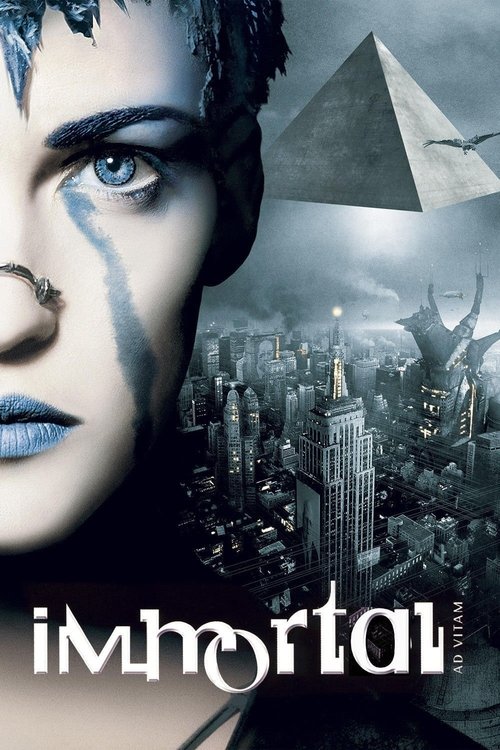
Immortal
2004In the distant future, Earth is occupied by ancient gods and genetically altered humans. When a god is sentenced to death he seeks a new human host and a woman to bear his child.

Casshern
2004Fifty years of war between the Great Eastern Federation and Europa - now merged as Eurasia - have taken their toll on planet Earth. As a result of the use of biological, chemical and nuclear weapons, much of Earth has become uninhabitable and people have become prey to new diseases. Professor Azuma's "neo-cell" project, which is supposed to be the answer to mankind's hardships, becomes a nightmare come true when mutants spawned from the experiment escape and declare war on the human race. Azuma's son Tetsuya, who was killed during the previous war, is reborn into the cyborg Casshern as mankind's last hope against the new mutant threat. This live-action sci-fi movie based on a 1973 Japanese animé of the same name.

Godzilla: Final Wars
2004Humanity finally rids themselves of Godzilla, imprisoning him in an icy tomb in the South Pole. All is peaceful until various monsters emerge to lay waste to Earth's cities. Overwhelmed, humanity is seemingly saved by a race of benevolent aliens known as Xiliens. But not all is what it seems with these bizarre visitors. If humanity wishes to survive, they must reluctantly resurrect their most hated enemy, Godzilla.
Ryuhei Kitamura’s hyper-kinetic celebration of kaiju history acts as a colorful, delirious eulogy for the suit-actor era. This kitchen-sink approach to monster mayhem remains a joyful explosion of practical effects and martial-arts absurdity that honors the legacy of its titular titan.

The Chronicles of Riddick
2004After years of outrunning ruthless bounty hunters, escaped convict Riddick suddenly finds himself caught between opposing forces in a fight for the future of the human race. Now, waging incredible battles on fantastic and deadly worlds, this lone, reluctant hero will emerge as humanity's champion - and the last hope for a universe on the edge of annihilation.
Vin Diesel’s expansive space opera trades its predecessor’s intimacy for a sprawling, baroque mythology rich with eccentric world-building. Its sheer ambition in crafting a distinct, gothic-industrial universe provides a refreshing alternative to more conventional galactic empires.

AVP: Alien vs. Predator
2004When scientists discover something near Antarctica that appears to be a buried Pyramid, they send a research team out to investigate. Little do they know that they are about to step into a hunting ground where Aliens are grown as sport for the Predator race.
By merging two of cinema’s most iconic extraterrestrial legacies, this clash offers a heavy-metal aesthetic that prioritizes tactile creature effects and ancient astronaut mythology. It functions as a brutal, claustrophobic arena piece that revitalized stagnant lore through sheer visceral confrontation.

Primer
2004A group of fledgling inventors discover a complex method to manipulate reality. At first, they successfully game the stock market with it, but the consequences of the invention start to catch up with them.
Shane Carruth’s low-budget marvel demands intellectual rigor, stripping away all blockbuster artifice to present the most authentic, labyrinthine depiction of causal engineering ever filmed. It is a dense, unapologetic puzzle box that respects the viewer’s intelligence by refusing to over-explain its complex geometry.

Resident Evil: Apocalypse
2004As the city is locked down under quarantine, Alice finds out that the people that died from the previous incident at the Umbrella Corporation have turned into zombies. She then joins a small band of elite soldiers, who are enlisted to rescue the missing daughter of the creator of the mutating T-virus. Once lack of luck and resources happen, they begin to wage an exhilarating battle to survive and escape before the Umbrella Corporation erases its experiment from the face of the earth.
This sequel pivots toward high-octane urban warfare, capturing the chaotic disintegration of societal order with kinetic energy and stylized brutality. It excels as a lean, genre-bending exercise that successfully translates survival-horror mechanics into a relentless cinematic chase.
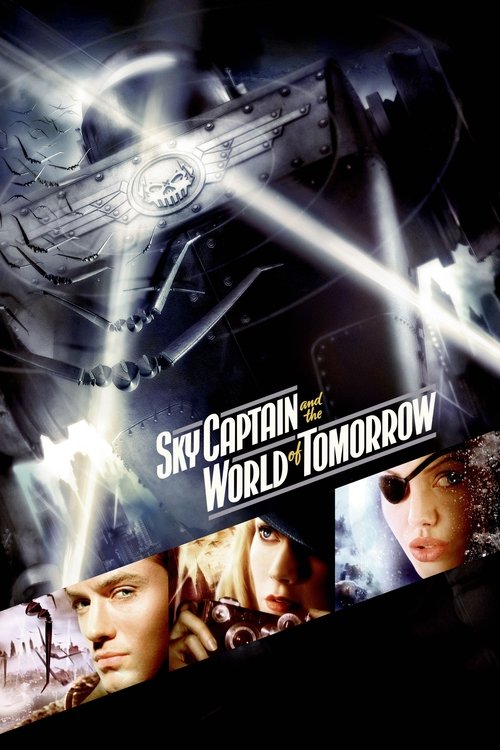
Sky Captain and the World of Tomorrow
2004When gigantic robots attack New York City, "Sky Captain" uses his private air force to fight them off. His ex-girlfriend, reporter Polly Perkins, has been investigating the recent disappearance of prominent scientists. Suspecting a link between the global robot attacks and missing men, Sky Captain and Polly decide to work together. They fly to the Himalayas in pursuit of the mysterious Dr. Totenkopf, the mastermind behind the robots.
A stunning exercise in retro-futurism, this digital pioneer revived the aesthetics of 1930s adventure serials through a groundbreaking sepia-toned lens. It stands as a brave stylistic experiment that prioritized atmospheric world-building and diesel-punk artistry over traditional realism.
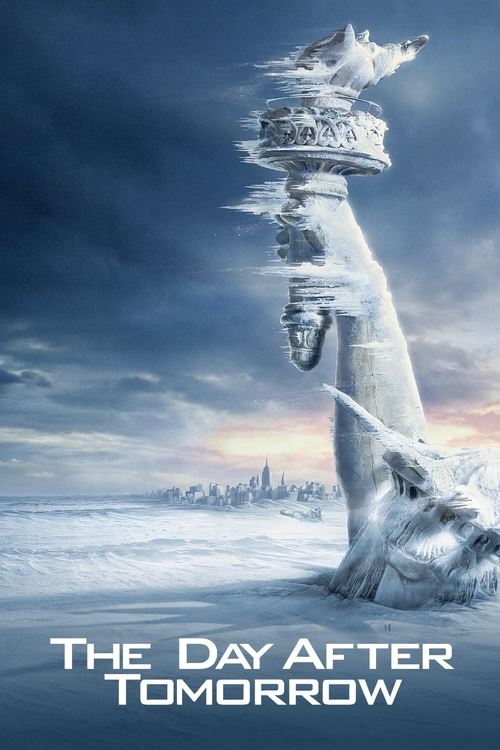
After paleoclimatologist Jack Hall is largely ignored by UN officials when presenting his environmental concerns about the beginning of a new Ice Age, his research proves true when a superstorm develops, setting off catastrophic natural disasters throughout the world. Trying to get to his son, Sam, who is trapped in New York City with his friend Laura and others, Jack and his crew must travel to get to Sam before it's too late.
Roland Emmerich turns environmental collapse into a grand, terrifying spectacle that reshaped the visual language of the climate-disaster subgenre. The film’s power lies in its unrelenting scale, forcing audiences to confront the sudden fragility of modern civilization against planetary forces.
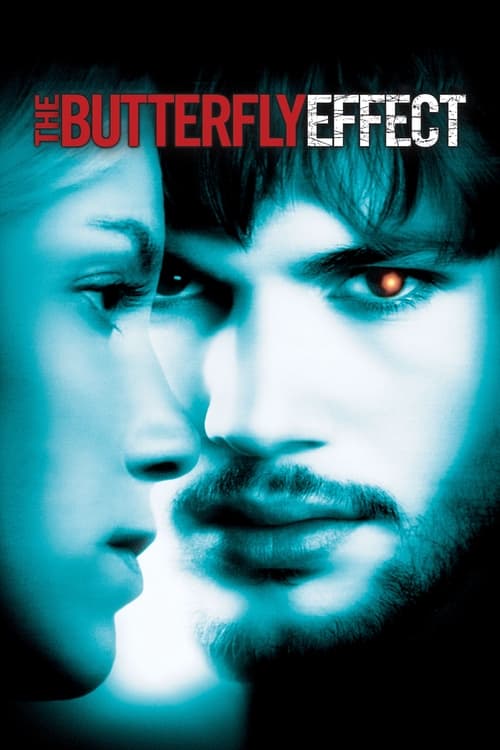
The Butterfly Effect
2004A young man struggles to access sublimated childhood memories. He finds a technique that allows him to travel back into the past, to occupy his childhood body and change history. However, he soon finds that every change he makes has unexpected consequences.
This grim exploration of temporal interference eschews glossy paradoxes for a gritty, unsettling look at the cruelty of unintended consequences. Its nihilistic commitment to the fragility of destiny distinguishes it from the more sanitized time-travel narratives of the era.
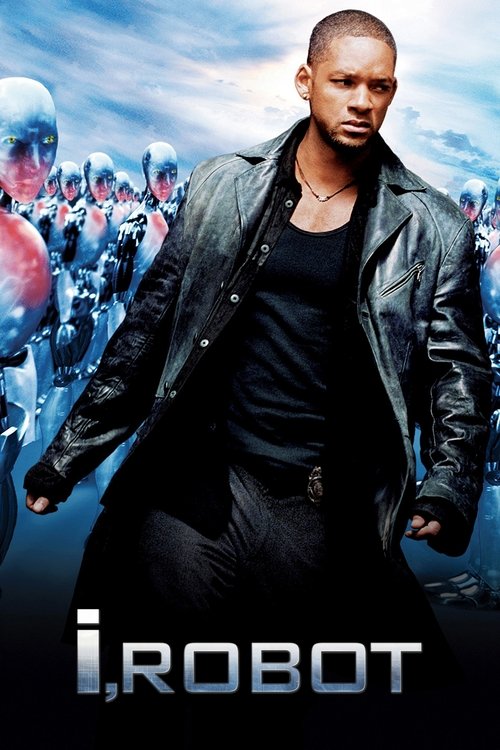
I, Robot
2004In 2035, where robots are commonplace and abide by the three laws of robotics, a technophobic cop investigates an apparent suicide. Suspecting that a robot may be responsible for the death, his investigation leads him to believe that humanity may be in danger.
While it wears the skin of a summer blockbuster, this adaptation succeeds by grounding Asimovian logic in a slick, cautionary tale regarding the erosion of human autonomy. The uncanny valley of its early CGI serves as a perfect chilling backdrop for its central philosophical inquiry into mechanical sentience.
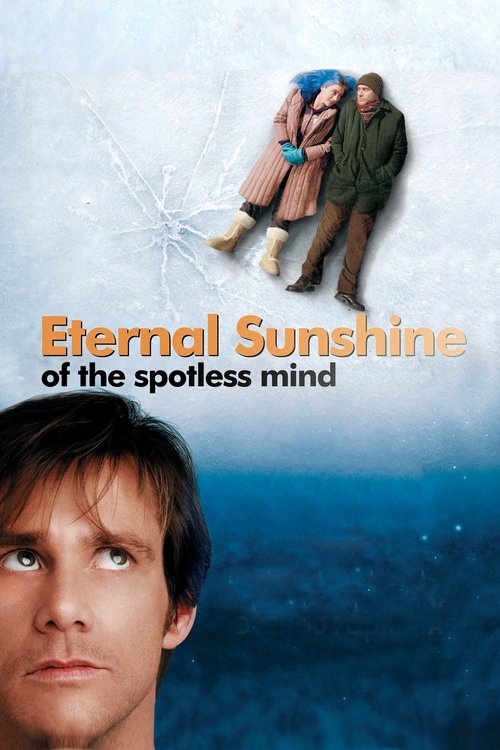
Joel Barish, heartbroken that his girlfriend underwent a procedure to erase him from her memory, decides to do the same. However, as he watches his memories of her fade away, he realises that he still loves her, and may be too late to correct his mistake.
Michel Gondry delivers a high-concept masterpiece that weaponizes speculative technology to dissect the visceral agony of heartbreak. It remains a rare triumph of surrealist cinema where the digital erasure of memory feels more hauntingly real than any physical threat.
Frequently Asked Questions
Everything you need to know about this list and SnakeDrafts
- Eternal Sunshine of the Spotless Mind delves into the complexities of memory erasure within a romantic context, combining science fiction with drama and romance. Directed by Michel Gondry, it stands out for its inventive narrative and emotional depth.
- I, Robot, directed by Alex Proyas, tackles the evolving relationship between humans and robots, focusing on the ethical challenges and potential threats posed by advanced AI. It blends action-packed sequences with thought-provoking sci-fi concepts.
- Yes, The Butterfly Effect and Primer both engage with time travel themes. The Butterfly Effect uses a psychological thriller approach to explore how changing past events impacts the present, while Primer offers a complex, low-budget narrative centered around experimental time travel technology.
- The Day After Tomorrow vividly portrays a climate catastrophe caused by sudden global cooling, blending thrilling action and environmental cautionary tales. This film highlights early 2000s concerns regarding climate change through a blockbuster lens.
- Resident Evil: Apocalypse and AVP: Alien vs. Predator incorporate horror elements within their sci-fi frameworks, featuring intense suspense and monstrous antagonists. Additionally, Casshern blends horror with sci-fi drama, showcasing genre hybridization prevalent in 2004.
- 2004 sci-fi films like Eternal Sunshine of the Spotless Mind and Primer veer towards introspective themes such as memory, identity, and existential anxiety, reflecting a broader move away from conventional alien invasion and laser battles. This shift illustrates the genre's growing sophistication and narrative diversity.
- Sky Captain and the World of Tomorrow stands out for its pioneering use of entirely digital sets and a retro-futuristic aesthetic, paying homage to 1930s adventure serials. Its blend of mystery, action, and sci-fi makes it a visually innovative entry in the 2004 lineup.