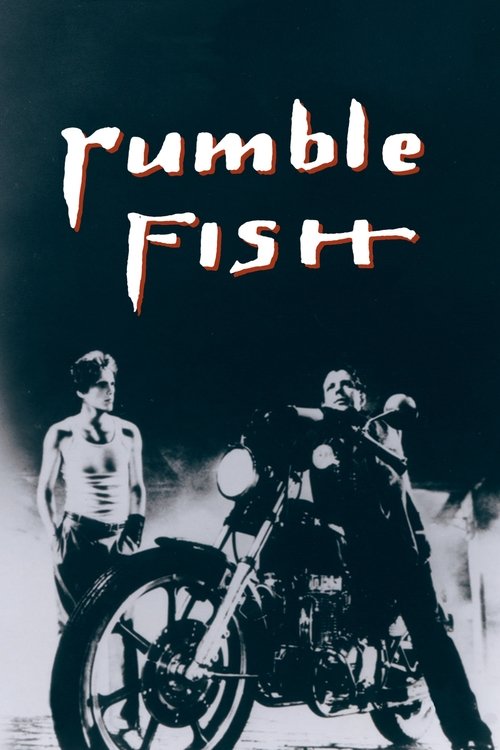
Rumble Fish
Francis Ford Coppola's "Rumble Fish" plunges viewers into a stylized, dreamlike world of restless youth, fraternal bonds, and the yearning for a bygone era of street legends. This visually stunning film explores the poignant struggle of a young delinquent grappling with his identity in the shadow of his enigmatic, revered older brother. Prepare for an evocative journey into a black-and-white urban landscape where loyalty and longing collide.
Director
Release Year
1983
Runtime
94 minutes
Main Cast
Matt Dillon, Mickey Rourke, Diane Lane, Dennis Hopper, Diana Scarwid
About Rumble Fish
**A Visual Symphony of Teenage Angst and Brotherhood**
Francis Ford Coppola’s 1983 film "Rumble Fish" is a hypnotic and melancholic dive into the world of Rusty James, a young, small-time tough guy in Tulsa, Oklahoma, who idolizes his older brother, the legendary "Motorcycle Boy." Shot in stark black and white, with bursts of color strategically placed, the film is a masterful exercise in visual storytelling, creating a dreamlike, almost otherworldly atmosphere that perfectly encapsulates the heightened emotions of adolescence. Its deliberate pacing and experimental aesthetics set it apart from typical teen dramas, marking it as a unique entry in Coppola’s diverse filmography.
Adapted from S.E. Hinton’s novel, the film delves into themes of identity, legacy, and the inescapable pull of family. Rusty James, brilliantly portrayed by Matt Dillon, yearns for the days of gang warfare and street supremacy, a time when his brother (a mesmerizing Mickey Rourke) was the undisputed king. However, Motorcycle Boy, recently returned from California, carries a weariness and a profound sense of disillusionment, offering Rusty James a stark contrast to his romanticized view of their past. The film masterfully explores the complex dynamic between the brothers, highlighting Rusty James' naive aspirations and Motorcycle Boy's world-weary wisdom.
Upon its release, "Rumble Fish" received a mixed critical reception, with some praising its artistic ambition and others finding its stylistic choices alienating. However, over time, it has garnered a significant cult following, particularly among cinephiles and fans of Coppola's more experimental work. Its striking cinematography, unconventional narrative structure, and compelling performances have cemented its place as a unique and influential film, often cited for its artistic boldness and atmospheric intensity. The film’s distinct visual style, characterized by slow motion, stark lighting, and a surreal quality, contributes to its enduring appeal.
The cultural impact of "Rumble Fish" lies in its unconventional portrayal of youth and rebellion. While not a box office hit, its artistic daring and memorable performances have resonated with generations of viewers. The film’s exploration of the yearning for a romanticized past, the burden of expectation, and the search for meaning in a seemingly predetermined life continue to provoke thought and discussion. Its legacy endures as a testament to Coppola's willingness to push creative boundaries and craft a deeply personal, visually arresting cinematic experience.
Drafts Featuring Rumble Fish
Every SnakeDrafts listicle where this movie appears
The Best Dennis Hopper Movies Ranked
Ranked #11
The Best Chris Penn Movies Ranked
Ranked #10
The Best Matt Dillon Movies Ranked
Ranked #6
The Best Laurence Fishburne Movies
Ranked #20
The Definitive Diane Lane Career Ranking
Ranked #6
Best Mickey Rourke Films of All Time
Ranked #4
Francis Ford Coppola's Greatest Films Ranked
Ranked #6
Top Movies of 1983 Ranked
Ranked #74
The Best Crime Movies of 1983, Ranked
Ranked #9
Similar Movies
Movies related to Rumble Fish

Frequently Asked Questions
Everything you need to know about Rumble Fish
- The rumble fish are Siamese fighting fish that Motorcycle Boy observes in a pet store. He notes that they would kill each other if not separated by glass, symbolizing the destructive nature of gang violence and the artificial barriers that prevent people from truly connecting. They represent the inherent aggression and isolation within their environment.
- Motorcycle Boy's colorblindness is a powerful symbol of his detachment from the vibrant, often chaotic, world around him. It suggests a profound disillusionment and an inability to perceive the world with the same youthful intensity as Rusty James. It also highlights his unique perspective and his alienation from the norms of his community.
- Rusty James idolizes Motorcycle Boy because he represents a bygone era of legendary street toughness and undeniable charisma. In Rusty James' eyes, his brother embodies the peak of their gang's power and reputation, and he longs to recapture that perceived glory. This idolization stems from a desire for identity and belonging within his turbulent world.
- The predominant black and white cinematography emphasizes the bleak, often hopeless reality of Rusty James's world and the nostalgic sense of a past era. The intentional splashes of color, primarily red and blue, are used to highlight significant objects, moments, or characters, drawing the viewer's attention to their symbolic importance and adding a dreamlike, almost surreal quality to the narrative.
- The film explores the theme of escaping fate through Motorcycle Boy's profound weariness with the cycle of violence and his yearning for something beyond their small-town existence. His past actions have cemented his legend, but he seeks a different path, urging Rusty James to break free from the expectations and limitations of their environment. Rusty James ultimately attempts to follow this advice, with a poignant ending that leaves his future ambiguous.
- The dreamlike sequences and distinctive sound design in 'Rumble Fish' are used to emphasize the subjective experience and internal states of the characters, particularly Rusty James's perception of reality. The echoing sounds, distorted voices, and slow-motion shots create an atmospheric and surreal quality, deepening the film's exploration of memory, longing, and the psychological impact of their environment.

