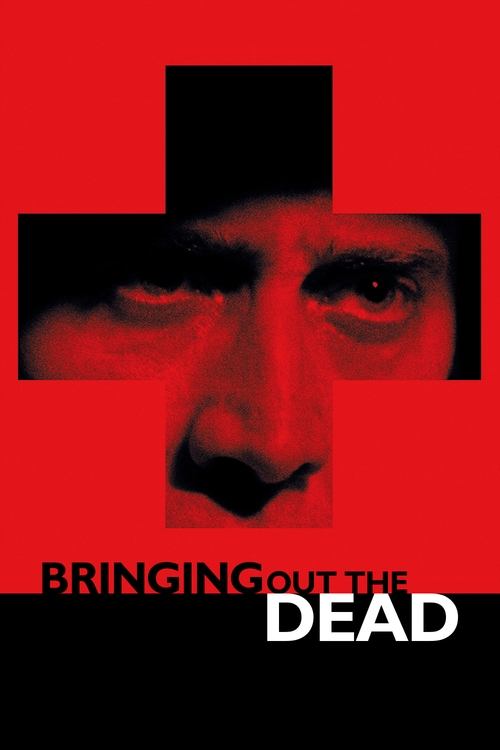
Bringing Out the Dead
In Martin Scorsese's "Bringing Out the Dead," Nicolas Cage delivers a searing performance as a paramedic haunted by the city's suffering. This intense drama plunges viewers into the nocturnal abyss of New York City, exploring themes of redemption and despair.
Director
Release Year
1999
Runtime
121 minutes
Genres
Main Cast
Nicolas Cage, Patricia Arquette, John Goodman, Ving Rhames, Tom Sizemore
About Bringing Out the Dead
Martin Scorsese’s "Bringing Out the Dead" (1999) offers a visceral journey into the psychological torment of a New York City paramedic. Based on Joe Connelly's novel, the film captures the relentless, often futile, struggle against death and human suffering that first responders face daily. It's a raw and unflinching look at the toll such a profession can take on the soul, cementing its place as a powerful exploration of urban desolation and the search for meaning amidst chaos.
Critically, the film received a mixed reception upon its initial release, with some praising its stylistic audacity and Cage's intense performance, while others found its relentless bleakness challenging. However, over time, "Bringing Out the Dead" has garnered an increasingly appreciative audience and critical re-evaluation, solidifying its status as a cult classic within Scorsese's esteemed filmography. Its visual poetry and often surreal tone contribute to its unique atmosphere, making it a compelling, albeit disturbing, viewing experience.
The narrative centers on Frank Pierce (Nicolas Cage), a burnt-out paramedic teetering on the edge of a mental breakdown. Haunted by the ghosts of those he couldn't save, Frank grapples with insomnia, hallucinations, and a profound sense of despair. His nights are a blur of desperate calls, emergency rooms, and the increasingly blurred line between savior and witness. The film expertly avoids traditional plot conventions, instead focusing on Frank's fragmented perception and emotional decay, making it a character study of remarkable depth.
While not a box office smash, "Bringing Out the Dead" has endured for its unflinching portrayal of existential dread and its distinctive artistic vision. It resonates with audiences who appreciate cinema that dares to confront the darker aspects of the human condition, solidifying its legacy as a powerful, albeit often overlooked, entry in the psychological drama genre.
Drafts Featuring Bringing Out the Dead
Every SnakeDrafts listicle where this movie appears
Similar Movies
Movies related to Bringing Out the Dead

Frequently Asked Questions
Everything you need to know about Bringing Out the Dead
- The spectral figures Frank encounters throughout the film are powerful manifestations of his guilt, trauma, and exhaustion. They serve as a visual metaphor for the psychological burden of his profession, blurring the lines between reality and his increasingly fragmented mind.
- Mary Burke acts as both a potential anchor and a mirror for Frank's own suffering. Her own experiences with loss through her father's coma allow her to connect with Frank's despair, offering a glimmer of understanding and a possibility of redemption or shared burden, even if fleeting.
- The perpetually dark and grimy streets of New York City become a character unto themselves, reflecting Frank's internal turmoil and the bleakness of his existence. The city's unforgiving nature and the constant emergencies amplify his sense of isolation and the pervasive suffering he witnesses.
- Each of Frank's rotating partners – Larry, Marcus, and Walls – offers a different perspective on coping with the job's demands, ranging from cynical detachment to spiritual belief. They highlight Frank's increasing isolation and the impossibility of finding solace or true connection in his deteriorating state.
- 'Bringing Out the Dead' powerfully conveys the devastating psychological cost of extreme empathy and unchecked burnout in high-stress professions. It suggests that while the desire to save others is noble, the constant exposure to suffering without proper coping mechanisms can lead to profound personal dissolution and a blurring of one's own identity.
- Nicolas Cage immersed himself in the role, taking ride-alongs with paramedics to accurately convey the physical and emotional exhaustion. He aimed to portray Frank not as a hero, but as a man grappling with overwhelming trauma, requiring a deep dive into complex psychological states.
- The ambiguous ending, with Frank cradling Mary and seemingly finding some peace, suggests a fragile truce with his inner demons. It's not a definitive cure, but perhaps a moment of shared humanity and acceptance of his role, indicating a subtle shift from utter despair to a more grounded, albeit still somber, existence.

