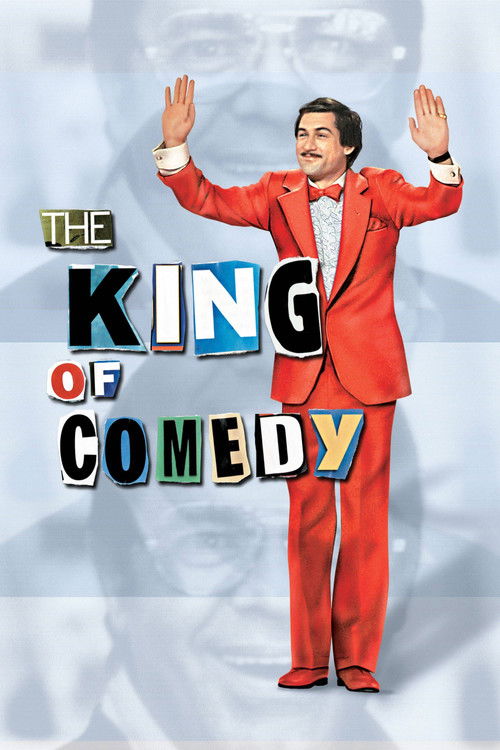
The King of Comedy
In Martin Scorsese's "The King of Comedy," Robert De Niro delivers a captivating performance as Rupert Pupkin, an aspiring comedian whose relentless pursuit of fame leads to a darkly comedic and uncomfortably relevant exploration of celebrity obsession and delusion. This satirical masterpiece cemented its place in cinematic history with its chillingly accurate portrayal of media culture and the desperate craving for recognition.
Director
Release Year
1982
Runtime
109 minutes
Main Cast
Robert De Niro, Jerry Lewis, Diahnne Abbott, Sandra Bernhard, Shelley Hack
About The King of Comedy
Martin Scorsese's 1982 film, "The King of Comedy," offers a biting satire on the cult of celebrity and the psychological underpinnings of ambition. At its core, the film delves into Rupert Pupkin's increasingly disturbing attempts to achieve stardom, providing a stark commentary on the lengths individuals will go to for recognition in the entertainment industry. The movie’s sharp social critique remains remarkably prescient, resonating with contemporary discussions about influencer culture and the blurring lines between public and private life.
The narrative centers on Rupert Pupkin, a struggling stand-up comedian who fantasizes about becoming a talk show sensation. His idolization of Jerry Langford, a successful late-night host played by Jerry Lewis, escalates into a series of unsettling encounters and ultimately, a desperate act to gain Langford's attention and a coveted spot on his show. The film cleverly uses Pupkin's delusional world to highlight the often-unseen struggles and warped perceptions that can take root in the pursuit of fame, leaving audiences to ponder the true cost of celebrity.
Upon its release, "The King of Comedy" experienced a mixed critical reception and struggled at the box office, with many viewers finding its themes and characterizations unsettling. However, over time, its critical standing dramatically improved, with many critics now hailing it as a masterpiece and a prophetic work. Critics lauded Scorsese's direction and De Niro's fearless portrayal of Pupkin, recognizing the film's profound insights into media manipulation and the dark side of ambition. It's frequently cited as one of Scorsese's most underrated films, boasting a unique tone that blends elements of dark comedy with uncomfortable psychological drama.
The film's ending, which sees Pupkin achieve a form of twisted celebrity, has sparked considerable debate and analysis. This ambiguous conclusion forces viewers to grapple with the morality of Pupkin's actions and the nature of fame itself. "The King of Comedy" continues to be studied for its narrative complexity and its enduring relevance in an age where curated self-image and viral moments often overshadow genuine talent and hard work. Its legacy lies in its unflinching examination of the human desire for validation and the sometimes-fragile boundary between ambition and delusion.
Drafts Featuring The King of Comedy
Every SnakeDrafts listicle where this movie appears
Similar Movies
Movies related to The King of Comedy
Frequently Asked Questions
Everything you need to know about The King of Comedy
- Rupert Pupkin's obsession stems from a profound desire for validation and recognition, believing that appearing on Jerry Langford's show is his only path to comedic stardom. His desperate ambition is fueled by a delusional self-belief that he is destined for greatness, despite lacking genuine talent or a grasp of social boundaries.
- The film offers a biting critique of celebrity culture by showcasing the dark side of fan obsession and the manufactured reality of fame. It suggests that celebrity can be a destructive force, both for those who crave it and those who possess it, highlighting the media's power to create and exploit public personas.
- Rupert's elaborate imagined conversations and interactions with Jerry Langford serve to illustrate his deep-seated delusions and his skewed perception of reality. These fantasies are a coping mechanism, allowing him to live out his ambitions in his mind when his real life falls short, further blurring the lines between what is real and what is imagined for both him and the audience.
- Rupert's final stand-up routine is a culmination of his journey, showcasing his twisted triumph and his distorted understanding of success. He embraces his infamy, turning his criminal act into a narrative for his comedy, which ironically gains him the attention he so desperately craved, albeit in a morally ambiguous way.
- Masha, another obsessed fan, serves as a dark mirror to Rupert's own fanaticism, amplifying the film's themes of celebrity obsession and delusion. Her equally disturbing and relentless pursuit of Jerry Langford highlights the isolating and potentially dangerous nature of such fixations, underscoring the film's commentary on the extremes of celebrity worship.
- The film's ending provocatively subverts conventional ideas of justice by showing Rupert not only escaping severe punishment but achieving his warped version of success and fame. This unsettling conclusion forces audiences to confront the uncomfortable reality that notoriety can sometimes be rewarded, challenging the expectation of clear moral consequences for his actions.

