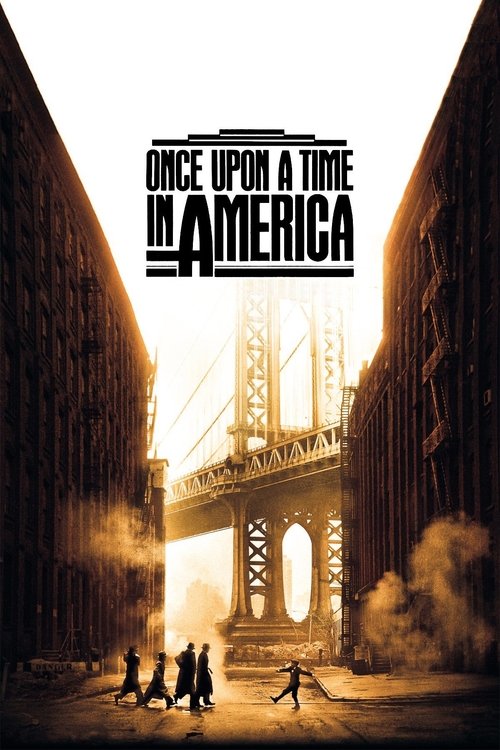
Once Upon a Time in America
Sergio Leone's epic crime drama "Once Upon a Time in America" is a sprawling masterpiece that delves into the lives of Jewish gangsters in New York City, exploring themes of friendship, betrayal, and the corrupting influence of power. This visually stunning film, known for its non-linear narrative and evocative score, offers a poignant reflection on memory, loss, and the American dream. Prepare for a cinematic journey through decades of intricate storytelling and unforgettable performances.
Director
Release Year
1984
Runtime
229 minutes
Main Cast
Robert De Niro, James Woods, Elizabeth McGovern, Treat Williams, Tuesday Weld
About Once Upon a Time in America
Sergio Leone's "Once Upon a Time in America" stands as a monumental achievement in cinematic storytelling, a four-hour-plus saga that transcends the typical gangster film. Released in 1984, the film marked Leone's return to the director's chair after a thirteen-year hiatus, and it serves as a fitting, if melancholic, capstone to his illustrious career. The narrative, known for its fractured timeline, weaves between the 1920s, 1930s, and 1960s, presenting a dreamlike meditation on the passage of time and the indelible marks left by past choices.
At its core, the film is a poignant exploration of the lives of David "Noodles" Aaronson (Robert De Niro) and Maximilian "Max" Bercovicz (James Woods), childhood friends who rise from the streets of the Lower East Side to become powerful figures in the Prohibition-era underworld. Their bond, initially forged in loyalty and ambition, is gradually eroded by greed, jealousy, and a series of tragic misunderstandings. The film masterfully portrays the evolution of their relationship against a backdrop of sweeping historical changes, offering a nuanced look at the dark side of American ambition.
Upon its initial release, "Once Upon a Time in America" faced a tumultuous reception, primarily due to its drastically cut theatrical version in the United States, which butchered Leone's intended narrative structure and ran significantly shorter than his European cut. This heavily edited version was widely panned, but the director's cut, or a version closely resembling it, later gained critical acclaim, solidifying its place as a classic. The film garnered BAFTA nominations and has since been re-evaluated as a profound work of art, praised for its intricate plot, breathtaking cinematography, and Ennio Morricone's hauntingly beautiful score, which perfectly encapsulates the film's melancholic mood.
The cultural impact of "Once Upon a Time in America" is undeniable, influencing countless filmmakers and becoming a benchmark for epic crime sagas. Its non-linear storytelling technique, though initially a point of contention, is now recognized as a vital component of its emotional depth, mirroring the distorted and fragmented nature of memory. The film's exploration of disillusionment, the myth of the American dream, and the enduring power of regret continues to resonate with audiences, making it a timeless examination of human nature and the consequences of a life lived outside the law.
Drafts Featuring Once Upon a Time in America
Every SnakeDrafts listicle where this movie appears
The Best Robert De Niro Movies Ranked
Ranked #8
The Best Joe Pesci Movies Ranked
Ranked #7
The Best Jennifer Connelly Movies Ranked
Ranked #3
Ranking James Woods's Greatest Movies
Ranked #1
Best Movies Directed by Sergio Leone
Ranked #2
The Top Movies Featuring Danny Aiello
Ranked #4
The Greatest Films of 1984
Ranked #4
A Ranking of Paul Herman's Best Movies
Ranked #2
The Greatest Crime Movies of 1984
Ranked #1
The Greatest Crime Movies Ranked
Ranked #30
The Best 1980s Crime Movies Ranked
Ranked #3
The Best Movies of the 1980s Ranked
Ranked #24
Similar Movies
Movies related to Once Upon a Time in America
Frequently Asked Questions
Everything you need to know about Once Upon a Time in America
- The opium den sequences serve as a recurring motif throughout the film, primarily as Noodles' refuge from the harsh realities of his life and a place where he can escape into his memories. The hazy, dreamlike atmosphere often underscores the film's non-linear narrative, blurring the lines between past and present and highlighting Noodles' fragmented recollections.
- Loyalty and betrayal are central themes, intricately woven into the complex relationships between Noodles, Max, and their crew. The film constantly challenges the audience to question the nature of their bonds, exploring how personal ambitions, external pressures, and unforeseen circumstances can lead to profound acts of treachery, ultimately shattering long-held trusts.
- The ending is deliberately ambiguous, leaving much to interpretation, which is a hallmark of Leone's style. Noodles' final, enigmatic smile in the opium den suggests a surrender to his memories, a fatalistic acceptance of his past, or perhaps even a final, drug-induced fantasy, leaving the true nature of his ultimate fate open to viewer speculation.
- Deborah represents an unfulfilled ideal, a dream of a different life for Noodles, one free from violence and crime. As she pursues her acting career, she embodies ambition and aspiration, contrasting sharply with the destructive path he follows. Her evolution from a childhood crush to a successful, but emotionally distant, woman underscores Noodles' lifelong regrets and the opportunities he lost.
- The film's non-linear structure is crucial to its thematic depth. By constantly shifting between different eras, the narrative mirrors the fragmented and often unreliable nature of memory, emphasizing how the past relentlessly shapes the present. This narrative choice allows for a poignant exploration of nostalgia, regret, and the inescapable weight of history on the characters' lives.

