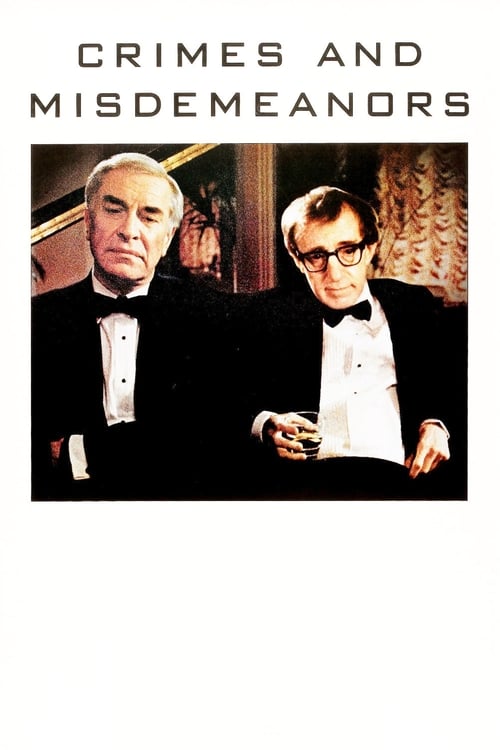
Crimes and Misdemeanors
Woody Allen's "Crimes and Misdemeanors" dissects the moral complexities of guilt, choice, and the elusive nature of justice, weaving together two disparate yet thematically linked narratives. This critically acclaimed film masterfully blends dark humor with profound philosophical questions, leaving audiences to ponder the consequences of their own moral compromises.
Director
Release Year
1989
Runtime
104 minutes
Main Cast
Woody Allen, Martin Landau, Mia Farrow, Alan Alda, Anjelica Huston
About Crimes and Misdemeanors
Woody Allen's 1989 masterpiece, "Crimes and Misdemeanors," stands as a profound exploration of ethics, responsibility, and the human condition, solidifying its place as a cornerstone of late 20th-century cinema. The film’s intricate narrative structure, which interweaves two seemingly unrelated storylines, allows for a multifaceted examination of moral culpability and the often-unseen repercussions of our actions. Its critical reception was overwhelmingly positive, with many praising Allen's mature storytelling and the film's daring philosophical inquiries.
The central premise revolves around two parallel narratives. One follows Judah Rosenthal (Martin Landau), a respected ophthalmologist whose life of pristine reputation is threatened by an extramarital affair. Desperate to maintain his societal standing, Judah contemplates a drastic solution, forcing himself to confront the darkest corners of his conscience. The other storyline features Clifford Stern (Woody Allen), a struggling documentary filmmaker tasked with creating a flattering portrait of his insufferably arrogant brother-in-law, Lester (Alan Alda), a successful TV producer. Clifford's disillusionment with Lester's superficiality and his own artistic struggles provide a stark contrast to Judah's moral crisis.
The film’s cultural impact lies in its unflinching portrayal of moral ambiguity. Allen challenges conventional notions of justice and divine retribution, suggesting that often, in the real world, the guilty go unpunished and the righteous suffer. This unsettling perspective, combined with the film's sharp dialogue and compelling performances, sparked considerable debate and introspection among viewers and critics alike. "Crimes and Misdemeanors" is frequently cited in discussions about ethical philosophy in film.
While not an awards sweep, "Crimes and Misdemeanors" garnered significant critical attention, earning an Academy Award nomination for Best Original Screenplay. Its legacy endures through its timeless themes and its bold approach to exploring the human psyche. The film solidified Woody Allen's reputation as a filmmaker capable of tackling serious, thought-provoking subjects with intellectual rigor and artistic finesse, cementing its status as a quintessential work in his prolific career.
Drafts Featuring Crimes and Misdemeanors
Every SnakeDrafts listicle where this movie appears
The Best Martin Landau Movies Ranked
Ranked #2
The Best Anjelica Huston Movies Ranked
Ranked #5
Ranking Woody Allen's Greatest Films
Ranked #5
Every Daryl Hannah Movie Ranked
Ranked #9
A Ranking of Mia Farrow's Best Movies
Ranked #3
Every Alan Alda Movie Ranked
Ranked #1
1989's Best Movies Ranked
Ranked #18
Best Crime Movies of 1989, Ranked
Ranked #20
The Best Movies of the 1980s Ranked
Ranked #65
Similar Movies
Movies related to Crimes and Misdemeanors


Frequently Asked Questions
Everything you need to know about Crimes and Misdemeanors
- Judah's guilt is depicted through his escalating paranoia, sleepless nights, and vivid hallucinations of his victim. He struggles internally with his conscience, initially believing he will be caught and punished, yet ultimately finds a disturbing peace when no earthly retribution comes.
- The documentary serves as a satirical commentary on superficiality and commercial success versus artistic integrity. Clifford uses it as an outlet for his frustrations with Lester's phoniness, highlighting the contrasting values and moral compromises within the film's broader themes.
- While Judah and Clifford's paths directly converge only briefly, their storylines are deeply connected by their shared exploration of moral choices and their consequences. Both characters grapple with ethical dilemmas and the often-unjust nature of the world, offering different perspectives on the film's central themes of crime, punishment, and the search for meaning.
- The film provocatively suggests that divine justice may not exist or actively intervene in human affairs. Judah's ability to escape punishment for his crime challenges the comforting notion that wrongdoers will always face consequences, leaving a haunting question about morality in a seemingly indifferent universe.
- The ending is deliberately unsettling, implying that some crimes go unpunished and that individuals can reconcile with their guilt, or simply move past it, without facing external consequences. It prompts viewers to confront the uncomfortable reality that justice is not always served, and moral choices can have lasting internal, rather than external, repercussions.

