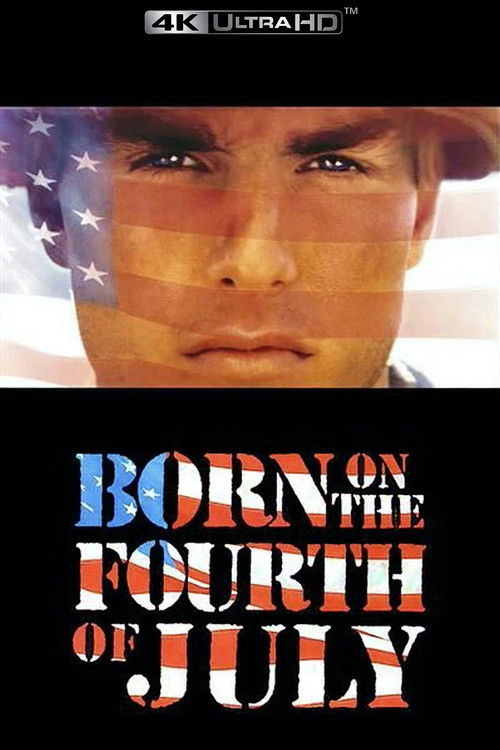
Born on the Fourth of July
Born on the Fourth of July" (1989) is a powerful, Oscar-winning biographical drama that profoundly explores the disillusionment of Vietnam veteran Ron Kovic. This Oliver Stone masterpiece offers an unflinching look at the human cost of war and the complex journey from patriotism to protest, making it a timeless and essential cinematic experience.
Director
Release Year
1989
Runtime
145 minutes
Genres
Drama, War
Main Cast
Tom Cruise, Raymond J. Barry, Caroline Kava, Kyra Sedgwick, Willem Dafoe
About Born on the Fourth of July
Oliver Stone's "Born on the Fourth of July" stands as a monumental achievement in cinema, capturing the raw, true story of Ron Kovic, a young man who eagerly volunteers for service in Vietnam, only to return a paralyzed anti-war activist. The film masterfully portrays the seismic shift in American consciousness during the Vietnam War era, reflecting the deep societal divides and the painful re-evaluation of national ideals. Its unflinching depiction of Kovic's personal trauma and subsequent political awakening resonated deeply with audiences, sparking important conversations about patriotism, sacrifice, and the true meaning of freedom.
At its core, "Born on the Fourth of July" is a searing character study, anchored by a transformative performance from Tom Cruise, who earned an Academy Award nomination for his portrayal of Ron Kovic. The narrative follows Kovic from his idyllic all-American youth in Massapequa, Long Island, to the brutal realities of combat, and finally, to his arduous recovery and eventual emergence as a vocal critic of the war. Stone expertly crafts a narrative that is both intensely personal and broadly political, highlighting the profound impact of war on individuals and the nation as a whole. The film doesn't shy away from the physical and emotional scars of conflict, presenting them with a visceral clarity that is often difficult to watch but impossible to ignore.
Upon its release, "Born on the Fourth of July" garnered widespread critical acclaim, earning Oliver Stone his second Academy Award for Best Director and numerous other accolades. Critics lauded its powerful storytelling, Stone's daring direction, and Cruise's compelling performance. The film's raw honesty and challenging themes cemented its place as a crucial piece of war cinema, offering a counter-narrative to more traditional heroic war movies. Its legacy endures as a testament to the enduring human spirit and the courage required to question the status quo, reminding viewers of the profound and lasting consequences of war long after the battles have ended.
Drafts Featuring Born on the Fourth of July
Every SnakeDrafts listicle where this movie appears
The Best of Tom Cruise Movies Ranked
Ranked #21
The Best Willem Dafoe Movies Ranked
Ranked #7
The Best Tom Berenger Movies Ranked
Ranked #7
The Best Tom Sizemore Movies Ranked
Ranked #15
Best Movies Directed by Oliver Stone
Ranked #3
Ranking the Best Kyra Sedgwick Movies
Ranked #14
1989's Best Movies Ranked
Ranked #13
Top Stephen Baldwin Movies Ranked
Ranked #4
The Best William Baldwin Films Ranked
Ranked #4
Similar Movies
Movies related to Born on the Fourth of July
Frequently Asked Questions
Everything you need to know about Born on the Fourth of July
- Ron Kovic's paralysis is a pivotal moment that fuels his transformation into an anti-war activist. His physical incapacitation, directly resulting from his service, gives him a powerful and visceral platform from which to articulate the immense human cost of war, lending immense credibility and emotional weight to his pleas for peace.
- The Fourth of July symbolizes American independence, patriotism, and national pride. The title starkly contrasts these traditional ideals with Ron Kovic's experience, as his 'birth' (serving and being wounded) on this day leads to a profound disillusionment with the very ideals he was taught to uphold, thus questioning the true meaning of patriotism.
- The film poignantly depicts the mixed and often hostile societal reaction to returning Vietnam veterans. Ron Kovic encounters indifference, misunderstanding, and even outright animosity from some segments of the public, which further exacerbates his feelings of betrayal and isolation, highlighting the deep societal divisions during that era.
- Ron Kovic's journey signifies a profound ideological shift, driven by his direct experience with the horrors of war and the subsequent lack of adequate support upon his return. His transformation from an eager, patriotic volunteer to a vocal protestor illustrates the disillusionment that many veterans faced, challenging the romanticized notions of war and patriotism.
- One powerful quote that encapsulates the movie's message is Kovic's declaration, 'I am the living death! The man who used to be, no more!'. This line vividly conveys his profound sense of loss, both physical and ideological, and his transformation into a symbol of the war's destructive impact on individuals and national ideals.
- The film explores the theme of masculinity by contrasting the traditional, heroic image of a soldier with Ron Kovic's post-war reality. His disability challenges conventional notions of strength and virility, forcing him to redefine his identity and purpose beyond physical prowess, and ultimately finding a new form of strength in his activism.

