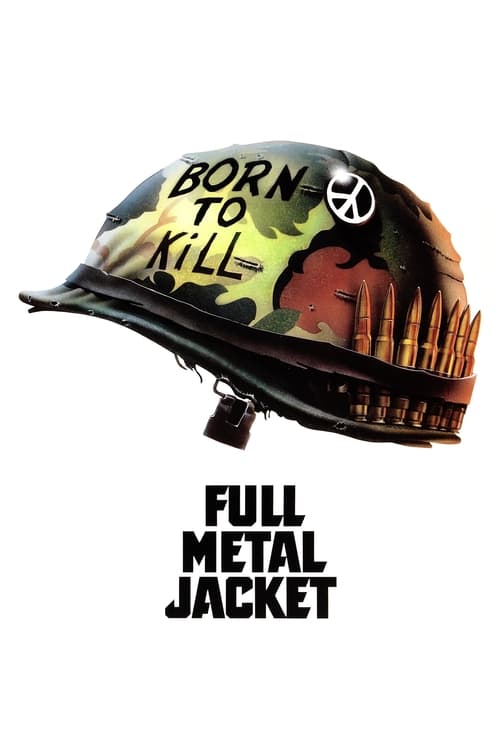
Full Metal Jacket
Stanley Kubrick's "Full Metal Jacket" is a visceral and unflinching portrayal of the Vietnam War, dissecting the psychological toll of military training and the dehumanizing realities of combat. This cinematic masterpiece challenges viewers to confront the stark dichotomy between the romanticized glory of war and its brutal, soul-crushing impact, making it essential viewing for understanding the human cost of conflict.
Director
Release Year
1987
Runtime
117 minutes
Genres
Drama, War
Main Cast
Matthew Modine, Adam Baldwin, Vincent D'Onofrio, R. Lee Ermey, Dorian Harewood
About Full Metal Jacket
Stanley Kubrick’s "Full Metal Jacket" arrived in 1987, offering a stark and indelible vision of the Vietnam War. Breaking the conflict into two distinct halves—the brutal indoctrination of boot camp and the disorienting chaos of urban warfare—the film’s narrative structure itself mirrors the psychological fracturing experienced by its characters. Its raw portrayal of military training, particularly through the unforgettable performance of R. Lee Ermey as Gunnery Sergeant Hartman, cemented its place in cinematic history and popular culture.
The film’s cultural impact is profound, influencing countless subsequent war films and television series. Kubrick’s meticulous direction and unflinching realism captured the era’s disillusionment with the conflict, resonating deeply with audiences. The dialogue, often stark and laced with black humor, has become iconic, quoted and referenced across various media. Beyond its immediate narrative, "Full Metal Jacket" serves as a powerful commentary on the nature of authority, conformity, and the loss of innocence.
Critically, "Full Metal Jacket" received widespread acclaim for its direction, performances, and audacious screenplay. While not shying away from depicting the horrors of war, Kubrick’s approach is less about glorifying violence and more about exposing the psychological scars it leaves. The film garnered an Academy Award nomination for Best Adapted Screenplay, recognizing its sharp and provocative narrative derived from Gustav Hasford's novel "The Short-Timers."
"Full Metal Jacket" endures as a seminal work in the war genre. Its exploration of themes like identity, morality, and the psychological impact of conflict remains as relevant today as it was upon its release. The film’s distinctive visual style, memorable characters, and powerful narrative continue to be analyzed and discussed, solidifying its legacy as a timeless and essential piece of cinema.
Drafts Featuring Full Metal Jacket
Every SnakeDrafts listicle where this movie appears
Similar Movies
Movies related to Full Metal Jacket
Frequently Asked Questions
Everything you need to know about Full Metal Jacket
- The brutal and dehumanizing training at Parris Island is designed to strip recruits of their individual identities and mold them into compliant, efficient killing machines. This process, while effective for military purposes, often leads to psychological trauma and a profound loss of self for many of the young soldiers.
- The juxtaposition of 'Born to Kill' with a peace symbol on Joker's helmet is a powerful visual paradox, highlighting the inherent contradictions and moral ambiguities of war. It symbolizes the internal conflict experienced by soldiers, caught between their indoctrination as killers and their lingering humanity, or perhaps a cynical detachment.
- Private Pyle embodies the tragic consequences of the dehumanizing military system when an individual cannot conform. His gradual descent into madness culminates in a violent outburst, serving as a chilling foreshadowing of the psychological toll awaiting the soldiers in Vietnam.
- The distinct two-part structure, splitting between boot camp and combat, powerfully illustrates the journey from innocent recruits to war-hardened soldiers. It emphasizes how the psychological conditioning in training directly impacts their experiences and perceptions once thrust into the brutal realities of Vietnam.
- The final scene, with the soldiers marching through the ruins of Hue while singing the 'Mickey Mouse Club March,' is deeply unsettling and ironic. It underscores the loss of innocence and the psychological regression caused by war, portraying these men as both products and victims of a system that has infantilized them while simultaneously forcing them to become instruments of death.

