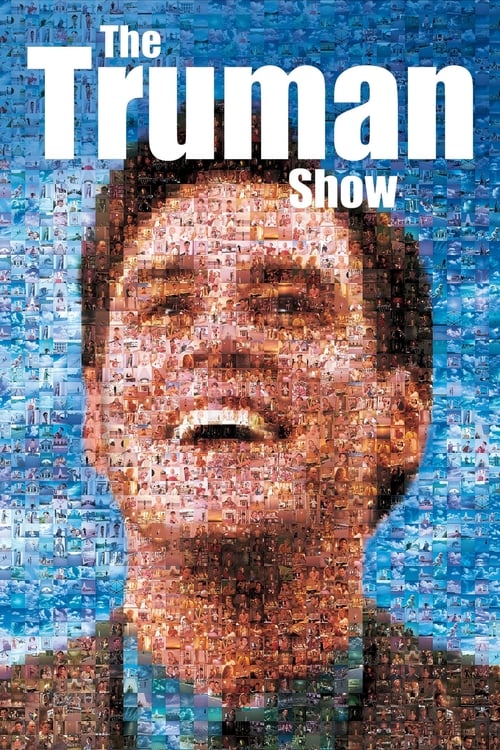
The Truman Show
In a world where reality is a performance, one man's life is the ultimate show. "The Truman Show" masterfully blends comedy and drama, exploring themes of surveillance, free will, and the manufactured nature of media, leaving audiences questioning the authenticity of their own realities.
Director
Release Year
1998
Runtime
103 minutes
Main Cast
Jim Carrey, Laura Linney, Noah Emmerich, Natascha McElhone, Holland Taylor
About The Truman Show
From its iconic opening sequence, "The Truman Show" immediately immerses viewers in the meticulously crafted world of Truman Burbank, a seemingly ordinary man whose entire life has been, unbeknownst to him, a globally broadcasted reality television series. This groundbreaking film, released in 1998, struck a profound chord with audiences worldwide, becoming a cultural touchstone that ignited conversations about privacy, media manipulation, and the very concept of reality itself. Its prescient exploration of these themes feels even more relevant today in an age dominated by social media and pervasive digital surveillance.
The film's premise centers on Truman, portrayed with remarkable depth by Jim Carrey in a role that defied his comedic typecasting. He lives in the idyllic, picturesque town of Seahaven Island, a seemingly perfect suburban paradise. However, beneath the veneer of normalcy, every moment of his existence, from his morning coffee to his nightly sleep, is orchestrated and broadcasted to millions of viewers. The narrative brilliantly unfolds as Truman slowly begins to perceive the cracks in his fabricated reality, leading to a compelling journey of self-discovery and a yearning for an authentic life beyond the lens.
"The Truman Show" garnered widespread critical acclaim for its ingenious script, Peter Weir's visionary direction, and the standout performances of its cast. Carrey's dramatic turn was particularly lauded, earning him a Golden Globe Award for Best Actor. The film also received numerous accolades and nominations, including three Academy Award nominations for Best Director, Best Original Screenplay, and Best Supporting Actor (Ed Harris). Its impact transcended the awards circuit, inspiring academic discourse and becoming a staple in film studies for its insightful commentary on media and society.
Beyond its critical success, "The Truman Show" left an indelible mark on cinematic history and popular culture. The term "Truman Show delusion" was even coined to describe a rare psychological condition where individuals believe their lives are a reality TV show. Its lasting legacy lies in its enduring ability to provoke thought and encourage audiences to look beyond the surface of what they perceive as real, solidifying its place as a classic that continues to resonate with new generations.
Drafts Featuring The Truman Show
Every SnakeDrafts listicle where this movie appears
The Best Paul Giamatti Movies Ranked
Ranked #7
The Best Jim Carrey Movies Ranked
Ranked #3
The Best Laura Linney Movies Ranked
Ranked #1
Ranking the Best Ed Harris Movies: The Essential Filmography
Ranked #1
Peter Weir's Best Directed Films Ranked
Ranked #2
Best 1998 Movies of All Time
Ranked #5
The Best Movies of the 1990s Ranked
Ranked #26
Similar Movies
Movies related to The Truman Show

Frequently Asked Questions
Everything you need to know about The Truman Show
- The name 'Seahaven' is symbolic, representing a 'safe haven' or a perfectly constructed, idyllic world. However, it's also a deceptive name, as Truman is anything but free within its confines, making it a prison designed for surveillance and control.
- Christof, the creator and director of 'The Truman Show,' maintains it for decades due to a combination of artistic obsession, a god-like complex over Truman's life, and the immense global viewership and commercial success the show generates. He believes he is giving Truman a better life within his controlled environment.
- Truman's dramatic exit from Seahaven through the painted sky represents his literal and metaphorical escape from the fabricated reality into true freedom and the unknown. It symbolizes his breaking free from manipulation and choosing an authentic life, despite the risks involved.
- The pervasive product placements in 'The Truman Show' subtly underscore the commercial nature of Truman's existence. Every aspect of his life is monetized and designed to sell, highlighting the insidious way consumerism and advertising can infiltrate and control even the most personal spaces.
- Truman's cheerful daily greeting is a memorable and poignant reflection of his unwitting role as a performer. It's a charming quirk that unknowingly acknowledges the continuous broadcast of his life, serving as an iconic opening and closing line for his 'show' and signaling his pleasant, yet artificial, disposition.

