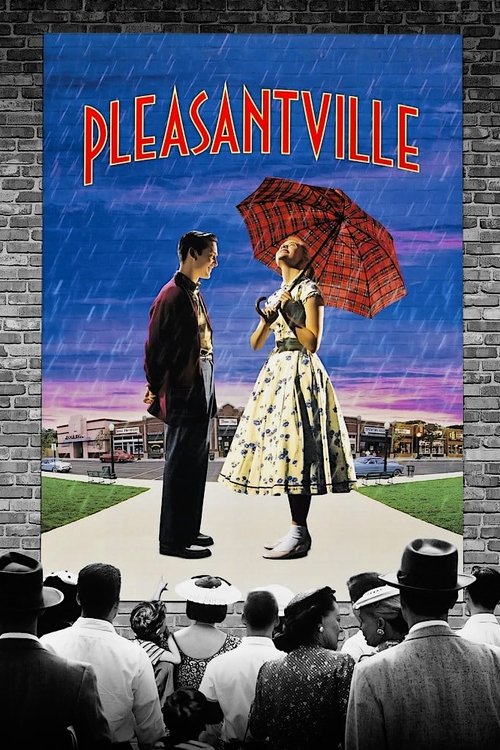
Pleasantville
Step into a world where monochrome meets vibrant rebellion in "Pleasantville," a truly unique film that masterfully blends fantasy, comedy, and drama. This 1998 cinematic gem offers a captivating exploration of conformity, change, and the awakening of individuality, making it a must-watch for those seeking thought-provoking storytelling with a touch of whimsy.
Director
Gary Ross
Release Year
1998
Runtime
124 minutes
Main Cast
Tobey Maguire, Reese Witherspoon, William H. Macy, Joan Allen, Jeff Daniels
About Pleasantville
"Pleasantville" arrived in 1998, a cinematic breath of fresh air that quickly carved its niche in popular culture. Directed by Gary Ross, the film skillfully navigates the delicate balance between nostalgic reverence and biting social commentary. Its innovative visual style, transitioning from crisp black and white to vivid color, became an iconic representation of the characters' emotional and societal awakenings, leaving a lasting impression on audiences and critics alike.
The premise sees modern-day teenagers David (Tobey Maguire) and Jennifer (Reese Witherspoon) unwittingly transported into the idealized, monochromatic world of a 1950s sitcom, "Pleasantville." In this seemingly perfect town, life adheres to an unwavering routine, devoid of passion, conflict, or indeed, color. The siblings' contemporary perspectives, particularly Jennifer's rebellious spirit, begin to unravel the town's carefully constructed facade, introducing new ideas and emotions that challenge the rigid social order. This narrative serves as a clever allegory for societal change and the courage it takes to embrace individuality over conformity.
Critically, "Pleasantville" was largely praised for its originality, intelligent script, and striking visual effects. Critics lauded the performances of its ensemble cast, particularly Joan Allen and Jeff Daniels, who portray the archetypal 1950s parents undergoing profound transformations. The film garnered several award nominations, including an Academy Award nomination for Best Costume Design, further cementing its artistic achievements. Its exploration of themes such as censorship, freedom of expression, and the beauty of imperfection resonated deeply, sparking discussions that extended far beyond the cinema.
"Pleasantville"'s legacy endures as a poignant and visually stunning fable about the beauty of change and the dangers of suppressing genuine human experience. It remains a relevant cultural touchstone, often cited for its allegorical power and its clever use of color as a narrative device. The film continues to captivate new generations, inviting them to ponder the true meaning of a "pleasant" life and the vibrant spectrum of human emotion.
Drafts Featuring Pleasantville
Every SnakeDrafts listicle where this movie appears
The Best Reese Witherspoon Movies
Ranked #6
The Best Jeff Daniels Movies Ranked
Ranked #7
The Best Tobey Maguire Movies Ranked
Ranked #4
Paul Walker’s Greatest Movies: The Ultimate Listicle
Ranked #18
William H. Macy’s Greatest Movie Roles Ranked
Ranked #4
Best 1998 Movies of All Time
Ranked #21
The Best Movies of the 1990s Ranked
Ranked #72
Similar Movies
Movies related to Pleasantville




Frequently Asked Questions
Everything you need to know about Pleasantville
- The sudden appearance of color in Pleasantville symbolizes the townspeople's awakening to new emotions, experiences, and individuality. It represents their departure from the rigid, black-and-white conformity of their previous existence and their embrace of a more complex and vibrant reality.
- Initially, Jennifer is the catalyst for change, while David tries to maintain the status quo. However, as the film progresses, David embraces his role as an agent of change, encouraging others to explore their true selves, while Jennifer, initially superficial, begins to appreciate the profundity of genuine emotion.
- The film explores the double-edged sword of nostalgia, portraying a yearning for a simpler past that often overlooks its inherent limitations and repressions. It champions progress, suggesting that embracing change, even with its discomforts, leads to a more fulfilling and authentic existence for individuals and society.
- The town's initial resistance and eventual embrace of change mirrors real-world social dynamics when new ideas challenge established norms. It highlights the fear of the unknown, the power of conformity, and the eventual triumph of individuality and progressive thought over oppression and stagnation.
- The iconic visual transition from black and white to color is a powerful artistic choice that visually represents the emotional and societal shifts occurring in Pleasantville. It serves as a metaphor for enlightenment, expressing how true life is found not in controlled uniformity, but in the chaotic and beautiful spectrum of human experience.

