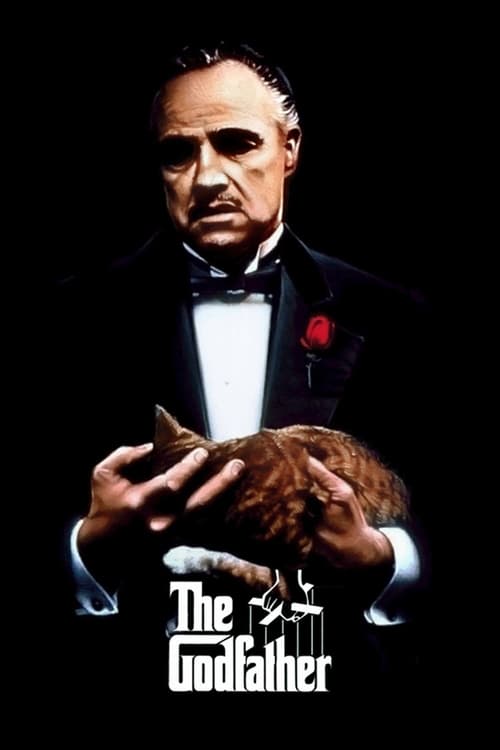
The Godfather
Francis Ford Coppola's "The Godfather" isn't just a movie; it's a cinematic landmark that redefined the gangster genre and left an indelible mark on popular culture. This epic tale of power, family, and betrayal continues to captivate audiences with its intricate storytelling and unforgettable performances.
Director
Release Year
1972
Runtime
175 minutes
Main Cast
Marlon Brando, Al Pacino, James Caan, Robert Duvall, Richard S. Castellano
About The Godfather
Set in the post-WWII era, "The Godfather" introduces us to the Corleone family, a powerful Italian-American crime dynasty led by the aging patriarch, Vito Corleone. The film masterfully explores themes of family loyalty, the corrupting influence of power, and the complex choices individuals make when faced with impossible circumstances. At its heart, it's a story about the transformation of Michael Corleone, Vito's youngest son, from an outsider to the ruthless head of the family, a journey propelled by a series of violent events and betrayals.
Critically acclaimed upon its release, "The Godfather" was a massive commercial success and garnered numerous accolades, including three Academy Awards: Best Picture, Best Actor for Marlon Brando, and Best Adapted Screenplay for Coppola and Mario Puzo. Its pervasive influence can be seen in countless films, television shows, and even real-world perceptions of organized crime. The film's iconic dialogue, memorable characters, and sweeping narrative have cemented its place as one of the greatest films ever made, profoundly impacting how stories of crime and power are told.
The film's enduring legacy lies in its rich character development and its unflinching look at the moral ambiguities of its characters. It transcends the crime genre by delving deep into the human condition, exploring themes of tradition versus modernity, and the immigrant experience in America. "The Godfather" continues to be studied, referenced, and celebrated for its artistic merit and its profound contribution to cinematic history, captivating new generations of viewers with its timeless story of ambition, loyalty, and the inevitable cycle of violence.
Drafts Featuring The Godfather
Every SnakeDrafts listicle where this movie appears
The Best Marlon Brando Movies Ranked
Ranked #1
The Essential Diane Keaton Movie Ranking: Every Must-Watch Film
Ranked #2
The Definitive James Caan Career Ranking: His Must-Watch Performances
Ranked #1
Robert Duvall's Greatest Movie Roles Ranked
Ranked #1
Francis Ford Coppola's Greatest Films Ranked
Ranked #1
Top 1972 Movies Ranked
Ranked #1
Top Drama Movies Ranked
Ranked #2
The Best Movies of the 1970s Ranked
Ranked #1
The Complete Ranking of Talia Shire Movies
Ranked #1
The Greatest Crime Movies Ranked
Ranked #1
The Greatest Crime Movies of 1972
Ranked #1
The Greatest 1970s Crime Movies Ranked
Ranked #1
The Best Al Pacino Movies Ranked
Ranked #1
Similar Movies
Movies related to The Godfather
Frequently Asked Questions
Everything you need to know about The Godfather
- The lengthy wedding sequence at the beginning of "The Godfather" serves as a brilliant microcosm of the Corleone family's world. It introduces key characters, establishes the delicate balance between family celebration and illicit business, and immediately immerses the audience in the customs and power dynamics of the Corleone empire. It subtly foreshadows the intertwined nature of personal and criminal affairs that will define the narrative.
- Oranges in "The Godfather" are often seen as a subtle but potent symbol of impending doom or death. Their appearance frequently precedes moments of violence or significant ill fortune for the Corleone family, such as Vito Corleone being shot after buying oranges or Don Fanucci eating an orange before being assassinated. This visual motif adds a layer of ominous foreshadowing and tension to the narrative.
- Michael Corleone's arc from a war hero eager to distance himself from the family business to the ruthless new Don is central to the film's exploration of fate and the corrupting nature of power. His transformation highlights the idea that even those who try to escape their origins can be inevitably drawn back into a cycle of violence and moral compromise, ultimately sacrificing their innocence for the sake of family and power.
- Peter Clemenza's line, "Leave the gun, take the cannoli," is iconic because it perfectly encapsulates the chilling casualness of violence within the Corleone world, juxtaposed with the mundane act of remembering a pastry. It highlights the brutal pragmatism and moral detachment of the characters, where murder can be just another item on a to-do list alongside a simple errand, making it both darkly humorous and deeply unsettling.
- "The Godfather" profoundly shaped and, in many ways, romanticized the public perception of the Mafia. It introduced a nuanced portrayal of organized crime figures, showing them as complex individuals with family values and internal codes, rather than one-dimensional villains. This portrayal, while critically acclaimed, also sparked debate about its influence on how Italian-Americans and mobsters are depicted in media, leaving a lasting legacy on the genre and cultural discourse.
- "The Godfather" profoundly shaped and, in many ways, romanticized the public perception of the Mafia. It introduced a nuanced portrayal of organized crime figures, showing them as complex individuals with family values and internal codes, rather than one-dimensional villains. This portrayal, while critically acclaimed, also sparked debate about its influence on how Italian-Americans and mobsters are depicted in media, leaving a lasting legacy on the genre and cultural discourse.

