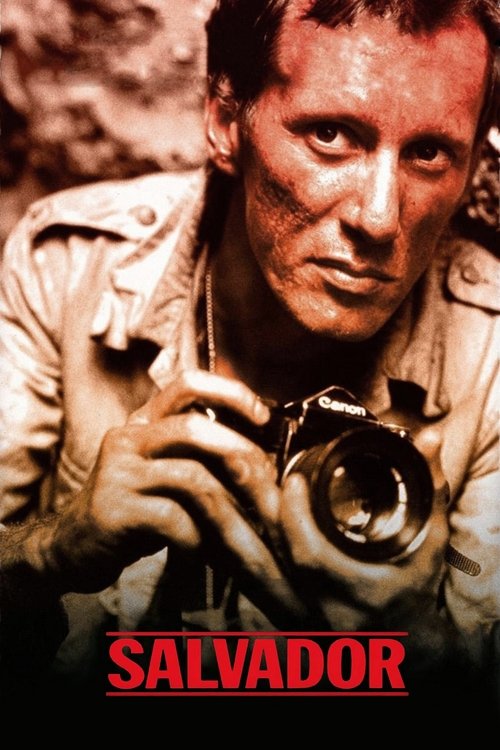
Salvador
In the volatile landscape of 1980 El Salvador, a jaded American journalist dives headfirst into chaos, navigating political unrest and personal peril to deliver a gripping, unflinching account of a nation on the brink. This intense drama offers a visceral look at the Salvadoran Civil War through the eyes of a man caught between his profession and a desperate fight for survival.
Director
Release Year
1986
Runtime
123 minutes
Main Cast
James Woods, Jim Belushi, Michael Murphy, John Savage, Elpidia Carrillo
About Salvador
Oliver Stone's "Salvador" is a visceral and often unsettling journey into the heart of a nation consumed by conflict. Released in 1986, the film throws viewers directly into the tumultuous Salvadoran Civil War, a period often overlooked in mainstream cinema. Stone, known for his politically charged narratives, doesn't shy away from depicting the brutal realities of the conflict, forcing audiences to confront uncomfortable truths about intervention and human cost. Its raw, documentary-style approach immediately struck a chord, differentiating it from more sanitized war films.
The narrative centers on down-on-his-luck journalist Richard Boyle, brilliantly portrayed by James Woods, who travels to El Salvador seeking a story and a quick buck. What he finds instead is a moral quagmire, as he becomes increasingly entangled with both the leftist guerrillas and the U.S.-backed military dictatorship. The film expertly balances Boyle's cynical yet ultimately humanistic perspective with the stark backdrop of political violence and social injustice. While not shying away from the atrocities committed by all sides, the film primarily focuses on the plight of the Salvadoran people and the complex geopolitical forces at play.
Upon its release, "Salvador" garnered significant critical attention, particularly for James Woods' electrifying performance, which earned him an Academy Award nomination for Best Actor. The film was praised for its bold storytelling and its willingness to tackle a controversial subject head-on. While not a massive box office success, its critical acclaim and lasting impact on conversations surrounding U.S. foreign policy and the role of journalism in conflict cemented its place as a significant work in Stone's filmography. It remains a powerful and relevant piece of cinema, inviting continued discussion about historical events and their echoes in contemporary global affairs.
The legacy of "Salvador" extends beyond its initial reception, serving as a vital cinematic record of a complex historical moment. It challenged audiences to look beyond headlines and consider the human element of international conflicts. The film's unflinching portrayal of brutality and corruption, alongside moments of profound human connection, ensures its continued relevance. It stands as a testament to Oliver Stone's distinctive directorial voice and his commitment to exploring the darker corners of political history, making it a crucial watch for anyone interested in political thrillers or historical dramas.
Drafts Featuring Salvador
Every SnakeDrafts listicle where this movie appears
Similar Movies
Movies related to Salvador
Frequently Asked Questions
Everything you need to know about Salvador
- The movie 'Salvador' primarily depicts the Salvadoran Civil War, focusing on the turbulent political and social conflict in El Salvador during the early 1980s. It highlights the struggles between leftist guerrilla groups and the right-wing military dictatorship.
- The protagonist, an American journalist, initially comes to El Salvador to cover the civil war as part of his reporting. However, he quickly becomes deeply entangled in the dangerous political situation, involving himself with various factions and trying to protect personal connections.
- The protagonist faces significant danger as he navigates through hostile environments controlled by both guerrilla fighters and the military regime. His mission is complicated by ongoing violence, political intrigue, and shifting allegiances within the war-torn country.
- The film explores themes such as political corruption, the moral complexities of war, journalistic integrity under duress, and the human impact of conflict. It also delves into issues of loyalty, survival, and the cost of intervention.
- The film depicts journalism as a dangerous, often morally ambiguous endeavor in wartime situations. It shows how journalists can become both observers and participants, struggling to report truthfully while ensuring their own survival and ethical boundaries.
- Oliver Stone directed 'Salvador,' and he is known for his politically charged and intense storytelling style. His approach in this film involves a gritty, realistic portrayal of war and the complexities of American involvement abroad.
- Yes, the film presents perspectives from both the leftist guerrilla groups and the right-wing military forces. It aims to provide a nuanced view of the conflict, highlighting the harsh realities faced by all parties involved.
- Upon its release, 'Salvador' was noted for raising awareness about the Salvadoran Civil War and American foreign policy in Central America. The film sparked discussions on the ethical responsibilities of governments, the media, and individuals during international crises.

