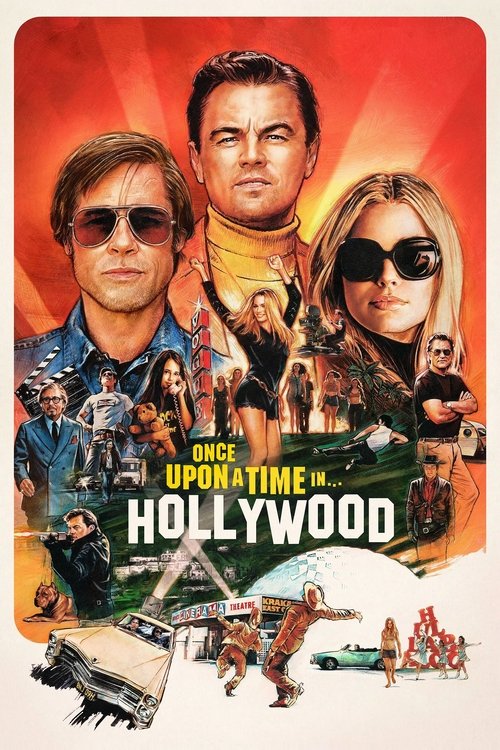
Once Upon a Time... in Hollywood
Quentin Tarantino's "Once Upon a Time... in Hollywood" is an evocative ode to 1960s Hollywood, blending comedy, drama, and thriller elements into a richly textured cinematic experience. Set against the backdrop of a changing film industry, the story follows fading TV star Rick Dalton and his stunt double Cliff Booth as they navigate the glitz and grime of Los Angeles in 1969. The film masterfully intertwines fictional narratives with real historical figures, creating a nostalgic yet gripping portrayal of Hollywood's golden age.
Director
Release Year
2019
Runtime
162 minutes
Main Cast
Leonardo DiCaprio, Brad Pitt, Margot Robbie, Emile Hirsch, Margaret Qualley
About Once Upon a Time... in Hollywood
"Once Upon a Time... in Hollywood" is a cultural time capsule that captures the glimmer and darkness of late 1960s Hollywood, a period marked by seismic shifts in cinema and society. Tarantino's film explores themes of friendship, fame, and the struggle to adapt to an evolving industry, all while paying homage to iconic figures of the era such as Sharon Tate. The movie's careful attention to period detail—from fashion to music to set design—immerses viewers in a world on the brink of transformation.
The plot centers on Rick Dalton, a TV actor whose career is waning, and Cliff Booth, his loyal stuntman. Their lives intersect with real historical events and people, offering a fictionalized but deeply resonant look at Hollywood's underbelly. The narrative is richly layered, blending humor with tension, and culminating in an inventive reimagining of late 1960s Hollywood events.
Critically acclaimed for its screenplay, direction, and stellar performances—particularly by Leonardo DiCaprio and Brad Pitt—the film garnered numerous awards and nominations. Brad Pitt won the Academy Award for Best Supporting Actor for his compelling role as Cliff Booth, highlighting the film's blend of star power and character depth. Its impact continues to be felt in how filmmakers and audiences view the golden era of Hollywood storytelling.
Beyond its awards, "Once Upon a Time... in Hollywood" has sparked discussions about nostalgia, violence in media, and the mythologizing of Hollywood history, cementing its legacy as a provocative and stylish exploration of legend versus reality. Tarantino’s unmistakable dialogue and cinematography contribute to a film that is both a love letter and a critique of Hollywood's past, cementing its place in contemporary cinema.
Drafts Featuring Once Upon a Time... in Hollywood
Every SnakeDrafts listicle where this movie appears
The Best Leonardo DiCaprio Movies
Ranked #6
The Best Al Pacino Movies Ranked
Ranked #12
The Best Michael Madsen Movies Ranked
Ranked #13
The Best Margot Robbie Movies Ranked
Ranked #2
The Best Kurt Russell Movies Ranked
Ranked #10
Best Movies Starring Austin Butler
Ranked #4
The Definitive Sydney Sweeney Movie Ranking
Ranked #1
Emile Hirsch Decisive Filmography Ranking: The Essential Movies
Ranked #2
The Ultimate Brad Pitt Movie Ranking: Every Must-Watch Performance
Ranked #1
Damian Lewis: His Most Essential Movie Roles Ranked
Ranked #1
The Best Dakota Fanning Films Ranked
Ranked #4
Timothy Olyphant Movies Ranked From Worst to Best
Ranked #1
Every Quentin Tarantino Movie Ranked
Ranked #2
The Best Movies of the 2010s Ranked
Ranked #5
2019's Best Movies Ranked
Ranked #1
The Ultimate Ranking of Bruce Dern Movies
Ranked #5
The Best 2010s Thriller Movies Ranked
Ranked #30
Similar Movies
Movies related to Once Upon a Time... in Hollywood
Frequently Asked Questions
Everything you need to know about Once Upon a Time... in Hollywood
- The relationship between Rick Dalton and Cliff Booth highlights themes of loyalty, friendship, and survival in a tough industry. Cliff serves as both a protector and grounding force for Rick, reflecting the bond that sustains them through Hollywood's ups and downs.
- The film weaves real historical figures like Sharon Tate into its fictional narrative to blur the lines between reality and fantasy. This approach honors the legacy of those individuals while reimagining events to explore deeper themes of Hollywood's allure and darkness.
- The 1969 Hollywood backdrop is crucial as it represents a time of transition and upheaval in the film industry and American culture. This period setting allows the film to explore themes of change, nostalgia, and the eventual end of an era.
- Brad Pitt's performance is lauded for its charisma, understated complexity, and physicality. His portrayal brings nuance to Cliff Booth, making him a deeply relatable and iconic character that balances humor with intensity.
- While the film includes references to the Manson Family and the atmosphere surrounding their crimes, it chooses a fictionalized and alternate history approach rather than a direct depiction. This creative choice adds tension and unpredictability to the story.
- Rick Dalton's journey explores themes of aging, relevance, and reinvention within Hollywood. His struggles symbolize broader questions about identity and the fear of obsolescence in a rapidly changing entertainment landscape.
- The film's soundtrack features carefully selected 1960s tracks that enhance the period authenticity and mood. Music is used to evoke nostalgia, underscore emotional beats, and complement the storytelling rhythm.
- Yes, the film includes several standout lines that reflect Tarantino's sharp dialogue style, such as Rick Dalton's reflections on acting and fame. These quotes often underscore the film's themes of change, regret, and camaraderie.

