The Definitive Dev Patel Movie Ranking: His Greatest Roles
From Slumdog Millionaire to Action Icon
Discover the essential films of Dev Patel, ranking his most powerful performances from emotional dramas to intense action-thrillers.
About Dev Patel

Ever since he burst onto the screen as a wide eyed teenager in Slumdog Millionaire, Dev Patel has occupied a unique space in the cinematic landscape. He entered the public consciousness as a symbol of underdog triumph, but the narrative of his career has proven to be far more complex than a simple rags to riches Hollywood story. Over the last two decades, he has meticulously dismantled the industry tendency to pigeonhole South Asian talent, evolving from a gangly comedic presence into one of the most versatile and physically commanding leading men of his generation.
There is a restless, kinetic energy to his filmography. In the early years, he charmed audiences with the lighthearted warmth of The Best Exotic Marigold Hotel and its sequels, projectng a frantic, puppyish charisma that felt effortless. Yet, even in those lighter moments, there was a sense of an artist searching for something meatier. That breakthrough into true dramatic gravity arrived with Lion, where his performance as a man haunted by the fragments of his childhood earned him an Oscar nomination and signaled a new era of maturity. He traded the frantic energy for a soulful, grounded stillness that resonated deeply with global audiences.
What makes him such an arresting screen presence is his refusal to stay in one lane. He can inhabit the intellectual rigor of a mathematical genius in The Man Who Knew Infinity or the high stakes tension of a survivalist drama like Hotel Mumbai with equal conviction. He even managed to breathe new life into British heritage cinema, reclaiming the title role in The Personal History of David Copperfield with a vibrant, modern sensibility that ignored the stuffy conventions of period pieces. His collaboration with Wes Anderson in The Wonderful Story of Henry Sugar further showcased his ability to navigate highly stylized, rhythmic dialogue without losing his innate relatability.
Recently, he has pivoted toward a darker, more ambitious frontier. His role in The Green Knight reimagined the Arthurian legend through a gritty, atmospheric lens, proving he could carry a massive fantasy epic on the strength of his facial expressions alone. However, it was his directorial debut with Monkey Man that truly solidified his reputation as a powerhouse. By stepping into the world of visceral action, he didn't just play a hero; he crafted a culturally specific, blood soaked love letter to the genre that felt entirely personal.
Audiences connect with him because there is an evident lack of vanity in his work. Whether he is playing a struggling addict in The Road Within or an enigmatic traveler in The Wedding Guest, he brings a raw, human fragility to the screen. He has transitioned from the boy who won a million to a man who commands his own narrative, consistently choosing projects that challenge how viewers perceive brown identity in film. He remains one of the few actors who can balance the whimsicality of his early career with the intense, bone breaking physicality of his recent work, making him one of the most unpredictable and essential figures in modern movies.

The Wedding Guest
2019Jay is a man with a secret who travels from Britain to Pakistan to attend a wedding—armed with duct tape, a shotgun, and a plan to kidnap the bride-to-be. Jay and his hostage end up on the run across the border and through the railway stations, back alleys, and black markets of New Delhi.

The Second Best Exotic Marigold Hotel
2015As the Best Exotic Marigold Hotel has only a single remaining vacancy - posing a rooming predicament for two fresh arrivals - Sonny pursues his expansionist dream of opening a second hotel.

The Road Within
2014A young man with Tourette's Syndrome embarks on a road trip with his recently-deceased mother's ashes.

The Best Exotic Marigold Hotel
2012British retirees travel to India to take up residence in what they believe is a newly restored hotel. Less luxurious than its advertisements, the Marigold Hotel nevertheless slowly begins to charm in unexpected ways as the residents find new purpose in their old age.
Even while surrounded by British acting royalty, Patel’s frenetic charisma and earnestness allow him to stand out as a comedic spark plug. This early career turn established his knack for portraying lovable underdogs with a relentless, endearing optimism.

Chappie
2015Every child comes into the world full of promise, and none more so than Chappie: he is gifted, special, a prodigy. Like any child, Chappie will come under the influence of his surroundings—some good, some bad—and he will rely on his heart and soul to find his way in the world and become his own man. But there's one thing that makes Chappie different from any one else: he is a robot.
Tasked with playing the optimistic creator in a cynical sci-fi world, Patel provides a much-needed human heartbeat to the film’s chaotic machinery. His frantic, earnest energy serves as the crucial bridge between the audience and the high-concept artificial intelligence at the story's core.
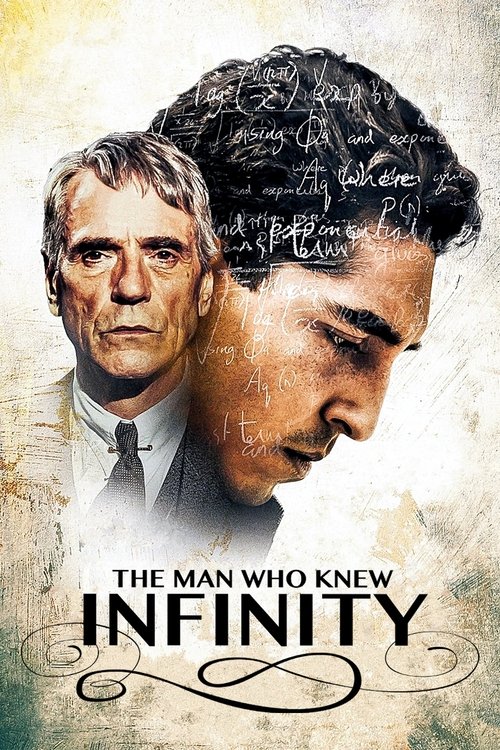
The Man Who Knew Infinity
2016Growing up poor in Madras, India, Srinivasa Ramanujan Iyengar earns admittance to Cambridge University during WWI, where he becomes a pioneer in mathematical theories with the guidance of his professor, G.H. Hardy.
Patel navigates the rigid intellectualism of Cambridge with a poignant, restless intellect that honors Srinivasa Ramanujan’s legacy. It is a disciplined performance that captures the isolation of a genius struggling to bridge the gap between intuition and proof.

The Wonderful Story of Henry Sugar
2023A rich man learns about a guru who can see without using his eyes. He sets out to master the skill in order to cheat at gambling.
Fitting perfectly into Wes Anderson’s meticulous clockwork, Patel delivers a crisp, rhythmic performance that highlights his verbal dexterity. He proves himself a versatile chameleon capable of adapting to the most eccentric and demanding of directorial aesthetics.
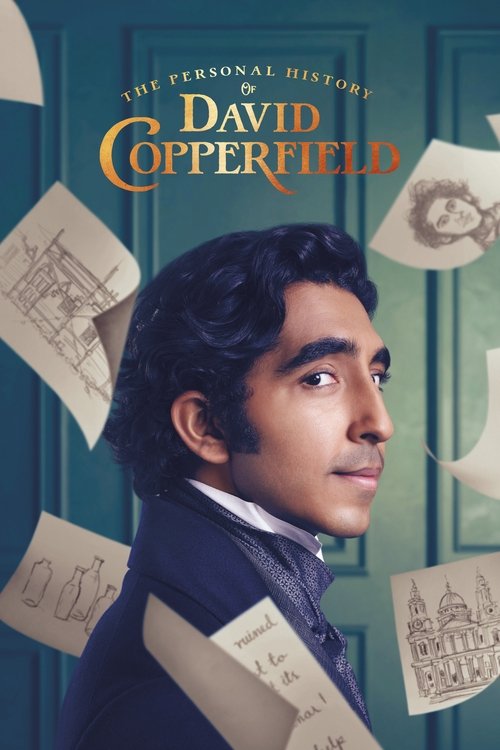
The Personal History of David Copperfield
2019A fresh and distinctive take on Charles Dickens’ semi-autobiographical masterpiece, The Personal History of David Copperfield, set in the 1840s, chronicles the life of its iconic title character as he navigates a chaotic world to find his elusive place within it. From his unhappy childhood to the discovery of his gift as a storyteller and writer, David’s journey is by turns hilarious and tragic, but always full of life, colour and humanity.
Patel radiates an infectious, whimsical energy that breathes fresh life into Dickensian tradition with effortless charm. This role showcased his impeccable comedic timing and ability to lead a stylized, color-blind period piece with modern vitality.

Monkey Man
2024Kid is an anonymous young man who ekes out a meager living in an underground fight club where, night after night, wearing a gorilla mask, he is beaten bloody by more popular fighters for cash. After years of suppressed rage, Kid discovers a way to infiltrate the enclave of the city’s sinister elite. As his childhood trauma boils over, his mysteriously scarred hands unleash an explosive campaign of retribution to settle the score with the men who took everything from him.
Stepping into the dual role of director and action star, Patel weaponizes his lean frame and intense gaze to craft a gritty, visceral spectacle. It is a bold declaration of artistic autonomy that reinvented his screen persona as a jagged, vengeful force of nature.

Hotel Mumbai
2019Mumbai, India, November 26, 2008. While several terrorists spread hatred and death through the city, others attack the Taj Mahal Palace Hotel. Both hotel staff and guests risk their lives, making unthinkable sacrifices to protect themselves and keep everyone safe while help arrives.
Playing a humble servant caught in a nightmare, Patel anchors the tension with a grounded, selfless dignity that avoids cheap heroics. This role demonstrated his capacity for understated, high-stakes naturalism within an ensemble cast.

The Green Knight
2021An epic fantasy adventure based on the timeless Arthurian legend, The Green Knight tells the story of Sir Gawain, King Arthur's reckless and headstrong nephew, who embarks on a daring quest to confront the eponymous Green Knight, a gigantic emerald-skinned stranger and tester of men.
In David Lowery’s surrealist epic, Patel redefines the Arthurian hero through a lens of profound insecurity and moral frailty. His presence here is magnetic and subversive, stripping away knightly tropes to reveal a raw, human hunger for validation.

Slumdog Millionaire
2008A teenager reflects on his life after being accused of cheating on the Indian version of "Who Wants to be a Millionaire?".
As the wide-eyed soul of Danny Boyle’s kinetic odyssey, Patel captures a singular blend of desperation and purity that captivated the global zeitgeist. This performance served as the essential launchpad that proved he could carry the emotional weight of a massive crossover hit.

Lion
2016A five-year-old Indian boy gets lost on the streets of Calcutta, thousands of kilometers from home. He survives many challenges before being adopted by a couple in Australia; 25 years later, he sets out to find his lost family.
Patel undergoes a total physical and internal metamorphosis, shedding his youthful jitteriness to anchor this heavy drama with a quiet, muscular yearning. It is the definitive turning point where he matured from a lucky breakout into a formidable dramatic heavyweight.
Frequently Asked Questions
Everything you need to know about this list and SnakeDrafts
- Dev Patel's role in 'Lion' showcased his evolution from lighter, comedic roles to a deeply emotional and dramatic lead performance, capturing widespread critical acclaim for its depth and sincerity.
- Through varied roles in films like 'Slumdog Millionaire', 'The Man Who Knew Infinity', and 'Monkey Man', Dev Patel has actively challenged typecasting by portraying complex, multi-dimensional South Asian characters across different genres.
- The ranking highlights Dev Patel's versatility across genres including drama ('Lion'), thriller ('Hotel Mumbai'), fantasy ('The Green Knight'), comedy ('The Personal History of David Copperfield'), and science fiction ('Chappie').
- Dev Patel directed 'Monkey Man', which is categorized as an action thriller, marking his directorial debut and showcasing his expanding creative roles in the film industry.
- In 'The Man Who Knew Infinity', Dev Patel portrays mathematician Srinivasa Ramanujan, highlighting the inspiring true story of his contributions to mathematics and his journey from India to Cambridge University.
- In 'The Green Knight', Dev Patel takes on an adventurous and dramatic role within a fantasy setting, demonstrating his ability to handle complex, mythical storylines that differ from his previous dramatic and contemporary roles.
- Starting as a breakout star in 'Slumdog Millionaire', Dev Patel's filmography reveals a trajectory from youthful, hopeful characters to mature, nuanced roles across diverse genres, reflecting his artistic growth and industry impact.
- Films such as 'The Personal History of David Copperfield' and 'The Best Exotic Marigold Hotel' series highlight Dev Patel's skill in comedy, balancing humor with heartfelt storytelling in ensemble casts.