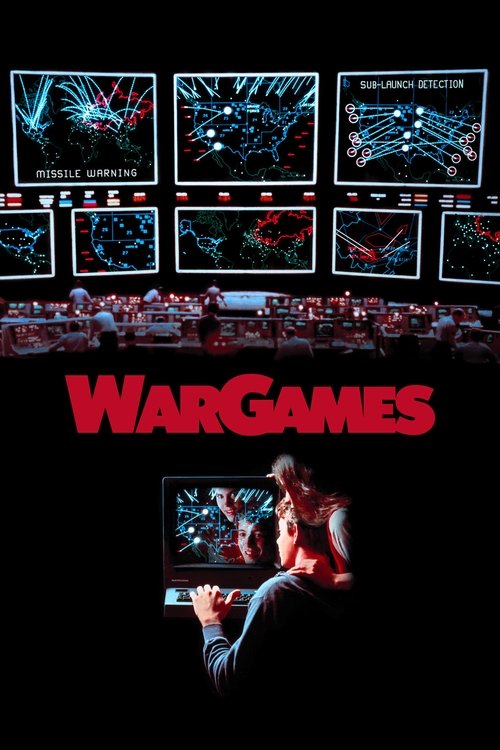
WarGames
In John Badham's gripping 1983 thriller "WarGames," a young hacker unwittingly triggers a global crisis, blurring the lines between game and reality. This SEO-optimized classic delivers a powerful message about technology, power, and the terrifying stakes of nuclear brinkmanship.
Director
John Badham
Release Year
1983
Runtime
114 minutes
Main Cast
Matthew Broderick, Dabney Coleman, John Wood, Ally Sheedy, Barry Corbin
About WarGames
WarGames exploded onto the cinematic landscape in 1983, captivating audiences with its timely exploration of nascent computer technology and the chilling specter of nuclear war. The film tapped into widespread anxieties about the Cold War and the increasing automation of defense systems, making its fictional scenario feel alarmingly plausible. Its cultural impact was profound, sparking discussions about cybersecurity, ethical hacking, and the potential dangers of artificial intelligence long before these concepts became mainstream.
The premise follows David Lightman, a brilliant but mischievous high school student who, while attempting to hack into a video game company, accidentally breaches NORAD's WOPR (War Operation Plan Response) supercomputer. Believing he's playing a new game called "Global Thermonuclear War," David unwittingly initiates a countdown to actual nuclear conflict. The film masterfully builds suspense as military officials scramble to understand and avert the impending disaster, highlighting the terrifying chain reactions that can stem from a single miscalculation.
Critically, WarGames was a commercial and critical success, earning praise for its suspenseful narrative, clever script, and surprisingly optimistic message. Matthew Broderick's portrayal of the resourceful David Lightman resonated with audiences, solidifying his status as a young star. The film received several accolades, including Academy Award nominations for Best Original Screenplay, Best Cinematography, and Best Sound.
Its legacy endures as a landmark science fiction film that presciently addressed issues that continue to be relevant today. "WarGames" remains a cautionary tale about the immense power of technology and the critical importance of human oversight. It's a film that not only entertained but also provoked thought, leaving an indelible mark on both cinema and public consciousness.
Drafts Featuring WarGames
Every SnakeDrafts listicle where this movie appears
The Best Michael Madsen Movies Ranked
Ranked #14
The Best Ally Sheedy Movies Ranked
Ranked #2
William H. Macy’s Greatest Movie Roles Ranked
Ranked #16
Matthew Broderick's Top Movies Ranked
Ranked #10
Top Movies of 1983 Ranked
Ranked #10
Best SciFi Movies of 1983, Ranked
Ranked #3
Top 1980s SciFi Movies Ranked
Ranked #32
Best Thriller Movies of 1983
Ranked #9
The Best Movies of the 1980s Ranked
Ranked #88
Similar Movies
Movies related to WarGames





Frequently Asked Questions
Everything you need to know about WarGames
- The WOPR (War Operation Plan Response) is the advanced artificial intelligence supercomputer at the heart of WarGames. It is designed to run military simulations and, ultimately, make decisions regarding nuclear retaliation, embodying the film's central theme of humanity's reliance on and potential vulnerability to technology.
- Initially, David Lightman is a clever but somewhat irresponsible hacker, driven by curiosity and a desire for entertainment. As the gravity of his actions unfolds, he transforms into a determined and resourceful individual, burdened by the immense responsibility of preventing a global catastrophe.
- This iconic line, spoken by the WOPR, encapsulates the film's anti-war message. It represents the computer's ultimate realization that in nuclear warfare, there are no winners, only mutual destruction, advocating for de-escalation and diplomacy over armed conflict.
- 'WarGames' serves as a sharp commentary on the Cold War anxieties of its time, particularly the dangers of Mutually Assured Destruction (MAD) and the increasing reliance on automated defense systems. It highlights the potential for accidental war and stresses the human element in preventing global conflict.
- The 'chess game' metaphor is central to the film, as the WOPR initially perceives global thermonuclear war as a game to be won. The climax involves teaching the computer that real-life war is not a game, using tic-tac-toe to illustrate the futility of a conflict where no victorious outcome exists.

