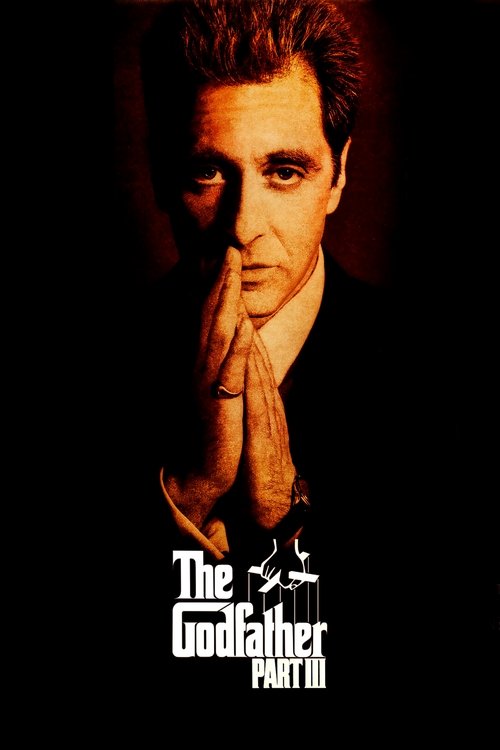
The Godfather Part III
The Godfather Part III concludes the epic saga of Michael Corleone, as he desperately attempts to legitimize his family's empire and reconcile with his past sins. This gripping crime drama explores themes of redemption, legacy, and the inescapable pull of power, offering a poignant finale to one of cinema's most iconic narratives.
Director
Release Year
1990
Runtime
162 minutes
Main Cast
Al Pacino, Diane Keaton, Talia Shire, Andy Garcia, Eli Wallach
About The Godfather Part III
Francis Ford Coppola's "The Godfather Part III" arrives nearly two decades after its predecessors, aiming to bring a definitive close to the Corleone family's tumultuous story. Set against the backdrop of late 1970s New York and Sicily, the film delves into Michael Corleone's persistent struggle to shed his criminal past and steer his family towards legitimate enterprises. His ambitious endeavors involve a significant investment in the Vatican Bank and a sincere quest for forgiveness, both personal and spiritual, for the violent deeds that have defined his reign as Don.
Critically, the film faced the monumental task of living up to the legendary status of "The Godfather" and "The Godfather Part II." While initial reception was mixed, many lauded Al Pacino's nuanced portrayal of an aging, guilt-ridden Michael, and Andy Garcia's charismatic performance as Vincent Mancini, Michael's hot-headed nephew. The narrative intricately weaves together family drama, political intrigue, and the moral complexities inherent in Michael's quest for redemption, offering a darker, more introspective look at the consequences of a life lived by the gun.
"The Godfather Part III" also garnered considerable attention for its depiction of the real-life financial scandals involving the Vatican and its ties to organized crime, adding a layer of historical commentary to the fictionalized drama. The film received seven Academy Award nominations, including Best Picture, Best Director for Coppola, and Best Supporting Actor for Garcia, underscoring its significant presence during the awards season. Its inclusion in the canon of the Godfather trilogy cemented its place in cinematic history, sparking ongoing discussions about closure, fate, and the possibility of atonement.
The legacy of "The Godfather Part III" is one of continuous re-evaluation, with many critics and audiences finding new appreciation for its dramatic weight and thematic depth in the years following its release. It serves as a powerful meditation on the corrupting influence of power and the elusive nature of peace for those entangled in a life of crime, ensuring its enduring relevance in cinematic discourse. The emotional core of the film — Michael's desperate longing for legitimacy and his struggle with the sins of his past — resonates deeply, making it an essential, albeit controversial, chapter in the Corleone saga.
Drafts Featuring The Godfather Part III
Every SnakeDrafts listicle where this movie appears
The Best Al Pacino Movies Ranked
Ranked #24
The Essential Diane Keaton Movie Ranking: Every Must-Watch Film
Ranked #12
1990's Best Movies Ranked
Ranked #33
A Ranking of Bridget Fonda's Best Movies
Ranked #3
Andy Garcia Movies Ranked Definitively
Ranked #3
The Best Crime Movies of 1990, Ranked
Ranked #2
The Complete Ranking of Talia Shire Movies
Ranked #4
The Greatest 1990s Crime Movies Ranked
Ranked #17
Ranking John Savage's Greatest Movies
Ranked #4
The Best Thriller Movies of 1990, Ranked
Ranked #14
Similar Movies
Movies related to The Godfather Part III
Frequently Asked Questions
Everything you need to know about The Godfather Part III
- The opera sequence in 'The Godfather Part III' serves as a dramatic climax, intertwining the performance on stage with the escalating violence and betrayals orchestrated by Michael Corleone's enemies. It symbolizes the tragic culmination of Michael's attempts to legitimize his family, juxtaposing art and brutality while highlighting his ultimate failure to escape his past.
- Vincent Mancini, Michael Corleone's nephew, embodies the volatile and passionate next generation of the Corleone family. His character explores the themes of继承 and the inescapable pull of the family's criminal legacy, forcing Michael to confront the difficult decision of passing on the torch despite his desire for legitimacy.
- Mary Corleone, Michael's daughter, represents his hopes for a pure and legitimate future for his family, untainted by the criminal underworld. Her tragic fate is a devastating blow to Michael, symbolizing the ultimate price he pays for his past sins and demonstrating the impossibility of truly escaping the consequences of his actions.
- Michael Corleone's silent scream at the end of the film is a powerful expression of his profound grief, despair, and the crushing weight of his life's choices. It encapsulates his personal hell, as he endures the loss of his daughter and the realization that his quest for redemption and a legitimate life has ultimately ended in tragedy and isolation.
- Michael Corleone's dealings with the Catholic Church in 'The Godfather Part III' are central to his efforts to legitimize his business and seek spiritual absolution. This relationship highlights the hypocrisy and corruption that can exist even within sacred institutions, mirroring Michael's own moral compromises and the eternal struggle between faith and worldly power.

