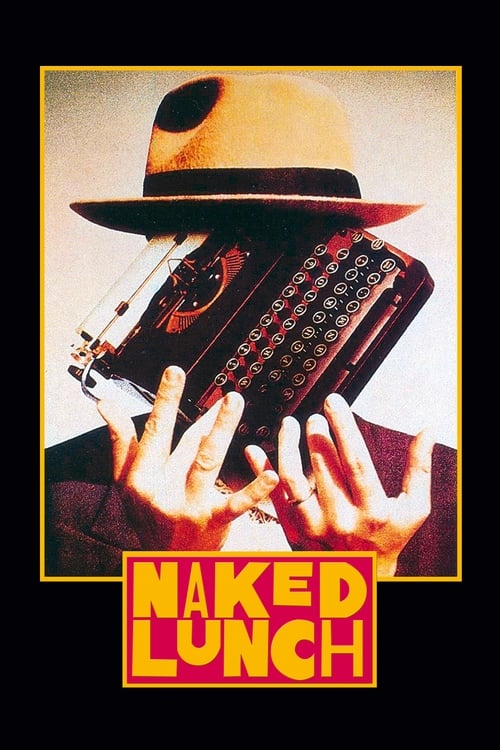
Naked Lunch
David Cronenberg's "Naked Lunch" plunges viewers into a surreal, hallucinatory world, blurring the lines between reality and delusion. This cult classic, based on William S. Burroughs' groundbreaking novel, is a mind-bending journey that explores addiction, paranoia, and the creative process through a truly unique cinematic lens.
Director
Release Year
1991
Runtime
115 minutes
Main Cast
Peter Weller, Judy Davis, Ian Holm, Julian Sands, Roy Scheider
About Naked Lunch
David Cronenberg's 1991 adaptation of William S. Burroughs' "Naked Lunch" is a visceral and often disturbing cinematic experience that faithfully captures the essence of its notoriously unadaptable source material. The film masterfully translates Burroughs' fragmented narrative and grotesque imagery into a coherent, yet still unsettling, vision. Its blend of dark humor, body horror, and psychological drama cemented its place as a quintessential Cronenbergian work.
The plot follows Bill Lee, an exterminator who descends into a nightmarish, insect-infested world after becoming addicted to his own bug powder. Following the accidental death of his wife, Joan, Bill flees to the bizarre interzone, a North African-esque city populated by eccentric characters, talking typewriters, and monstrous creatures. As he struggles to write his "report," Bill grapples with his own sanity, the nature of reality, and the pervasive corruption around him.
Critically, "Naked Lunch" garnered a polarized but passionate response. While some found its graphic content and non-linear narrative challenging, others lauded its artistic ambition, stunning visuals, and uncompromising vision. The film's intricate production design and special effects, which bring Burroughs' fantastical creatures to life, were particularly praised. It stands as a testament to Cronenberg's unique ability to transform intellectual concepts into tangible, unsettling realities.
"Naked Lunch" has had a lasting impact on cinema, influencing subsequent works that dare to explore the darker corners of the human psyche and the boundaries of narrative storytelling. Its themes of censorship, addiction, and the subversive power of art continue to resonate, making it a compelling subject for academic study and discussion. The film's distinctive aesthetic and intellectual depth have solidified its status as a seminal work in both Cronenberg's filmography and the broader landscape of surrealist cinema.
Drafts Featuring Naked Lunch
Every SnakeDrafts listicle where this movie appears
Similar Movies
Movies related to Naked Lunch
Frequently Asked Questions
Everything you need to know about Naked Lunch
- The 'bug powder' acts as both a literal and metaphorical intoxicant, propelling Bill Lee into his hallucinatory journey. It represents the destructive allure of addiction, blurring the lines between the real world and the vivid, disturbing fantasies he experiences.
- David Cronenberg's film creatively adapts Burroughs' famously non-linear and sprawling novel by weaving in biographical elements from Burroughs' life, particularly his accidental killing of his wife, Joan Vollmer. This narrative anchor provides a more structured, yet still surreal, path through the book's complex themes.
- The talking typewriters and various monstrous creatures are manifestations of Bill Lee's drug-induced hallucinations and his subconscious mind. They symbolize the oppressive forces at play in his surreal world, dictating his 'mission' and reflecting his deepest anxieties and desires related to his writing and his past.
- The 'Interzone' is a liminal and chaotic fictional city that serves as a physical and psychological space where Bill Lee's reality unravels. It represents a place free from conventional societal rules, allowing for both creative freedom and profound moral decay, reflecting Burroughs' own experiences in Tangier.
- 'Naked Lunch' delves into the often-disturbing wellspring of artistic creation, suggesting that true art can emerge from transgressive experiences and altered states. It also implicitly touches upon themes of censorship through the controversial nature of Burroughs' work, questioning societal boundaries on expression and thought.

