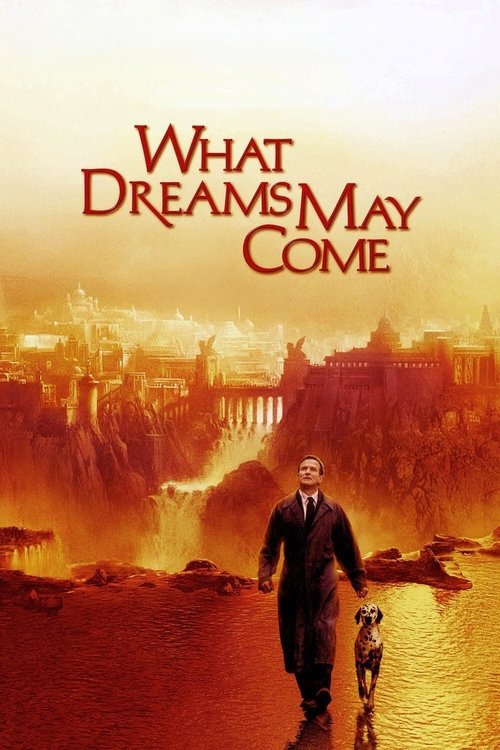
What Dreams May Come
What Dreams May Come takes audiences on a breathtaking visual journey through the afterlife, exploring profound themes of love, loss, and the enduring power of the human spirit. This visually stunning fantasy-drama challenges perceptions of heaven and hell, offering a unique and poignant cinematic experience.
Director
Vincent Ward
Release Year
1998
Runtime
113 minutes
Main Cast
Robin Williams, Cuba Gooding Jr., Annabella Sciorra, Josh Paddock, Jessica Brooks Grant
About What Dreams May Come
Vincent Ward's 1998 film "What Dreams May Come" stands as a singular achievement in visual storytelling, pushing the boundaries of cinematic artistry to depict the ethereal realms of the afterlife. At its core, the film is a deeply emotional exploration of grief and unwavering devotion, inspired by Richard Matheson's novel of the same name. Its release garnered significant attention for its groundbreaking special effects and its audacious portrayal of metaphysical concepts.
The narrative centers on Chris Nielsen (Robin Williams), who, after a tragic accident, navigates a vivid and personalized heaven. However, his idyllic existence is shattered by the suicide of his beloved wife, Annie (Annabella Sciorra), leading her to a starkly different fate. Driven by an unyielding love, Chris embarks on a perilous quest through the various levels of the afterlife to rescue her, risking his own eternal peace for hers. The film masterfully balances its fantastical elements with a raw, human emotional core, making Chris's journey resonate on a deeply personal level.
Critically, "What Dreams May Come" was lauded for its extraordinary visual effects, earning an Academy Award for Best Visual Effects. While critical reception was somewhat divided on other aspects, many praised Robin Williams's poignant performance and the film's ambitious scope. Its innovative use of color and imagery to represent emotional states and different planes of existence left a lasting impression, influencing subsequent fantasy films.
Beyond its technical achievements, the film's legacy lies in its bold tackling of existential questions: what happens after death, the definition of heaven and hell, and the limits of love. It remains a powerful meditation on interconnectedness, sacrifice, and the possibility of redemption, continuing to provoke thought and discussion among viewers. Its artistic ambition and emotional depth solidify its place as a unique and memorable entry in the fantasy-drama genre.
Drafts Featuring What Dreams May Come
Every SnakeDrafts listicle where this movie appears
Similar Movies
Movies related to What Dreams May Come




Frequently Asked Questions
Everything you need to know about What Dreams May Come
- Chris Nielsen's heaven is initially a landscape literally painted into existence by Annie, reflecting her artistic passion and their shared memories. This visual representation underscores the deeply personal and subjective nature of the afterlife, where one's inner world shapes their eternal reality. It symbolizes love's ability to create and sustain beauty, even in the realm beyond life.
- The film depicts Hades not as a fiery, demonic realm, but as a desolate and shattered reflection of the individual's tormented psyche. For Annie, it's a stark, monochromatic landscape of her own despair and guilt, a prison built from her fractured mind. This interpretation emphasizes that suffering in the afterlife can be a self-inflicted psychological state, deeply connected to unresolved earthly pain.
- The concept of reincarnation in the film, particularly the ability to 'jump off' and be reborn, offers a hopeful counterpoint to the suffering depicted. It suggests a cyclical nature to existence and the possibility of new beginnings, even after profound loss. This theme highlights the enduring hope for connection and the chance to rewrite one's destiny.
- Albert, Chris's guide in the afterlife, takes on different forms and is eventually revealed to be two different individuals: Chris's mentor (played by Cuba Gooding Jr.) and later his son. This shifting identity symbolizes the fluidity of form in the afterlife and the idea that loved ones can guide us in unexpected ways. It also underscores the profound connections that transcend physical appearance and even death.
- The ending of What Dreams May Come offers a powerful and ultimately optimistic interpretation of eternal love, despite the harrowing journey. Chris and Annie, after finding each other in the afterlife and enduring immense hardship, choose to be reborn together. This signifies that true love can overcome even the boundaries of death and the fragmented self, offering a cyclical path to reunion and enduring connection.

