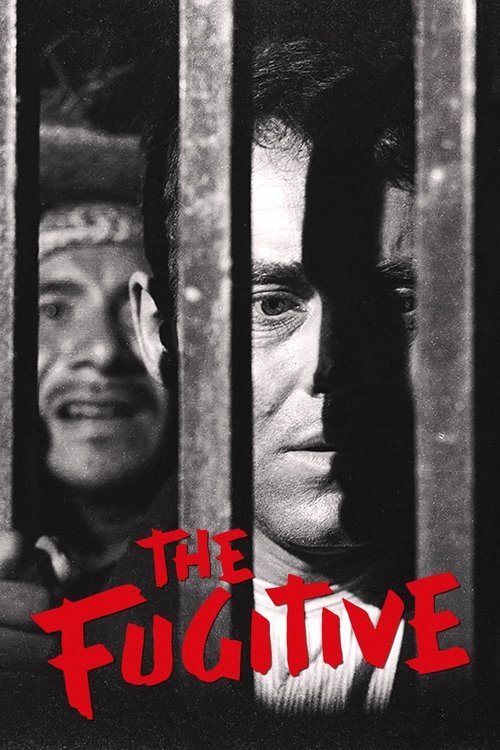
The Fugitive
In John Ford's "The Fugitive," a persecuted priest in revolutionary Mexico embarks on a perilous journey of faith and survival, forcing viewers to confront profound questions of spirituality, justice, and the human spirit under oppression. This visually stunning drama, inspired by Graham Greene's "The Power and the Glory," offers a captivating exploration of conviction amidst adversity. Experience a poignant tale of sacrifice and redemption in a world hostile to belief.
Director
Release Year
1947
Runtime
100 minutes
Genres
Main Cast
Henry Fonda, Dolores del Río, Pedro Armendáriz, J. Carrol Naish, Leo Carrillo
About The Fugitive
John Ford's "The Fugitive," released in 1947, transports audiences to the politically charged landscape of a fictionalized Mexican state where anti-clerical laws have driven the church underground. The film masterfully adapts Graham Greene's acclaimed novel, "The Power and the Glory," capturing the essence of a "whisky priest" on the run, hunted for his faith. This cinematic translation showcases Ford's signature visual style, using dramatic chiaroscuro lighting and stark compositions to emphasize the priest's isolation and the harshness of his environment.
The narrative centers on a nameless priest, portrayed with profound gravitas by Henry Fonda, as he evades capture by the relentless Lieutenant (Pedro Armendáriz). The plot, while straightforward in its pursuit, delves deep into the priest's internal struggles—his perceived unworthiness, his past sins, and his unwavering commitment to his parishioners. The film avoids overt proselytizing, instead focusing on the universal themes of moral obligation, the burden of leadership, and the enduring power of faith in the face of an existential threat. Dolores del Río delivers a memorable performance as Maria, a woman who aids the fugitive, adding layers of human connection to the priest's solitary journey.
Upon its release, "The Fugitive" garnered critical attention for its artistic ambition and its departure from typical Hollywood fare. While perhaps not as widely recognized as some of Ford's other masterpieces, it remains a significant work in his filmography, demonstrating his versatility as a director and his willingness to tackle challenging subject matter. The film's exploration of religious persecution and the resilience of belief resonated deeply with audiences in the post-World War II era, prompting reflection on individual freedom and spiritual conviction.
The legacy of "The Fugitive" lies in its timeless portrayal of a man grappling with his conscience and his destiny. It serves as a powerful testament to the human capacity for endurance and the enduring search for meaning, even when all hope seems lost. The film's striking cinematography, evocative performances, and profound thematic depth continue to captivate cinephiles and scholars, solidifying its place as a thought-provoking classic that transcends its historical context.
Similar Movies
Movies related to The Fugitive
Frequently Asked Questions
Everything you need to know about The Fugitive
- The central theme revolves around religious persecution, focusing on the anti-Catholic and anti-cleric policies enacted by a revolutionary government in Tabasco, Mexico. It highlights the struggles faced by the last remaining priest in the state.
- The film depicts the revolutionary government's efforts to suppress the Catholic Church and eradicate its influence in Tabasco. This conflict is explored through the plight of the priest who becomes the target of persecution.
- Tabasco serves as a critical backdrop, representing a region under political and religious turmoil. The setting accentuates the stakes for the characters and underscores the broader social and political issues at play.
- The priest is portrayed as a figure of faith and resilience, standing firm against oppression despite overwhelming odds. His character embodies the struggle to maintain religious identity in a hostile environment.
- John Ford employs his signature visual style, using dramatic landscapes and close-ups to convey emotional intensity. His direction emphasizes the somber tone and moral complexity of the narrative.
- While the movie is a fictional story, it is inspired by real historical tensions in Mexico during the era of anti-clerical government policies. It reflects genuine socio-political conflicts experienced in certain regions.
- Both actors deliver compelling performances that add depth and authenticity to the story. Their portrayals help humanize the larger political and religious themes, making the narrative more relatable.
- Yes, the film also touches on themes of freedom, justice, and resilience in the face of authoritarian control. It examines how individuals and communities respond to systemic oppression.

