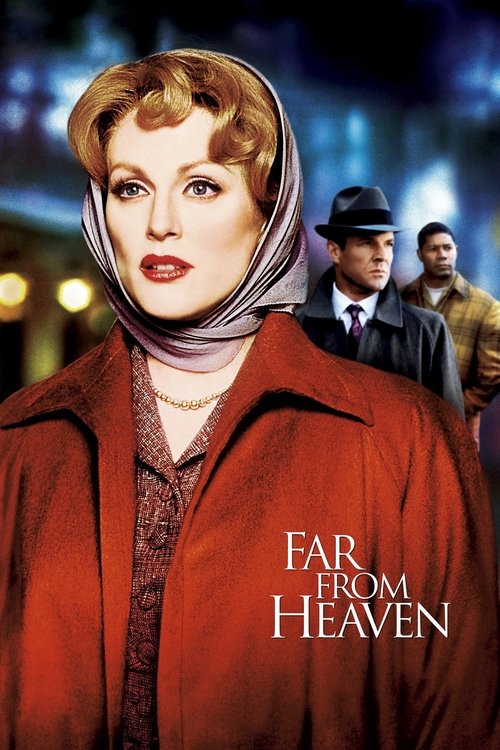
Far from Heaven
Far from Heaven is a visually stunning and emotionally powerful drama that meticulously recreates 1950s suburbia to explore the societal conventions and hidden desires lurking beneath its polished surface. This critically acclaimed film masterfully weaves together themes of racial prejudice, sexual identity, and the façade of the American dream, offering a poignant reflection on a seemingly idyllic era. Discover the film that challenges perceptions and leaves a lasting impact on its audience.
Director
Todd Haynes
Release Year
2002
Runtime
107 minutes
Main Cast
Julianne Moore, Dennis Quaid, Dennis Haysbert, Patricia Clarkson, Viola Davis
About Far from Heaven
Todd Haynes' 2002 film, "Far from Heaven," serves as a masterful homage to the lush melodramas of Douglas Sirk, particularly those from the 1950s. Haynes meticulously recreates the Technicolor aesthetic and heightened emotionality of the era, not merely as an exercise in style, but to critically examine the societal constraints and simmering discontents beneath the surface of post-war American prosperity. The film’s vibrant cinematography and meticulous production design are central to its narrative, establishing a stark contrast between outward appearances and inner turmoil.
The narrative centers on Cathy Whitaker (Julianne Moore), a seemingly perfect 1950s housewife in Hartford, Connecticut, whose idyllic life begins to unravel. Her conventional world is shattered by the discovery of her husband Frank's (Dennis Quaid) secret life, leading her to seek solace and understanding in the unexpected friendship of her African American gardener, Raymond Deagan (Dennis Haysbert). This burgeoning connection, however, becomes another source of scandal and societal condemnation in the racially segregated community. The film cleverly uses these personal crises to expose the rigid social codes and prejudices that governed the era, highlighting the stifling expectations placed upon individuals, especially women, regarding marriage, race, and sexuality.
"Far from Heaven" garnered widespread critical acclaim for its daring exploration of complex themes through the lens of a classic Hollywood genre. Julianne Moore's nuanced portrayal of Cathy earned her an Academy Award nomination for Best Actress, while the film itself received nominations for Best Original Screenplay, Best Cinematography, and Best Original Score. Critics lauded Haynes' courageous direction and the film's ability to evoke the past while delivering a potent commentary on contemporary issues of identity and acceptance. Its deliberate pacing and rich symbolism invite viewers to ponder the enduring relevance of its themes.
The film's legacy lies in its bold reinterpretation of melodrama and its unflinching examination of societal hypocrisy. "Far from Heaven" challenged audiences to look beyond the nostalgia often associated with the 1950s, revealing the profound struggles and injustices hidden beneath its polished veneer. It remains a powerful and visually arresting work that continues to resonate, demonstrating how cinematic artistry can illuminate uncomfortable truths about our history and ourselves. The film encourages a deeper understanding of the personal sacrifices made in the pursuit of societal approval.
Drafts Featuring Far from Heaven
Every SnakeDrafts listicle where this movie appears
Similar Movies
Movies related to Far from Heaven
Frequently Asked Questions
Everything you need to know about Far from Heaven
- The vibrant, saturated colors in 'Far from Heaven' are not merely decorative but serve as a powerful visual metaphor for Cathy's emotional journey. Initially, the bright hues represent her seemingly perfect suburban life, but as her world crumbles, these colors often feel claustrophobic or ironically detached from her inner turmoil, reflecting her growing isolation and disillusionment.
- Raymond Deagan represents a profound challenge to the rigid racial barriers prevalent in 1950s society. His respectful and intellectual demeanor contrasts sharply with the prejudiced attitudes he encounters, highlighting the absurdity and injustice of segregation and offering Cathy a connection built on genuine understanding rather than societal expectation.
- Cathy's meticulously coordinated and often brightly colored wardrobe initially reflects her conformity to the ideal 1950s housewife. As her personal crises deepen and she begins to question her life, subtle changes in her clothing choices, though still era-appropriate, hint at her internal struggle and growing sense of confinement within her societal role.
- 'Far from Heaven' deconstructs the idealized facade of the 1950s American Dream, revealing the profound unhappiness and repression that could exist beneath a seemingly perfect exterior. It exposes how the pursuit of this dream often demanded conformity, sacrificing individual desires and authenticity for the sake of appearances and societal acceptance.
- The film's ending is deliberately bittersweet, underscoring the enduring power of societal constraints and the personal sacrifices made in conforming to them. Cathy's final choices reflect a painful acceptance of her reality, devoid of the genuine connections she sought, leaving the audience to ponder the heavy cost of living unauthentically and the limitations placed upon personal freedom in that era.

