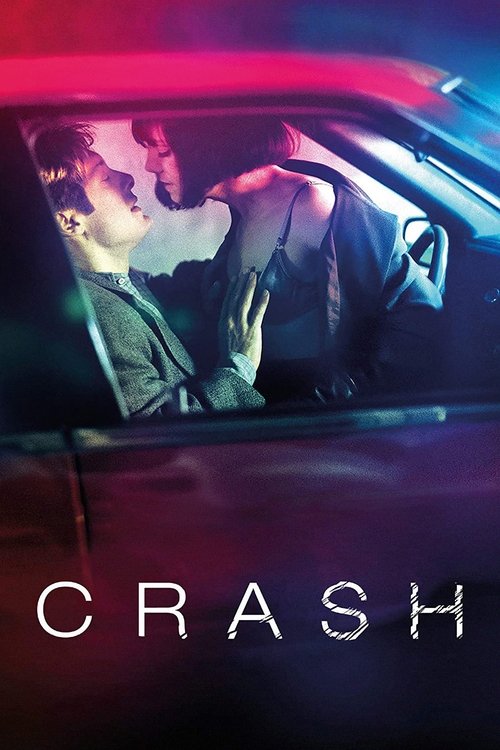
Crash
David Cronenberg's "Crash" throttles viewers into a world where desire and destruction collide, exploring the fetishistic allure of car accidents and the dark, transformative power of twisted metal and shattered glass. This provocative thriller, based on J.G. Ballard's novel, challenges perceptions of intimacy and control, leaving an indelible mark on cinematic history. Prepare for a journey into the unsettling depths of human obsession, where pleasure and pain become inextricably intertwined.
Director
Release Year
1996
Runtime
100 minutes
Main Cast
James Spader, Holly Hunter, Elias Koteas, Deborah Kara Unger, Rosanna Arquette
About Crash
David Cronenberg's 1996 film "Crash" adapted J.G. Ballard's controversial 1973 novel, pushing the boundaries of cinematic exploration into human sexuality and desire. The film delves into the lives of a group of individuals who find erotic stimulation and psychological fulfillment through car crashes, exploring the fetishistic potential of bodily harm and mechanical wreckage.
The premise centers on James Ballard (James Spader) and his wife Catherine (Deborah Kara Unger), whose lives become entangled with Vaughan (Elias Koteas), a charismatic figure who orchestrates and photographs crash recreations. Their initial fascination evolves into a disturbing journey of self-discovery, where characters seek new forms of intimacy and sensory experience through the grotesque beauty of mangled vehicles and scarred bodies. The narrative, while challenging, avoids explicit judgment, instead immersing the audience in the characters' unconventional world.
Upon its release, "Crash" ignited a firestorm of critical debate and censorship attempts, particularly in the UK. Many critics lauded Cronenberg's audacious vision and the film's unflinching gaze into taboo subjects, praising its artistic merit and intellectual depth. Its exploration of technology's impact on human behavior and the blurring lines between pleasure and peril resonated with some, while others found its themes too disturbing. The film's stark, clinical aesthetic and hypnotic score contributed to its unique, unsettling atmosphere.
The film's profound cultural impact stems from its daring examination of societal anxieties surrounding technology, violence, and evolving sexual mores. "Crash" solidified Cronenberg's reputation as a master of "body horror" and a director unafraid to confront the darker aspects of the human psyche. It remains a significant work in his filmography and a touchstone for discussions on cinematic transgression and the representation of controversial themes, continuing to provoke and fascinate audiences decades after its premiere.
Though not a conventional awards darling, "Crash" was recognized for its unique artistic vision. It received a Special Jury Prize at the 1996 Cannes Film Festival for "its originality, its daring, and its audacity," a testament to its singular power and the artistic risks it took. The film's aesthetic, themes, and performances continue to be analyzed and discussed, cementing its place as a cult classic and a challenging piece of modern cinema.
Drafts Featuring Crash
Every SnakeDrafts listicle where this movie appears
Similar Movies
Movies related to Crash


Frequently Asked Questions
Everything you need to know about Crash
- In 'Crash,' the car crashes serve as a bizarre and unsettling metaphor for human connection. For the characters, these violent events strip away societal pretenses, laying bare vulnerabilities and creating intense, almost primal bonds through shared trauma and altered perceptions of desire. This unconventional approach to intimacy challenges traditional notions of romantic and sexual relationships.
- The characters' injuries in 'Crash' are not merely physical wounds but symbolic representations of their internal psychological states and evolving desires. They become badges of honor, external manifestations of their pursuit of extreme experiences, and catalysts for deeper immersion into their subculture. These scars and physical transformations symbolize their alienation from conventional society and their embrace of a new, unsettling reality.
- Initially, James Ballard is drawn to the morbid fascination of car accidents, but his perspective profoundly shifts as he becomes more deeply involved with Vaughan and his group. What begins as curiosity morphs into a form of erotic awakening and a search for existential meaning. His increasingly active participation in crash recreations signifies his complete immersion into this transgressive world.
- 'Crash' offers a stark and unsettling commentary on the increasingly intertwined relationship between humanity and technology, specifically the automobile. The film suggests that technology, while designed for utility, can also become an extension of human desires, even the most taboo ones. It explores how machines can mediate and even transform our understanding of pleasure, pain, and identity.
- The ambiguous ending of 'Crash' leaves viewers to ponder the ultimate fate and psychological state of its characters. It suggests a cyclical nature to their obsessions, implying that the pursuit of extreme experiences through crashes may be an endless, consuming cycle. The lack of a clear resolution forces the audience to confront the film's disturbing themes long after the credits roll, leaving a lasting impression of unsettling fascination rather than definitive closure.

