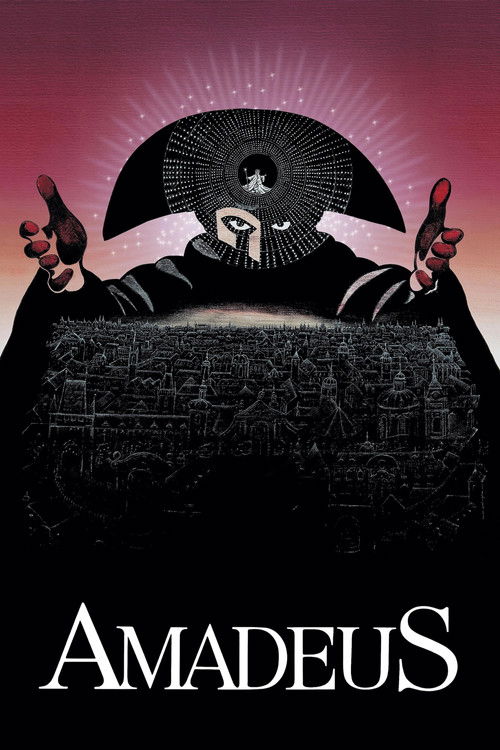
Amadeus
Immerse yourself in the opulent, yet cutthroat world of 18th-century Vienna as "Amadeus" masterfully dissects the intoxicating blend of genius and jealousy, forever changing how we perceive musical greatness. This cinematic triumph, celebrated for its lavish production and powerful performances, offers a profound exploration of artistic rivalry and the heavy cost of ambition.
Director
Miloš Forman
Release Year
1984
Runtime
160 minutes
Genres
History, Music, Drama
Main Cast
F. Murray Abraham, Tom Hulce, Elizabeth Berridge, Simon Callow, Roy Dotrice
About Amadeus
Miloš Forman's "Amadeus" isn't just a historical drama; it's a vibrant, often darkly humorous, exploration of artistic envy and divine talent. The film centers on the fictionalized rivalry between the established court composer Antonio Salieri and the prodigious, yet eccentric, Wolfgang Amadeus Mozart. Through Salieri's eyes, we witness Mozart's explosive brilliance juxtaposed with his often-vulgar personality, creating a fascinating tension that drives the narrative.
Upon its release in 1984, "Amadeus" was a critical and commercial phenomenon. Its sumptuous costumes, breathtaking set designs, and, most importantly, its masterful use of classical music, captivated audiences worldwide. The film's ability to make classical music accessible and thrilling to a broad audience cemented its place as a cultural touchstone, sparking renewed interest in Mozart's compositions.
The critical reception for "Amadeus" was overwhelmingly positive, culminating in a remarkable eight Academy Awards, including Best Picture, Best Director for Miloš Forman, Best Actor for F. Murray Abraham (for his unforgettable portrayal of Salieri), and Best Adapted Screenplay. These accolades underscored the film's artistic achievement and its profound impact on both cinematic storytelling and historical biography.
"Amadeus" endures as a timeless classic, continually lauded for its exceptional performances, particularly those of F. Murray Abraham and Tom Hulce. Its exploration of complex themes like genius, mediocrity, faith, and ambition resonates deeply, ensuring its continued relevance. The film's artistic legacy extends beyond its narrative, inspiring countless discussions about the nature of creativity and the psychological toll of envy.
Drafts Featuring Amadeus
Every SnakeDrafts listicle where this movie appears
Similar Movies
Movies related to Amadeus
Frequently Asked Questions
Everything you need to know about Amadeus
- Salieri's confession is a dramatic device, a framing narrative that allows the story to unfold from his perspective. While he believes he is confessing to Mozart's murder, it's more accurately a confession of his overwhelming envy and the spiritual struggle it caused him, rather than a literal crime.
- While 'Amadeus' takes dramatic liberties, particularly with Mozart's boorishness and 'giggling,' it aims to capture the spirit of his documented eccentricities and prodigious talent. Historical accounts suggest Mozart was indeed playful and sometimes impulsive, though perhaps not to the exaggerated extent depicted in the film.
- The masked figure commissioning the Requiem is a crucial plot point, symbolizing both death and Salieri's manipulative machinations. In reality, the commission came from Count Franz von Walsegg, but in the film, Salieri uses this figure to torment Mozart, intensifying his fear and accelerating his decline.
- The film deliberately leaves the question of literal poisoning ambiguous, emphasizing that Salieri's actions and intense psychological torment ultimately 'killed' Mozart's spirit and contributed to his demise, rather than a direct physical act. The 'poison' is more metaphorical, representing envy and sabotage.
- This contrast highlights the film's central theme: genius is often disconnected from conventional morality or personal decorum. It challenges the assumption that great artists must be virtuous people, suggesting that divine talent can reside in an imperfect vessel, leading to both awe and frustration.

