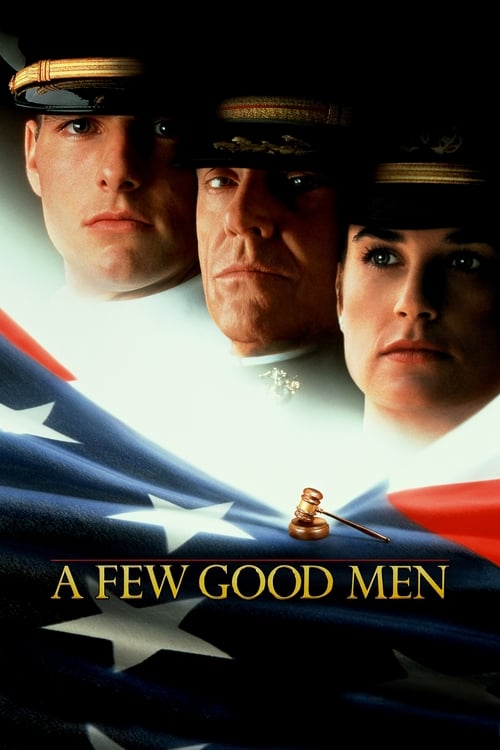
A Few Good Men
In the gripping courtroom drama "A Few Good Men," a seemingly straightforward murder case within the Marine Corps unravels into a complex web of military protocol, honor, and the pursuit of truth. This iconic film challenges viewers to question the true meaning of loyalty and justice when faced with the unyielding demands of authority.
Director
Release Year
1992
Runtime
138 minutes
Genres
Main Cast
Tom Cruise, Jack Nicholson, Demi Moore, Kevin Bacon, Kiefer Sutherland
About A Few Good Men
"A Few Good Men," directed by Rob Reiner and released in 1992, swiftly became a cultural phenomenon, embedding unforgettable lines and intense performances into the public consciousness. Its exploration of military ethics and the tension between individual morality and institutional obedience resonated deeply, sparking widespread discussion about the responsibilities that come with power.
The film plunges audiences into the high-stakes world of military justice as a young, hotshot Navy lawyer, Lieutenant Daniel Kaffee, takes on a seemingly open-and-shut case. Two Marines are accused of murder, but as Kaffee and his fellow lawyers delve deeper, they uncover a dark secret involving a "code red" – an extrajudicial punishment sanctioned by superior officers. The narrative skillfully builds suspense, leading to an explosive courtroom confrontation where the very foundations of military honor are put on trial.
Critically acclaimed upon its release, "A Few Good Men" garnered multiple Academy Award nominations, including Best Picture, and was lauded for its sharp screenplay and powerful acting. Jack Nicholson's portrayal of Colonel Nathan Jessep, in particular, earned widespread praise, delivering a performance that remains etched in cinematic history. The film's enduring legacy lies in its masterful blend of legal drama with profound ethical questions, making it a timeless examination of integrity under pressure.
Beyond its immediate success, "A Few Good Men" continues to be a benchmark for courtroom dramas, influencing subsequent films and television series with its meticulous pacing and compelling character development. It endures as a powerful narrative about standing up for what is right, even when the odds are overwhelmingly stacked against you, and the indelible impact of seeking truth in the face of deep-seated institutional resistance.
Drafts Featuring A Few Good Men
Every SnakeDrafts listicle where this movie appears
The Best of Tom Cruise Movies Ranked
Ranked #2
The Best Kevin Bacon Movies
Ranked #2
The Best Demi Moore Movies Ranked
Ranked #1
The Essential Cuba Gooding Jr. Movie Ranking
Ranked #6
The Ultimate Rob Reiner Movie Rankings
Ranked #6
The Greatest Films of 1992
Ranked #2
The Best Movies of the 1990s Ranked
Ranked #24
Ranking the Best Kevin Pollak Movies
Ranked #2
The Best Jack Nicholson Movies, Ranked: The Essential Films
Ranked #5
Similar Movies
Movies related to A Few Good Men


Frequently Asked Questions
Everything you need to know about A Few Good Men
- The 'code red' in 'A Few Good Men' represents an unauthorized disciplinary action carried out by soldiers against a fellow Marine, often involving physical hazing. It is a critical plot device that exposes the moral compromises and abuses of power within the military hierarchy, serving as the catalyst for the entire court-martial.
- Lieutenant Daniel Kaffee begins as a somewhat flippant and unmotivated lawyer, known for plea bargains rather than courtroom battles. As the case progresses, he undergoes a significant transformation, growing into a principled and determined attorney who is committed to uncovering the truth, regardless of the personal or professional cost.
- Colonel Jessep's defense centers on the controversial idea that certain harsh actions are necessary to maintain order and protect national security, often encapsulated in his famous line about needing 'men on that wall.' This theme explores the moral complexities of leadership and the perceived justifications for extraordinary measures in the name of duty.
- The final verdict finds the Marines guilty of conspiracy to commit battery but not murder, and Colonel Jessep guilty of conduct unbecoming an officer. This outcome signifies a victory for justice and accountability, demonstrating that even high-ranking officials are not above the law, and bringing a degree of closure to the protagonists while highlighting the moral victory of upholding ethical standards.
- Colonel Jessep's explosive declaration, 'You can't handle the truth!', becomes iconic because it encapsulates the film's core conflict: the clash between a desire for convenient untruths and the harsh realities of difficult truths. It speaks to the uncomfortable nature of confronting uncomfortable facts, especially when those facts challenge deeply ingrained beliefs or power structures.

