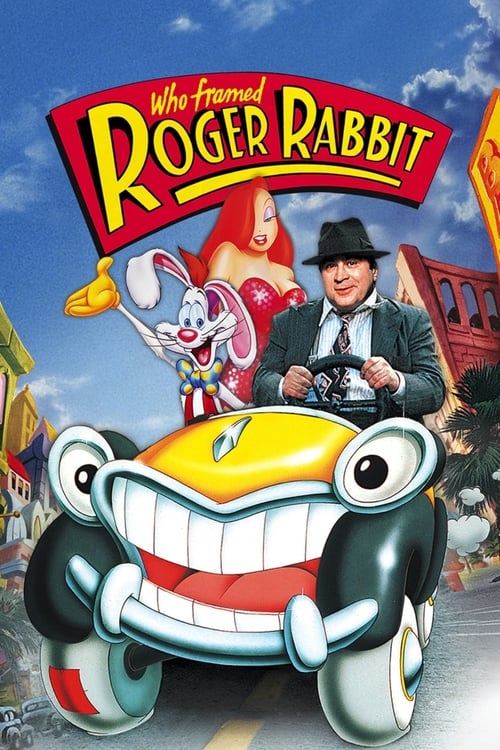
Who Framed Roger Rabbit
Step into the revolutionary world where animation and live-action collide in "Who Framed Roger Rabbit," a groundbreaking cinematic achievement that continues to enchant audiences with its unique blend of mystery, comedy, and dazzling visual effects. This neo-noir romp offers a truly unforgettable experience, solidifying its place as a quintessential genre-bending classic. Discover the magic behind this iconic film that redefined possibilities in moviemaking.
Director
Release Year
1988
Runtime
104 minutes
Main Cast
Bob Hoskins, Christopher Lloyd, Joanna Cassidy, Charles Fleischer, Kathleen Turner
About Who Framed Roger Rabbit
When "Who Framed Roger Rabbit" burst onto screens in 1988, it wasn't just a movie; it was a cultural phenomenon. Directed by Robert Zemeckis, fresh off the success of "Back to the Future," the film dared to imagine a world where cartoon characters, or 'Toons,' coexisted with humans. Its innovative spirit captivated audiences, earning it widespread critical acclaim and solidifying its status as a technological marvel that pushed the boundaries of filmmaking.
The film plunges viewers into 1947 Hollywood, a gritty, hardboiled detective story where private investigator Eddie Valiant (Bob Hoskins), a Toon-hating human, is hired to investigate the alleged infidelity of Jessica Rabbit, the stunning Toon wife of cartoon star Roger Rabbit. Things quickly escalate when Marvin Acme, owner of Toontown and Acme Corporation, is murdered, and Roger becomes the prime suspect. Valiant, still reeling from a personal tragedy involving Toons, finds himself drawn into a complex conspiracy that threatens the very existence of Toontown, blurring the lines between the animated and real worlds. The plot masterfully weaves classic detective tropes with the anarchic humor of Golden Age cartoons.
"Who Framed Roger Rabbit" was a critical and commercial triumph, lauded for its revolutionary special effects that seamlessly integrated hand-drawn animation with live-action footage. This unprecedented achievement earned it four Academy Awards, including Best Film Editing, Best Sound Effects Editing, Best Visual Effects, and a Special Achievement Academy Award for animation direction. Critics praised its daring originality, sophisticated storytelling, and the unforgettable performances, particularly Bob Hoskins's ability to convincingly interact with unseen cartoon characters.
The film's legacy is immense, not only as a trailblazer in visual effects but also for its nostalgic yet subversive celebration of animation history. It reintroduced classic cartoon characters to a new generation and offered a meta-commentary on the golden age of Hollywood and the anxieties of technological change. "Who Framed Roger Rabbit" remains a beloved classic, continually inspiring filmmakers and animators while retaining its status as a unique and endlessly rewatchable cinematic masterpiece.
Drafts Featuring Who Framed Roger Rabbit
Every SnakeDrafts listicle where this movie appears
Similar Movies
Movies related to Who Framed Roger Rabbit
Frequently Asked Questions
Everything you need to know about Who Framed Roger Rabbit
- The Dip is a potent mixture of turpentine, acetone, and benzene, specifically designed to erase Toons permanently. It serves as a terrifying and effective weapon, highlighting the vulnerability of the Toons in a human-dominated world and raising the stakes in the film's climax.
- Eddie Valiant harbors a deep-seated hatred for Toons due to a tragic incident in his past. A Toon dropped a piano on his brother, leading to his death, leaving Eddie with emotional scars and a strong prejudice against all Toons.
- Judge Doom's ultimate motivation is pure greed, driven by his desire to destroy Toontown and build a freeway in its place. He aims to monopolize transportation by eliminating the alternative of public transit, revealing a sinister capitalist ambition beneath his menacing demeanor.
- The film employed a revolutionary combination of traditional cel animation, optical compositing, and innovative use of matte work to create the seamless interaction between live-action actors and animated characters. This meticulous process involved extensive planning, specialized camera rigs, and early motion control techniques.
- Jessica Rabbit's iconic line speaks to the societal tendency to judge individuals based on their appearance rather than their character. It's a powerful statement about unfair stereotypes, challenging the notion that her seductive looks define her moral compass and hinting at her true, caring nature.
- Jessica Rabbit's iconic line speaks to the societal tendency to judge individuals based on their appearance rather than their character. It's a powerful statement about unfair stereotypes, challenging the notion that her seductive looks define her moral compass and hinting at her true, caring nature.

