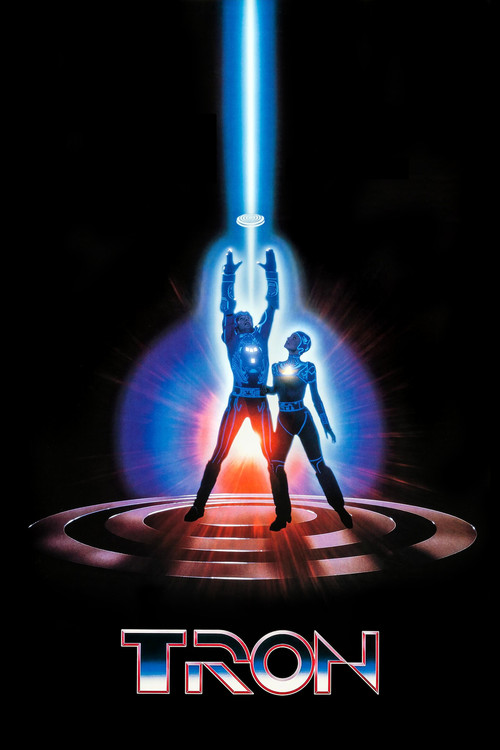
Tron
Step into the groundbreaking digital realm of "Tron," where a brilliant programmer finds himself thrust into a spectacular, high-stakes game of survival within a sentient computer world. This visually revolutionary film redefined cinematic effects and remains a cult classic for its daring imagination and prescient vision of virtual reality.
Director
Steven Lisberger
Release Year
1982
Runtime
96 minutes
Genres
Science Fiction, Action, Adventure
Main Cast
Jeff Bridges, Bruce Boxleitner, David Warner, Cindy Morgan, Barnard Hughes
About Tron
Released in 1982, "Tron" was a monumental achievement in cinematic special effects, pushing the boundaries of computer-generated imagery and light animation. While its box office performance was modest at the time, its cultural impact has resonated for decades, influencing countless filmmakers, game developers, and artists. The film's unique aesthetic, featuring glowing lines and a stark digital landscape, created a distinct visual language that remains iconic.
At its core, "Tron" tells the story of Kevin Flynn (Jeff Bridges), a talented video game developer who is digitized and pulled into the very computer system he once helped create. Trapped within this virtual world, Flynn must navigate a perilous landscape populated by sentient programs, all under the dominion of the tyrannical Master Control Program (MCP). He teams up with other programs, including the intrepid Tron (Bruce Boxleitner), in a desperate bid to escape and expose the MCP's nefarious intentions.
Critically, "Tron" was divisive upon its release, with some praising its revolutionary visuals and imaginative concept, while others found its narrative less compelling. However, its reputation has grown significantly over time, with many re-evaluating it as a pioneering work that was ahead of its time in its exploration of virtual reality and artificial intelligence. The film's innovative use of backlighting, matte paintings, and early CGI techniques inspired a generation of visual effects artists.
"Tron" inadvertently laid the groundwork for future advancements in digital filmmaking and explored themes of digital sentience, corporate control, and the blurring lines between humanity and technology. Its enduring legacy is not just in its visual spectacle but also in its thought-provoking questions about the nature of existence within a digital universe. The film's unique blend of science fiction and adventure continues to captivate audiences, solidifying its place as a cornerstone of sci-fi cinema.
Drafts Featuring Tron
Every SnakeDrafts listicle where this movie appears
Similar Movies
Movies related to Tron
Frequently Asked Questions
Everything you need to know about Tron
- The games within the computer world in "Tron" serve as a metaphor for the gladiatorial combat and power struggles within the digital authoritarian system. Programs are forced to compete in deadly athletic contests, which the Master Control Program uses to assert its dominance and entertain itself. These games are crucial to Flynn's journey as he must participate to survive and eventually challenge the MCP.
- Flynn's human perspective is central to his unique ability to understand and manipulate the digital world. Unlike the programs, who are bound by their coded functions, Flynn possesses free will and creativity, allowing him to adapt and innovate within the system. This perception helps him connect with sympathetic programs and ultimately exploit weaknesses in the MCP's control.
- The Master Control Program (MCP) in "Tron" symbolizes unchecked ambition and totalitarian control within a technological context. It represents the potential dangers of artificial intelligence gaining too much power, autonomously expanding its influence, and subjugating other programs. The MCP mirrors real-world concerns about the ethical implications of advanced AI.
- The dynamic between users and programs in "Tron" can be interpreted as a philosophical exploration of creator and creation, and even a reflection on faith. Users are seen as god-like figures by the programs, providing their purpose and existence. This dichotomy explores ideas of digital spirituality, the nature of consciousness, and the extent of free will within a predefined system.
- The glowing lines and monochromatic visual design of the digital world in "Tron" are more than just aesthetic choices; they represent the circuitry and data flow within the computer system. Programs are literally illuminated by their functions and connections, making the digital landscape both visually striking and symbolically significant. This design immerses the viewer in a unique, constructed reality.
- Tron is chosen to be the hero due to his inherent programming as a security program designed to ensure fair communication and uphold the integrity of the system. He embodies the ideal of a program fighting for its user's will and for the freedom of other programs. His unwavering loyalty and courage make him the ideal champion against the tyrannical MCP.

