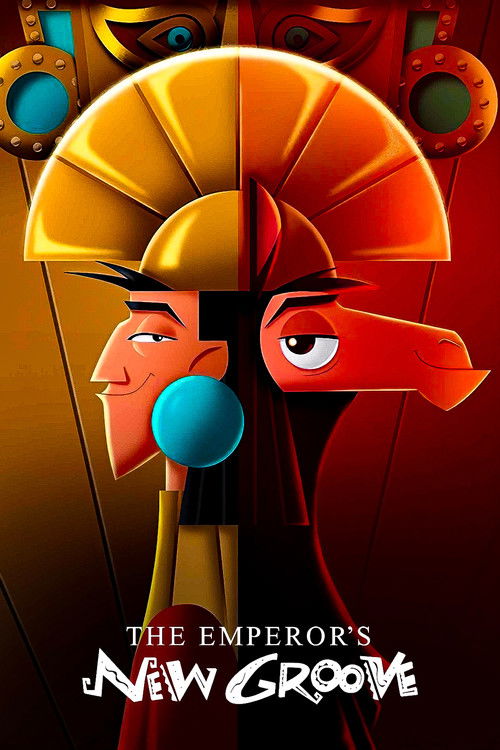
The Emperor's New Groove
Get ready for a hilarious, fast-paced adventure as a selfish emperor finds himself transformed into a llama and stranded in the jungle. "The Emperor's New Groove" is a vibrant, witty animated comedy that delivers laughs and heartwarming lessons for the whole family, exploring themes of humility and friendship.
Director
Mark Dindal
Release Year
2000
Runtime
78 minutes
Genres
Adventure, Animation, Comedy, Family, Fantasy
Main Cast
David Spade, John Goodman, Eartha Kitt, Patrick Warburton, Wendie Malick
About The Emperor's New Groove
When it was released in 2000, "The Emperor's New Groove" offered a refreshing change of pace from Disney's more traditional animated musicals. Initially conceived as a more dramatic, epic tale titled "Kingdom of the Sun," the project underwent significant changes, evolving into the irreverent buddy comedy audiences know and love. This shift in tone, embracing a more modern comedic sensibility, helped it stand out within the Disney Renaissance.
The film introduces Emperor Kuzco, a young, arrogant ruler who is accustomed to getting his own way. His plans for a lavish new summer home are disrupted when his scheming ex-advisor, Yzma, attempts to poison him. The plot takes an unexpected turn when her bumbling henchman, Kronk, accidentally transforms Kuzco into a llama instead. Stranded in the jungle, Kuzco is forced to rely on Pacha, a kind-hearted village leader whose home Kuzco threatened to destroy.
While not an immediate box office smash, "The Emperor's New Groove" garnered generally positive critical reception for its sharp humor, unique animation style, and stellar voice cast. Eartha Kitt's performance as Yzma, in particular, is often lauded as one of the most iconic villainous portrayals in animated history. Its quirky charm and memorable characters have since cemented its place as a cult classic, earning a dedicated fanbase.
The film's legacy is marked by its distinctive comedic timing and quotable dialogue, making it a beloved entry in the Disney canon. Its willingness to break from established Disney formulas, embracing a more slapstick and self-aware brand of humor, paved the way for subsequent animated features to experiment with storytelling and character archetypes. "The Emperor's New Groove" remains a testament to the power of unexpected friendships and the journey of self-discovery.
Drafts Featuring The Emperor's New Groove
Every SnakeDrafts listicle where this movie appears
Similar Movies
Movies related to The Emperor's New Groove
Frequently Asked Questions
Everything you need to know about The Emperor's New Groove
- Kuzco's transformation into a llama is a pivotal metaphor for his journey of humility. Stripped of his imperial power and human form, he is forced to experience life from a vulnerable perspective, directly confronting the consequences of his selfish actions and ultimately learning empathy.
- Yzma stands out due to her deliciously over-the-top theatricality, sharp wit, and darkly comedic machinations. Her flamboyant personality, coupled with Eartha Kitt's iconic voice performance, creates a villain who is both genuinely threatening and incredibly entertaining, making her a fan favorite.
- Pacha's persistent kindness, even in the face of Kuzco's initial arrogance and cruelty, is central to the film's message about genuine friendship and compassion. He represents the moral compass that Kuzco desperately needs, ultimately teaching the emperor the value of selflessness and community.
- 'Boom, baby!' is Kuzco's signature exclamation, embodying his exuberant self-confidence and often his belief that he has flawlessly executed a plan. It reflects his larger-than-life personality and serves as a comedic punctuation mark throughout his misadventures.
- The film's ending demonstrates Kuzco's radical transformation from a self-absorbed emperor to a more thoughtful and considerate individual. Instead of building his opulent summer palace, he chooses to construct a more modest home next to Pacha's, symbolizing his newfound appreciation for genuine connection and a simpler, less self-centered life.
- The film's ending demonstrates Kuzco's radical transformation from a self-absorbed emperor to a more thoughtful and considerate individual. Instead of building his opulent summer palace, he chooses to construct a more modest home next to Pacha's, symbolizing his newfound appreciation for genuine connection and a simpler, less self-centered life.

