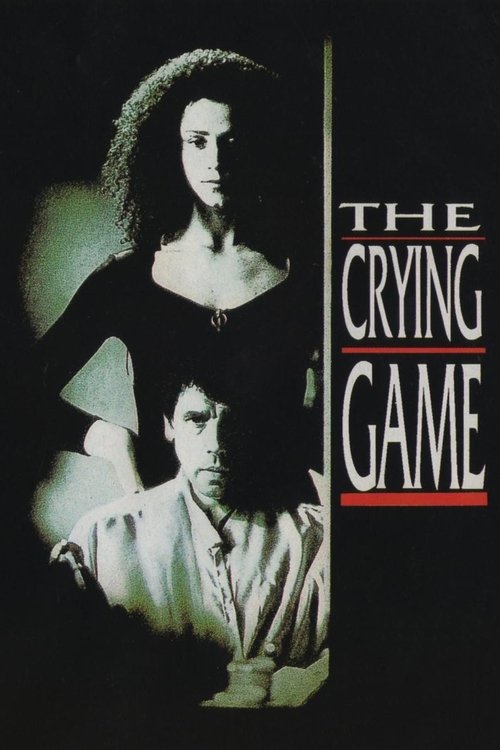
The Crying Game
Neil Jordan's "The Crying Game" thrusts viewers into a world of shifting loyalties and complex identities, where a seemingly straightforward act of compassion unravels into a mesmerizing exploration of love, war, and self-discovery. This BAFTA and Academy Award-winning thriller captivated audiences with its bold narrative and unforgettable twists, solidifying its place as a cinematic landmark of the early 90s.
Director
Neil Jordan
Release Year
1992
Runtime
112 minutes
Main Cast
Stephen Rea, Miranda Richardson, Jaye Davidson, Forest Whitaker, Adrian Dunbar
About The Crying Game
Released in 1992, "The Crying Game" quickly became a cultural phenomenon, celebrated for its daring narrative and shocking mid-film revelation. The film masterfully blends elements of political thriller, psychological drama, and romantic intrigue, challenging conventional notions of identity and sexuality. Its profound impact resonated deeply, sparking widespread discussion and critical acclaim, and it remains a touchstone for discussions on cinematic surprise and thematic depth.
The premise introduces Fergus, an IRA volunteer tasked with guarding a captured British soldier, Jody. A bond forms between the captor and captive, leading to a promise that Fergus will look after Jody's girlfriend, Dil, should anything happen. When circumstances force Fergus to flee to London, he seeks out Dil, a beautiful and enigmatic hairdresser. As he grows closer to her, Fergus finds himself increasingly entangled in her life, while simultaneously being pursued by his former IRA comrades.
Critically, the film was lauded for its intelligent screenplay, powerful performances, and Neil Jordan's skillful direction. It garnered numerous accolades, including the Academy Award for Best Original Screenplay, and was nominated for Best Picture, Best Director, Best Actor (Stephen Rea), Best Supporting Actor (Jaye Davidson), and Best Film Editing. The film's critical reception highlighted its ability to transcend genre conventions and deliver a deeply human story amidst political turmoil.
"The Crying Game" left an indelible mark on cinema, demonstrating the power of a well-crafted narrative to provoke thought and challenge societal norms. Its legacy endures through its iconic twist, which continues to be a subject of fascination and analysis, and its sensitive portrayal of complex themes. The film's exploration of identity, compassion, and the human condition ensures its continued relevance for new generations of viewers.
Drafts Featuring The Crying Game
Every SnakeDrafts listicle where this movie appears
Similar Movies
Movies related to The Crying Game

Frequently Asked Questions
Everything you need to know about The Crying Game
- The fable of the scorpion and the frog is a central metaphor in "The Crying Game," symbolizing inherent nature and unavoidable betrayal. Jody recounts it to Fergus, highlighting the idea that some beings cannot act against their true character, even if it leads to their own detriment. This foreshadows the difficult choices and inherent conflicts faced by the characters throughout the film.
- Dil's character profoundly challenges traditional gender roles and expectations through her nuanced portrayal and the film's famous reveal. Her femininity and vulnerability initially lead both characters and audience to categorize her in a certain way, only for the film to subvert these assumptions. This forces a re-evaluation of preconceptions about gender identity and attraction.
- The title "The Crying Game" carries multiple layers of meaning, reflecting the emotional manipulation, hidden truths, and ultimately, the vulnerability experienced by the characters. It alludes to the idea of a deceptive play or façade, where emotions are used as tools, and the act of crying can be both genuine sadness and a strategic act within the complex 'game' of their lives and relationships.
- The relationship between Fergus and Jody transcends typical captor-captive dynamics through an unexpected bond of empathy and respect. Despite their opposing allegiances, they discover common ground and humanity in each other, leading to a promise that dictates much of the subsequent plot. This unusual connection highlights the film's theme of finding human connection in extreme circumstances.
- The song "The Crying Game," famously covered by Boy George for the film, serves as a poignant and ironic backdrop to the narrative. Its lyrics about playing games with love and tears resonate deeply with the characters' deceptions, hidden identities, and emotional vulnerabilities. The song underscores the film's themes of illusion, heartbreak, and the difficulty of true connection.

