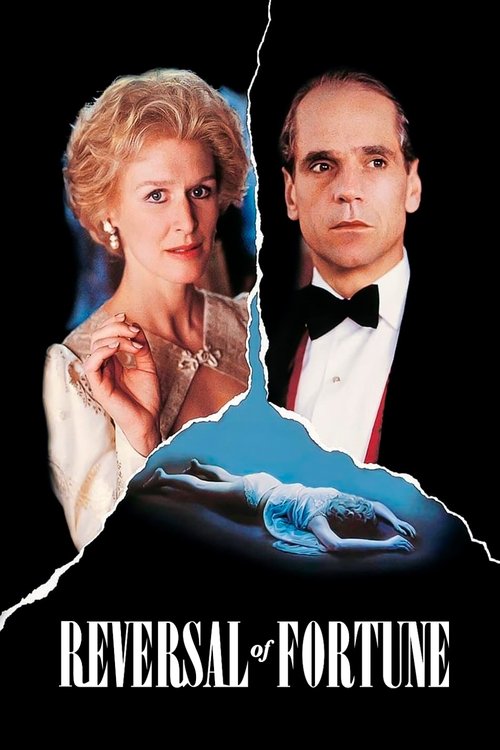
Reversal of Fortune
Reversal of Fortune masterfully blurs the lines between guilt and innocence, inviting viewers into the scandalous real-life trial of Claus von Bülow, accused of attempting to murder his socialite wife, Sunny. This captivating drama, led by an Oscar-winning performance from Jeremy Irons, is a must-watch for anyone fascinated by legal thrillers and psychological enigmas.
Director
Barbet Schroeder
Release Year
1990
Runtime
111 minutes
Genres
Main Cast
Glenn Close, Jeremy Irons, Ron Silver, Annabella Sciorra, Uta Hagen
About Reversal of Fortune
Barbet Schroeder's 1990 film, ''Reversal of Fortune,'' delves into one of the most sensational criminal cases of the 20th century: the alleged attempted murder of Sunny von Bülow by her husband, Claus. Based on attorney Alan Dershowitz's book, the movie meticulously reconstructs the appellate process, presenting a captivating portrait of high society, legal strategy, and moral ambiguity. It garnered significant critical acclaim, particularly for Jeremy Irons' chilling and enigmatic portrayal of Claus von Bülow.
The film's plot unfolds primarily through the perspective of Alan Dershowitz (Ron Silver), the Harvard Law professor hired to appeal Claus von Bülow's conviction. As Dershowitz and his team investigate, they uncover a labyrinth of family secrets, drug use, and intricate personal relationships, leaving both them and the audience to question the true nature of events. The narrative cleverly avoids definitive pronouncements of guilt or innocence, instead focusing on the complexities of evidence and human perception.
''Reversal of Fortune'' had a profound cultural impact, reigniting public interest in the von Bülow case and sparking widespread discussion about the American justice system. Its exploration of privilege, media scrutiny, and the elusive nature of truth resonated deeply with audiences. The film's elegant cinematography and nuanced performances contribute to its lasting legacy as a sophisticated legal drama that transcends typical genre conventions.
Jeremy Irons' performance as Claus von Bülow was widely lauded, earning him an Academy Award for Best Actor. His portrayal, characterized by a detached demeanor and a darkly witty sensibility, became iconic. The film also received nominations for Best Director and Best Screenplay. Its critical success cemented its place as a classic of the legal drama genre, demonstrating how real-life events can be transformed into compelling cinematic narratives that continue to provoke thought and debate.
Drafts Featuring Reversal of Fortune
Every SnakeDrafts listicle where this movie appears
Similar Movies
Movies related to Reversal of Fortune

A Few Good Men
1992
Witness for the Prosecution
1957
Anatomy of a Murder
1959
Presumed Innocent
1990

The Pelican Brief
1993
Frequently Asked Questions
Everything you need to know about Reversal of Fortune
- The film artfully incorporates Sunny von Bülow's voice as a narrator, voiced by Glenn Close. This narrative device allows her to offer poignant commentary and insights into her life and the unfolding events, providing a unique and often melancholic perspective on the mystery surrounding her condition.
- The ending of ''Reversal of Fortune'' deliberately maintains ambiguity about Claus von Bülow's guilt, a narrative choice that is central to the film's thematic core. It emphasizes the limitations of the legal system in definitively proving truth, ultimately leaving the audience to grapple with their own interpretations of the evidence and the characters' motivations.
- Alan Dershowitz, as depicted in the film, embodies a pragmatic and intellectual approach to justice that prioritizes legal process and the burden of proof. His pursuit of due process, even for an individual widely perceived as guilty, raises questions about the ethical boundaries of legal representation and the presumption of innocence.
- The film vividly illustrates how class and immense privilege profoundly influenced the von Bülow case. The wealth and social standing of the characters shape the public's perception, the legal strategies employed, and even the access to resources for both the prosecution and the defense, highlighting how justice can be interpreted differently across social strata.
- While the film is a dramatization, it draws heavily from the actual events and Alan Dershowitz's account, including specific legal arguments and insights. One of the most famous lines, ''You have to remember, I am guilty,'' delivered by Claus, captures the enigmatic and somewhat theatrical persona he presented during the real-life trial and in the film.
- The film endeavors to accurately depict the key legal strategies and challenges Dershowitz faced, relying on his own book for much of its detail. It showcases his unconventional methods, meticulous research, and the intellectual rigor he applied to dissecting the prosecution's case and constructing an appeal.

