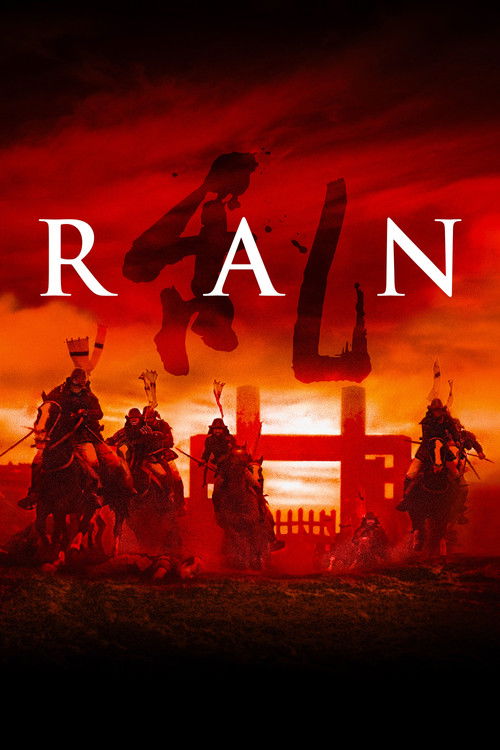
Ran
Akira Kurosawa's "Ran" is a visually stunning and emotionally resonant epic that reimagines Shakespeare's King Lear in feudal Japan, exploring themes of power, betrayal, and the cyclical nature of violence. This cinematic masterpiece is a must-see for anyone interested in historical dramas and profound storytelling.
Director
Release Year
1985
Runtime
160 minutes
Main Cast
Tatsuya Nakadai, Akira Terao, Jinpachi Nezu, Daisuke Ryū, Mieko Harada
About Ran
Akira Kurosawa’s "Ran," released in 1985, stands as a monumental achievement in world cinema, renowned for its breathtaking visuals, complex narrative, and devastating exploration of ambition and folly. The film translates Shakespeare's King Lear into the brutal landscape of 16th-century Japan, replacing ancient British kings with a revered warlord, Hidetora Ichimonji. As Hidetora divides his kingdom among his three sons, he inadvertently unleashes a torrent of betrayal, war, and madness, mirroring the tragic trajectory of Lear but infused with Kurosawa’s distinct philosophical and aesthetic sensibilities.
"Ran" was a critical sensation, lauded for its epic scale, meticulous historical detail, and Kurosawa's masterful direction. The film's use of vibrant color, particularly in its meticulously choreographed battle sequences, remains a benchmark in cinematography. Critics widely praised the performances, especially Tatsuya Nakadai as Hidetora, who conveys the weight of a fracturing mind and a crumbling empire. Its cultural impact is undeniable, influencing countless filmmakers and artists with its sheer visual grandeur and thematic depth.
The film delves deeply into the destructive consequences of unchecked power and the corrupting influence of ambition. Hidetora’s descent into madness is portrayed with stark realism, juxtaposed against the increasingly chaotic warfare among his sons. Beyond its visceral action, "Ran" is a poignant meditation on the fragility of loyalty and the inevitability of human suffering, often leaving audiences with a profound sense of tragedy and the cyclical nature of history. It masterfully blends historical drama with a timeless exploration of human nature.
"Ran" garnered numerous accolades, including four Academy Award nominations and a win for Best Costume Design, a testament to its extraordinary visual artistry. Its legacy endures as one of Kurosawa's most ambitious and celebrated works, often cited in discussions of the greatest films ever made. The film continues to be studied for its groundbreaking cinematography, intricate narrative structure, and its powerful, enduring themes, cementing its place as a cornerstone of international cinema.
Drafts Featuring Ran
Every SnakeDrafts listicle where this movie appears
Similar Movies
Movies related to Ran
Frequently Asked Questions
Everything you need to know about Ran
- The vibrant colors in "Ran" are deeply symbolic. Each of Hidetora's sons is assigned a distinct color for their armies – yellow, red, and blue – which allows Kurosawa to visually represent their shifting allegiances, power dynamics, and the chaos of battle without relying solely on dialogue. This masterful use of color heightens the emotional impact and clarity of the complex warfare.
- Lady Kaede is a pivotal character driven by a relentless desire for revenge against Hidetora and his family for the destruction of her own. Her cunning manipulation and ruthless actions are instrumental in instigating and escalating the conflicts between Hidetora’s sons, effectively serving as a catalyst for the family's ultimate downfall. She embodies the cyclical nature of hatred and its devastating consequences.
- Hidetora's descent into madness forces viewers to confront profound questions about the nature of power, morality, and the human condition. As he loses everything, his sanity unravels, prompting reflection on the transient nature of authority, the consequences of past actions, and the existential dread that accompanies absolute loss and isolation. His suffering explores the ultimate futility of human ambition.
- One of the most iconic and tragic images in "Ran" is the shot of Hidetora standing utterly alone and destitute on a hill, overlooking the ruins of his castles and the ongoing war among his sons. This image powerfully encapsulates the film's overarching theme of the futility of human ambition, the destructive nature of betrayal, and the profound isolation that comes from absolute loss. It is a stark visual representation of his broken spirit.
- The ending of "Ran" is bleak and uncompromising, with all major characters either dead or left in despair, and the lone blind character teetering on the edge of a precipice. This grim conclusion profoundly reinforces its anti-war message by demonstrating the universal and devastating cost of conflict, ambition, and betrayal, leaving no victors and only profound suffering in its wake. It underscores the ultimate futility and tragic consequences of violence, highlighting that war only begets more misery and destruction, leaving behind a scarred, desolate landscape and shattered lives.
- Kurosawa incorporated elements from traditional Japanese Noh theater, particularly in the stylized movements, masks, and emotional restraint of certain characters, most notably Lady Kaede and Hidetora himself. This lends a ceremonial and often eerie quality to the film, enhancing its tragic atmosphere and emphasizing the ritualistic aspects of power struggles and fate. The Noh elements contribute to the film's unique aesthetic and thematic depth, distancing it from pure realism and elevating it to a more archetypal narrative. The slow, deliberate movements and expressions draw parallels to ancient Japanese storytelling traditions, adding layers of cultural resonance.

