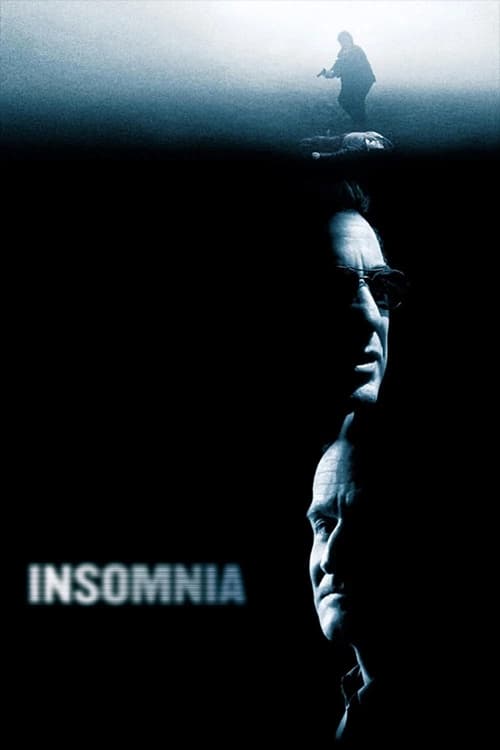
Insomnia
Insomnia, directed by Christopher Nolan, plunges viewers into a chilling psychological thriller where a detective's moral compass is tested under the perpetual daylight of an Alaskan summer. This taut crime drama explores guilt, deception, and the blurring lines between right and wrong, keeping audiences on the edge of their seats.
Director
Release Year
2002
Runtime
118 minutes
Main Cast
Al Pacino, Robin Williams, Hilary Swank, Martin Donovan, Nicky Katt
About Insomnia
Christopher Nolan's 2002 film "Insomnia" stands as a crucial early work in his celebrated filmography, showcasing his emerging mastery of complex narratives and psychological depth. While a remake of a 1997 Norwegian film, Nolan injects his signature style, transforming it into a distinctly American thriller. The film garnered critical acclaim for its performances, particularly from Al Pacino and Robin Williams, and solidified Nolan's reputation as a director capable of elevating genre fare into compelling artistic statements.
The premise introduces LAPD detective Will Dormer (Al Pacino) and his partner Hap Eckhart (Martin Donovan) to Nightmute, Alaska, a town where the summer sun never sets. They are investigating the murder of a teenage girl, a case that quickly unravels into a moral quagmire for Dormer. Exhaustion and guilt begin to erode his judgment, leading to a series of fateful decisions that haunt him throughout the investigation. The constant daylight serves as a relentless antagonist, mirroring Dormer's internal struggle and the inability to escape his own conscience.
The film's critical reception highlighted its intense atmosphere and the profound performances by its lead actors. Al Pacino delivers a nuanced portrayal of a man teetering on the brink of collapse, while Robin Williams, in a remarkable departure from his comedic roles, delivers a chilling and understated performance as the prime suspect, Walter Finch. Hilary Swank also shines as the earnest local detective, Ellie Burr, who becomes increasingly suspicious of Dormer's actions. "Insomnia" was praised for its tight direction, intelligent screenplay, and its exploration of themes like morality, culpability, and the psychological impact of guilt.
"Insomnia" may not always be highlighted in the same breath as Nolan's later blockbusters, but its legacy is significant. It demonstrates his early brilliance in crafting suspenseful, character-driven narratives that delve into the human psyche. The film's exploration of moral ambiguity and the consequences of one's actions resonates deeply, leaving a lasting impression on viewers and solidifying its place as a thought-provoking crime drama within the modern cinematic landscape.
Drafts Featuring Insomnia
Every SnakeDrafts listicle where this movie appears
The Best Al Pacino Movies Ranked
Ranked #16
The Best Hilary Swank Movies Ranked
Ranked #3
The Best Robin Williams Movies Ranked
Ranked #10
Best Christopher Nolan Films of All Time
Ranked #11
2002's Best Movies Ranked
Ranked #31
The Best Crime Movies of 2002, Ranked
Ranked #5
Best 2000s Thriller Movies Ranked
Ranked #10
The Best Thriller Movies of All Time, Ranked
Ranked #27
The Greatest Thriller Movies of 2002
Ranked #4
Similar Movies
Movies related to Insomnia



Frequently Asked Questions
Everything you need to know about Insomnia
- The unending daylight in Nightmute, Alaska, profoundly impacts Detective Dormer by disrupting his sleep patterns and exacerbating his guilt and paranoia. This constant light symbolizes his inability to escape the consequences of his actions, blurring the lines between reality and his deteriorating mental state, ultimately hindering his judgment during the investigation.
- Walter Finch, played by Robin Williams, is the prime suspect and serves as a manipulative mirror to Dormer's own culpability. Their relationship develops into a psychological chess match, where Finch recognizes Dormer’s moral compromise and uses it to his advantage, highlighting the film’s themes of shared guilt and moral ambiguity.
- Ellie Burr, the local detective, initially looks up to Dormer as a celebrated L.A. homicide detective. As the investigation progresses, she begins to meticulously piece together Dormer's inconsistencies, evolving from an admirer to a skeptical investigator who ultimately understands the depth of his moral compromises. She becomes a reluctant witness to his downfall and a proxy for the audience's moral compass.
- Beyond its crime narrative, 'Insomnia' delves into profound themes of guilt, moral compromise, and the psychological toll of one's actions. It explores the idea that even those upholding the law can succumb to ethical erosion, examining the subjective nature of justice and the heavy burden of a troubled conscience.
- The ending of 'Insomnia' presents a complex conclusion that can be interpreted as both tragic and containing a glimmer of redemption. Dormer confesses his actions to Ellie before he dies, clearing his conscience and ensuring justice, but his death nonetheless marks a tragic end to a career and a life consumed by guilt and moral choices, leaving a somber yet impactful resolution.

