Hulk
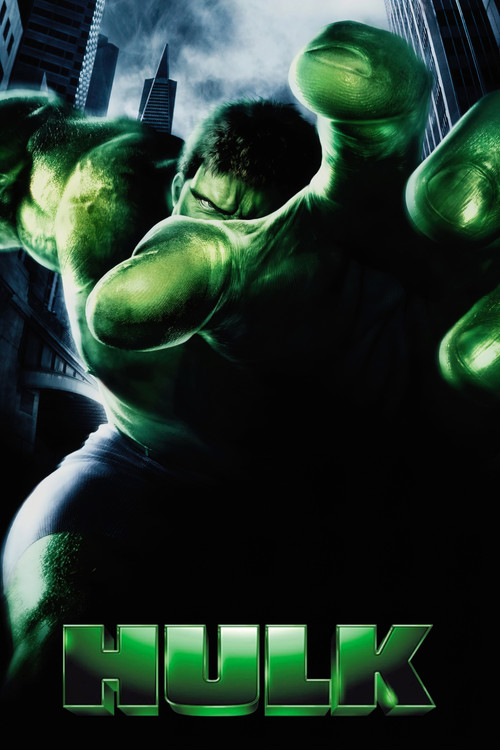
Unleashing an intense exploration of rage and identity, Ang Lee's "Hulk" delves into the dual nature of man and monster. This 2003 adaptation reimagines the iconic Marvel superhero with a deeper look at the psychological and emotional struggles that come with immense power.
Director
Release Year
2003
Runtime
138 minutes
Genres
Science Fiction, Adventure, Action
Main Cast
Eric Bana, Jennifer Connelly, Sam Elliott, Josh Lucas, Nick Nolte
About Hulk
Ang Lee's "Hulk" stands out in the superhero genre with its distinct focus on psychological depth and visual storytelling. Released in 2003, this interpretation of the classic Marvel character breaks away from the traditional superhero narrative, offering an introspective take on Bruce Banner's internal conflict. The film is notable for its artistic direction and the use of comic book-style editing, which pays homage to its source material while pushing the boundaries of conventional filmmaking. Eric Bana's portrayal of Bruce Banner adds a layer of vulnerability to the character, showcasing the struggle between his human side and the monstrous force within him.
The film's cultural impact lies in its ambition to blend superhero action with a contemplative narrative, a move that was both praised and critiqued by audiences. While the visual effects were groundbreaking for the time, providing a visceral depiction of the Hulk's power, the film's pacing and deviation from action-focused storytelling challenged standard blockbuster formulas. This choice sparked diverse opinions, as some viewers appreciated the nuanced approach while others desired more traditional, action-packed sequences.
Critically, "Hulk" had a mixed reception. While some applauded Ang Lee's artistic vision and the film's psychological depth, others were less impressed by its slow pace and complex narrative. Nonetheless, it garnered a follow-up interest in exploring deeper themes within superhero films, paving the way for more character-driven stories in the genre. Despite not achieving major box office success comparable to other Marvel adaptations, the film remains a significant point of reference for its ambitious integration of drama and action.
"Hulk" did not dominate the awards circuit but was recognized for its visual effects, which were a highlight of its production. The CGI technology used to bring the Hulk to life was revolutionary at the time, influencing subsequent films in the superhero genre. Ang Lee's direction challenged industry norms, leaving a legacy as a bold experiment in blending art-house cinema with mainstream appeal.
Drafts Featuring Hulk
Every SnakeDrafts listicle where this movie appears
Similar Movies
Movies related to Hulk
Frequently Asked Questions
Everything you need to know about Hulk
- In "Hulk," genetic experiments play a crucial role in exploring themes of identity and transformation. Bruce Banner's exposure to gamma radiation, compounded by these experiments, acts as a catalyst for his metamorphosis into the Hulk, symbolizing the conflict between scientific ambition and ethical responsibility.
- Bruce Banner's relationship with his father is central to the film, representing deep-seated family trauma. The tumultuous interactions between Bruce and his father highlight issues of neglect and unresolved anger, which contribute to Bruce's emotional volatility and transformation into the Hulk.
- The comic book-style editing in "Hulk" serves as a visual homage to its source material, aiming to recreate the experience of reading a comic. This stylistic choice helps in transitioning between scenes, providing dynamic storytelling that aligns with the narrative's origin as a graphic novel.
- Betty Ross, portrayed by Jennifer Connelly, is a pivotal character in "Hulk," serving as Bruce Banner's emotional anchor. Her relationship with Bruce is a source of stability and conflict, highlighting themes of love and understanding amidst the chaos of his transformations and inner turmoil.
- Ang Lee's "Hulk" delves into themes of identity, rage, and the duality of human nature. It explores the impact of past traumas and the quest for control over one's inner demons, presenting a nuanced take on what defines humanity and monstrosity within the context of a superhero narrative.

