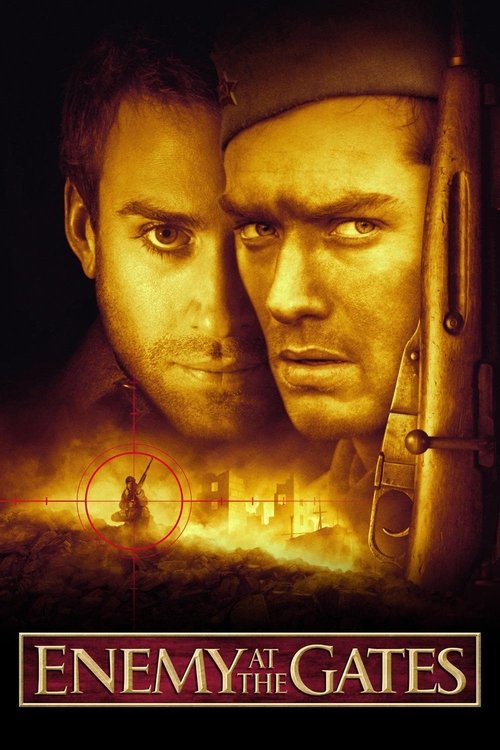
Enemy at the Gates
Amidst the brutal siege of Stalingrad, a deadly game of cat-and-mouse unfolds between a legendary Soviet sniper and his cunning German counterpart, transforming the frozen ruins into a treacherous battleground of wits and bullets. This gripping war drama plunges viewers into the psychological intensity of World War II's Eastern Front, exploring themes of heroism, propaganda, and the devastating cost of conflict. Discover the true story that inspired this visceral cinematic experience.
Director
Jean-Jacques Annaud
Release Year
2001
Runtime
131 minutes
Genres
War, History
Main Cast
Jude Law, Joseph Fiennes, Rachel Weisz, Ed Harris, Bob Hoskins
About Enemy at the Gates
Enemy at the Gates thrusts audiences into the harrowing reality of the Battle of Stalingrad, one of the bloodiest confrontations in human history. The film masterfully captures the brutal conditions, the sheer scale of the conflict, and the desperate struggle for survival on both sides. Its depiction of urban warfare and the psychological toll on soldiers offers a stark, unflinching look at the Eastern Front.
At its core, the film presents a compelling tale of two snipers: the legendary Soviet Vassili Zaitsev, portrayed by Jude Law, and the aristocratic German Major König, played by Ed Harris. Their personal duel becomes a microcosm of the larger war, embodying the ideological clash and the dehumanizing nature of combat. The narrative skillfully builds tension as each man tries to outwit and outmaneuver the other, turning the vast, bombed-out city into their own deadly hunting ground.
Upon its release, *Enemy at the Gates* garnered attention for its intense action sequences and its exploration of the human element within such a massive conflict. While some critics debated historical accuracies and the romantic subplot, many praised the performances, particularly from Law and Harris, and the film's ability to convey the desperation and strategic brilliance inherent in sniper warfare. Its visual style, showcasing the grim, desolate landscape of Stalingrad, further enhanced its immersive quality.
The film's legacy lies in its potent portrayal of psychological warfare and individual heroism amidst overwhelming chaos. It stands as a significant entry in the canon of World War II cinema, offering a perspective on the Eastern Front that often differs from Western-centric narratives. *Enemy at the Gates* continues to be a point of discussion for its engaging depiction of a legendary sharpshooter and the profound impact of the Battle of Stalingrad.
Drafts Featuring Enemy at the Gates
Every SnakeDrafts listicle where this movie appears
Similar Movies
Movies related to Enemy at the Gates
Frequently Asked Questions
Everything you need to know about Enemy at the Gates
- The film *Enemy at the Gates* is inspired by the real-life Soviet sniper Vassili Zaitsev, who achieved legendary status during the Battle of Stalingrad. While the core element of a cat-and-mouse game with a German counter-sniper is based on historical accounts, the specific details and dramatic embellishments, including Major König's character and the romantic subplot, are largely fictionalized for cinematic effect. Zaitsev's incredible marksmanship and his contributions to Soviet morale are well-documented.
- The wolf imagery in *Enemy at the Gates* often symbolizes the primal, predatory nature of war and the hunters within it. Major König is sometimes referred to as a 'wolf,' highlighting his cunning, solitary, and deadly pursuit of Zaitsev. This motif underscores the animalistic survival instincts that emerge in such extreme circumstances, blurring the lines between man and beast in the fight for life.
- Propaganda plays a crucial role in *Enemy at the Gates*, particularly through the character of Commissar Danilov, who elevates Vassili Zaitsev into a national hero to boost Soviet morale. The film illustrates how individual acts of heroism are utilized and sometimes exaggerated by state media to inspire troops and civilians. This highlights the psychological dimension of warfare, where belief and narrative can be as powerful as bullets.
- Major König's relentless pursuit of Vassili Zaitsev is driven by a deep sense of professional duty, a desire to eliminate a significant threat to German morale, and perhaps a personal challenge to his own reputation as a master sniper. For König, Zaitsev represents not just an enemy combatant, but a symbol of Russian resistance that must be psychologically dismantled. His mission goes beyond mere military orders, becoming a test of skill and will.
- The watch that Vassili Zaitsev eventually takes from Major König serves as a powerful symbol of victory and the transfer of dominance between the two adversaries. It represents not just a trophy, but the psychological defeat of König and the triumph of Zaitsev. This small, personal item becomes a tangible marker of the conclusion of their individual war within the larger conflict.

