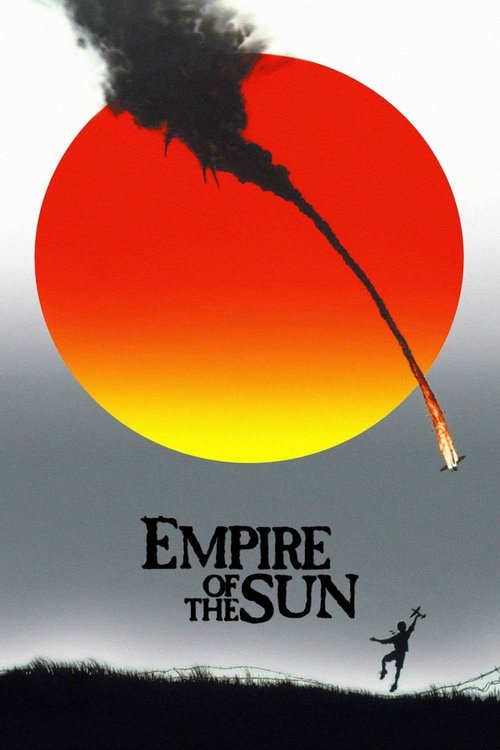
Empire of the Sun
In this poignant coming-of-age drama, a young English boy navigating the chaos of World War II-era Shanghai finds resilience and hope amidst internment, painting a powerful portrait of survival and the loss of innocence. Steven Spielberg's masterful direction brings J.G. Ballard's semi-autobiographical novel to vivid life, offering a unique perspective on the human spirit's capacity for enduring hardship. Discover the unforgettable journey of a boy who learns to survive by his wits and dreams.
Director
Release Year
1987
Runtime
153 minutes
Genres
Drama, History, War
Main Cast
Christian Bale, John Malkovich, Miranda Richardson, Nigel Havers, Joe Pantoliano
About Empire of the Sun
Steven Spielberg's 1987 epic "Empire of the Sun" delves into the harrowing yet ultimately hopeful story of Jamie Graham, a privileged British schoolboy living in Shanghai during World War II. The film opens amidst a luxurious, insulated existence that is abruptly shattered by the Japanese invasion, thrusting Jamie into a world of chaos and uncertainty. Separated from his parents, he navigates the tumultuous streets before ultimately being interned in a Japanese prison camp. This dramatic shift forms the core of the narrative, focusing on Jamie's struggle for survival and his evolving perspective on humanity.
The film boasts a remarkable performance from a young Christian Bale, whose portrayal of Jamie is both captivating and deeply moving. He embodies the resilience and imaginative spirit of a child confronted with unimaginable horrors, yet still finding moments of wonder and even heroism. John Malkovich, as the cynical but ultimately caring American merchant Basie, provides a compelling foil to Jamie's youthful optimism, highlighting the different ways individuals cope with extreme circumstances. The supporting cast, including Miranda Richardson and Nigel Havers, further enriches the narrative with their nuanced performances.
"Empire of the Sun" earned critical acclaim for its breathtaking cinematography, evocative score by John Williams, and Spielberg's sensitive direction. While not a massive box office hit upon its initial release, its reputation has grown over time, recognized for its powerful storytelling and profound thematic depth. The film was nominated for six Academy Awards, including Best Cinematography and Best Art Direction, solidifying its place as a visually stunning cinematic achievement.
Beyond its technical brilliance, the film's lasting legacy lies in its exploration of themes such as the loss of innocence, the nature of war, and the indomitable power of the human spirit. Through Jamie's eyes, audiences witness the brutality of conflict alongside unexpected acts of kindness and the enduring allure of dreams. "Empire of the Sun" remains a resonant and thought-provoking examination of childhood resilience in the face of a cataclysmic historical event, cementing its status as a timeless classic.
Drafts Featuring Empire of the Sun
Every SnakeDrafts listicle where this movie appears
Similar Movies
Movies related to Empire of the Sun

Frequently Asked Questions
Everything you need to know about Empire of the Sun
- Initially, Jamie views the Japanese soldiers with a mixture of fear and fascination, sometimes even admiration for their flying machines. As his internment progresses, his understanding of their humanity becomes more complex, recognizing both their cruelty and, in rare instances, glimpses of their individual struggles.
- The Cadillac represents Jamie's past life of privilege and a tangible connection to his parents. It becomes a symbol of his lost innocence and a constant, albeit unattainable, beacon of hope for his return to a familiar world.
- Basie, initially a self-serving opportunist, gradually assumes a paternal role towards Jamie, teaching him survival skills and offering a degree of protection. Their relationship is characterized by a complex mix of exploitation and genuine affection, highlighting the strange bonds forged in extreme circumstances.
- Airplanes symbolize freedom, power, and escape for Jamie. They represent his dreams and his longing to transcend his grim reality, serving as a powerful visual motif throughout the film, connecting his privileged past to his hopeful, albeit uncertain, future.
- For Jamie, 'home' is a constantly shifting concept. Initially, it's his comfortable Shanghai residence, then the shared camaraderie and odd sense of belonging within the camp, and ultimately, the poignant yearning for his original home and family, representing a return to warmth and security.

