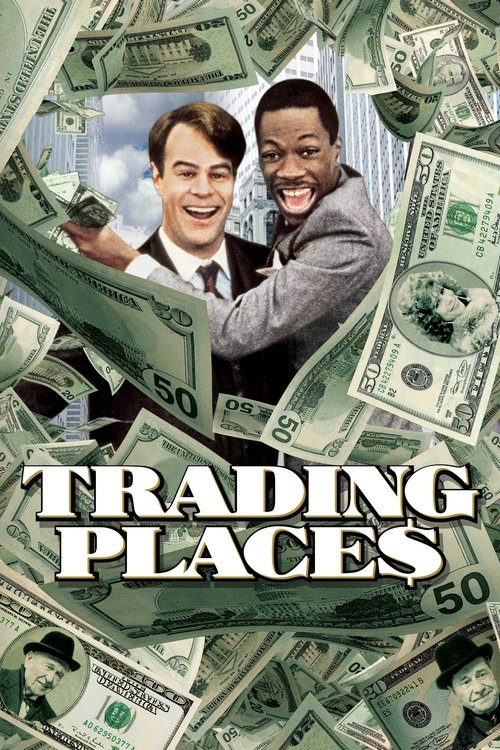
Trading Places
In the cutthroat world of commodities trading, a conniving bet upends the lives of a snobbish executive and a quick-witted con artist, proving that circumstance, not birthright, often dictates destiny. This iconic 80s comedy brilliantly skewers class, privilege, and the American dream, delivering timeless laughs and surprisingly poignant social commentary. Prepare for a hilarious ride as two men from opposite sides of the tracks learn what it truly means to walk in another's shoes.
Director
Release Year
1983
Runtime
116 minutes
Genres
Main Cast
Dan Aykroyd, Eddie Murphy, Ralph Bellamy, Don Ameche, Denholm Elliott
About Trading Places
Trading Places, directed by John Landis, burst onto the scene in 1983, becoming an instant classic and a cornerstone of 80s comedy. Its sharp wit and satirical edge resonated deeply with audiences, offering a humorous yet incisive look at wealth disparity and social mobility during a decade often characterized by excess. The film's cultural impact endures, frequently cited as a prime example of the buddy-comedy genre and a masterclass in comedic timing.
The plot revolves around the lives of Louis Winthorpe III (Dan Aykroyd), a successful and arrogant commodities broker, and Billy Ray Valentine (Eddie Murphy), a street-smart con artist. Their paths collide when two eccentric millionaire brothers, Randolph and Mortimer Duke (Ralph Bellamy and Don Ameche), make a perverse bet: can they swap the lives of these two men and observe the results? What follows is a riotous exploration of identity, environment, and the arbitrary nature of fortune, as Winthorpe is stripped of everything and Valentine is thrust into a world of privilege.
Critically acclaimed upon its release, Trading Places garnered praise for its intelligent script, stellar performances, and Landis's direction. Eddie Murphy, fresh off his success on Saturday Night Live and 48 Hrs., solidified his status as a comedic superstar, while Dan Aykroyd showcased his versatility in a role that beautifully juxtaposed his dramatic capabilities with his comedic prowess. The film received nominations for an Academy Award for Best Original Song and multiple Golden Globe awards, further cementing its place in cinematic history.
Beyond its comedic brilliance, Trading Places leaves a lasting legacy as a film that manages to be both uproariously funny and thought-provoking. Its exploration of class distinctions, prejudice, and the power of human connection continues to resonate, making it more than just a nostalgic trip to the 80s. The film's enduring popularity is a testament to its clever writing, unforgettable characters, and its ability to deliver genuine heart amidst the humor, ensuring its status as a beloved cinematic treasure for generations to come.
Drafts Featuring Trading Places
Every SnakeDrafts listicle where this movie appears
The Best Eddie Murphy Movies Ranked
Ranked #3
The Essential Giancarlo Esposito: His Best Movie Performances Ranked
Ranked #9
Jamie Lee Curtis Movies Ranked: The Ultimate Filmography of a Hollywood Icon
Ranked #6
The Essential John Landis Films Ranked
Ranked #4
The Definitive Ranking of Comedy Movies
Ranked #20
The Greatest 1980s Comedy Movies Ranked
Ranked #14
Similar Movies
Movies related to Trading Places

Frequently Asked Questions
Everything you need to know about Trading Places
- Trading Places revolves around a bet between two wealthy brothers who switch the lives of a prosperous investor and a street-wise con artist. The movie explores how both men adapt to their new roles and the comedic situations that arise from their swapped circumstances.
- The film uses the body-swap premise to humorously highlight social and economic disparities between the wealthy and the poor. It critiques the assumptions and prejudices tied to social class through the contrasting experiences of the two main characters.
- The two millionaires, the Duke brothers, instigate the main conflict by making a bet that leads to switching the lives of the investor and the con artist. They serve as the primary antagonists whose actions drive much of the plot.
- Trading Places features a blend of situational comedy, satire, and witty dialogue. Much of the humor arises from the characters' drastic changes in environment and status, highlighting both personal and societal absurdities.
- The story is set mainly in Philadelphia, utilizing the urban environment to emphasize the stark contrast between the wealthy upper class and the street-smart lower class. This setting enhances the themes of social mobility and economic disparity.
- Yes, the film offers cultural commentary on race, class, and capitalism in America during the 1980s. Through comedy, it challenges stereotypes and critiques the impact of wealth and social status on identity.
- One notable scene is the climax involving a high-stakes commodities trading sequence. This scene encapsulates themes of greed, manipulation, and the reversal of fortunes while delivering sharp comedic moments.

