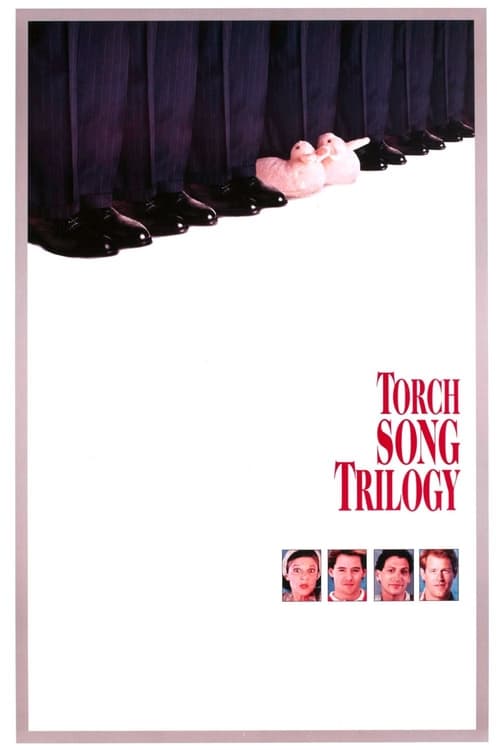
Torch Song Trilogy
Explore the heartwarming and heartbreaking journey of Arnold Beckoff, a drag queen navigating love, loss, and family in 1970s New York City. This cinematic adaptation of the groundbreaking Broadway hit is an essential watch for its poignant humor and powerful emotional depth, offering a timeless look at self-discovery and the search for acceptance.
Director
Paul Bogart
Release Year
1988
Runtime
120 minutes
Main Cast
Harvey Fierstein, Matthew Broderick, Anne Bancroft, Brian Kerwin, Eddie Castrodad
About Torch Song Trilogy
Torch Song Trilogy, a landmark film in LGBTQ+ cinema, brings Harvey Fierstein's Tony Award-winning play to the big screen with all its wit, pain, and enduring humanity intact. The film delves into the life of Arnold Beckoff, a gay man whose pursuit of love, family, and respect is continually challenged by societal prejudices and personal insecurities. Set against the vibrant backdrop of late 1970s and early 1980s New York, it captures a pivotal era for the LGBTQ+ community, reflecting both the struggles and the burgeoning sense of identity.
The narrative unfolds as a series of vignettes, exploring Arnold's relationships with his bisexual lover Ed, his younger partner Alan, and his fiercely opinionated mother, played by the formidable Anne Bancroft. Fierstein, reprising his stage role, brings Arnold to life with a distinctive voice and a blend of vulnerability and resilience that makes him utterly compelling. The film courageously tackles themes of chosen family, the complexities of queer relationships, and the universal desire for unconditional love and acceptance, long before these topics found mainstream cinematic resonance.
Upon its release, Torch Song Trilogy was praised for its bold storytelling and powerful performances. While some critics debated the transition from stage to screen, the film was widely lauded for its significant cultural impact, offering a rare and authentic portrayal of gay life that resonated with audiences. It cemented its place as a groundbreaking work that pushed boundaries and opened doors for more diverse representation in film, earning it a dedicated following and critical acclaim.
The film's legacy extends beyond its initial reception, serving as a vital touchstone in discussions about LGBTQ+ rights and visibility in media. Its frank portrayal of gay characters and their experiences contributed significantly to broader cultural conversations, fostering empathy and understanding. Torch Song Trilogy remains a powerful and emotionally resonant film, celebrated for its enduring message of love, resilience, and the importance of finding your own family, making it a compelling cultural artifact that continues to inspire and provoke thought.
Drafts Featuring Torch Song Trilogy
Every SnakeDrafts listicle where this movie appears
Similar Movies
Movies related to Torch Song Trilogy
Frequently Asked Questions
Everything you need to know about Torch Song Trilogy
- The 'torch song' refers to a sentimental love song, typically one in which the singer laments unrequited love. In the context of the film, it symbolizes the burning, often painful, intensity of Arnold's romantic experiences and his persistent hope for lasting love, despite repeated heartbreaks.
- The film powerfully illustrates how Arnold, facing a lack of complete acceptance from his biological mother, creates his own supportive family unit. This chosen family, comprised of his lovers and close friends, provides him with the love, understanding, and stability he deeply craves, highlighting the importance of community for LGBTQ+ individuals.
- For Arnold, drag is more than just a performance; it's an extension of his identity and a form of self-expression. It allows him to explore different facets of his personality, cope with his struggles, and connect with an audience, serving as both a shield and a celebratory declaration of who he is.
- The climactic confrontation between Arnold and his mother is a raw and honest depiction of their deeply complex relationship. It lays bare her ingrained prejudices and Arnold's desperate need for her acceptance, ultimately highlighting the generational and societal divides that often strain family bonds when confronted with difference.
- Despite the tragedies Arnold endures, the ending offers a hopeful outlook. It shows him building a new life with his adopted son, surrounded by his chosen family, suggesting that while heartbreak is inevitable, love, resilience, and the creation of one's own happiness are ultimately triumphant.
- Arnold's Jewish background is interwoven throughout the film, particularly in his interactions with his mother. Their discussions often touch upon traditional Jewish values, expectations, and the tension between these traditions and Arnold's identity as a gay man, adding another layer to the complexities of his search for acceptance and belonging.

