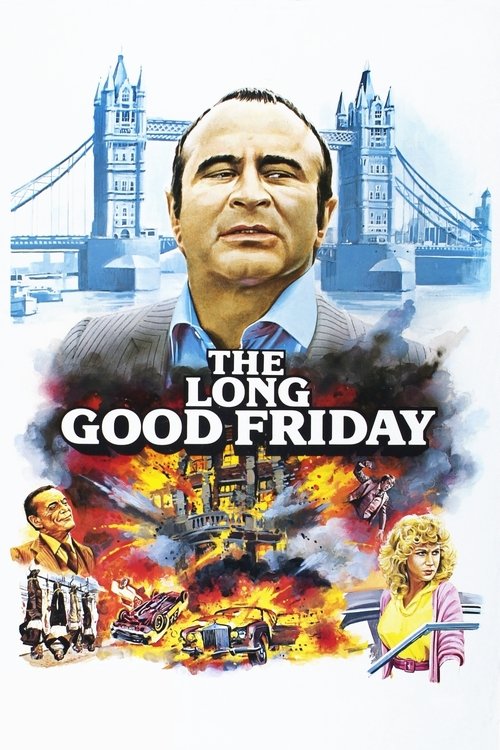
The Long Good Friday
In the volatile underworld of late 1970s London, a ruthless gangster’s dreams of legitimacy are shattered by a brutal wave of attacks, forcing him to confront betrayal and fight for his empire. This iconic British crime thriller masterfully blends high-stakes ambition with gritty realism, delivering a searing portrait of a man on the brink.
Director
John Mackenzie
Release Year
1980
Runtime
114 minutes
Main Cast
Bob Hoskins, Helen Mirren, Dave King, Bryan Marshall, Derek Thompson
About The Long Good Friday
"The Long Good Friday" arrived in 1980 as a seismic force in British cinema, forever altering the landscape of gangster films. Its raw energy, sharp dialogue, and unflinching portrayal of organized crime immediately resonated with audiences and critics alike, establishing it as a touchstone of the genre. The film captured the zeitgeist of a changing Britain, reflecting anxieties about economic shifts and the decline of traditional working-class communities, all set against the backdrop of an evolving global power dynamic.
The premise plunges viewers into the world of Harold Shand, a cunning and ambitious Cockney crime boss with grand visions of transforming London's Docklands into a future Olympic site. His carefully constructed world begins to unravel when a series of explosive attacks targets his operations on the very weekend he’s trying to woo American Mafia investors. This sudden and violent disruption propels Shand into a desperate quest to uncover the identity of the traitor within his ranks, leading to a relentless and increasingly brutal investigation. The film expertly builds tension, showing Shand's initial composure giving way to a primal fury as his empire crumbles around him.
Critically acclaimed for its potent script and stellar performances, "The Long Good Friday" is particularly lauded for Bob Hoskins' electrifying portrayal of Harold Shand. Hoskins delivers a career-defining performance, embodying the complex blend of charm, menace, and vulnerability that defines the character. Helen Mirren also shines as Victoria, Shand’s intelligent and equally formidable partner. The film garnered significant critical attention, earning nominations and accolades for its direction, screenplay, and acting, solidifying its place as a quintessential British crime drama.
Beyond its immediate impact, the film's legacy endures through its influence on subsequent gangster films and television series. Its realistic depiction of London's criminal underworld, coupled with its intricate plot and memorable characters, has made it a perennial favorite. "The Long Good Friday" remains a powerful exploration of ambition, loyalty, and the brutal consequences of a life lived on the wrong side of the law, cementing its status as a classic of British cinema.
Drafts Featuring The Long Good Friday
Every SnakeDrafts listicle where this movie appears
Best Movies Starring Helen Mirren
Ranked #4
1980's Best Movies Ranked
Ranked #18
The Best Crime Movies of 1980, Ranked
Ranked #3
The Greatest Crime Movies Ranked
Ranked #72
Best Thriller Movies of 1980, Ranked
Ranked #14
The Best 1980s Crime Movies Ranked
Ranked #10
The Best Movies of the 1980s Ranked
Ranked #83
Similar Movies
Movies related to The Long Good Friday

Frequently Asked Questions
Everything you need to know about The Long Good Friday
- The iconic final shot of Harold Shand in the car, his face a silent tableau of terror and resignation, is widely interpreted as the definitive moment of his downfall. It powerfully conveys the utter destruction of his dreams and power without a single word, leaving his fate ambiguous but undeniably bleak.
- Harold Shand's insatiable ambition to transition from a criminal enterprise to a legitimate property mogul is the central catalyst for the film's events. His grand aspirations for the Docklands project set in motion the chain of betrayals and violence that ultimately lead to his demise as he tries to protect his burgeoning empire.
- Victoria, portrayed by Helen Mirren, serves as Harold Shand's intelligent and equally ruthless partner, offering strategic counsel and emotional support. She is not merely a moll but an active participant in his business, unafraid to challenge him and displaying her own brand of steely resolve in a male-dominated world.
- Betrayal is a core theme, manifesting in the systematic dismantling of Shand's operations by an unknown enemy from within his own organization. The film delves into the devastating impact of disloyalty, revealing how trust, once broken, can lead to catastrophic consequences for even the most powerful figures.
- The film uses London's transforming Docklands as a potent backdrop, symbolizing Shand's ambition to modernize and legitimize his operations. This setting contrasts the old-school criminal underworld with the emerging landscape of urban development, highlighting the clash between tradition and progress within the city.

