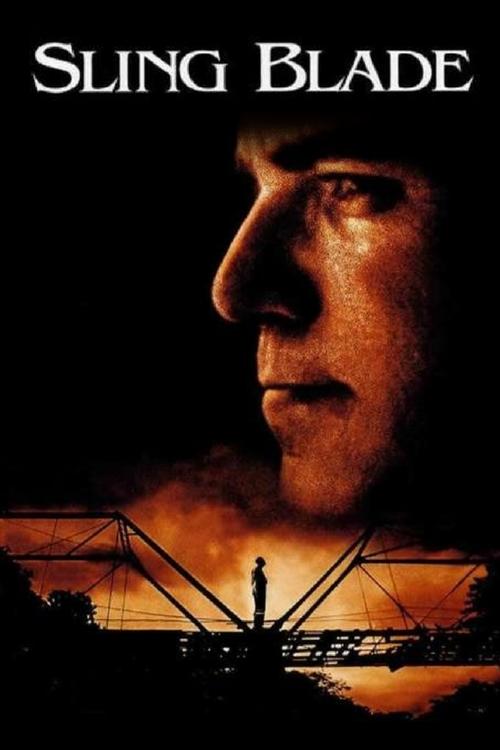
Sling Blade
Sling Blade, a powerful and poignant drama, delves into the life of Karl Childers, a man released from a mental institution grappling with a troubled past. This critically acclaimed film explores themes of redemption, prejudice, and the complexities of human connection, captivating audiences with its raw performances and compelling narrative.
Director
Release Year
1996
Runtime
135 minutes
Genres
Main Cast
Billy Bob Thornton, Dwight Yoakam, J. T. Walsh, John Ritter, Lucas Black
About Sling Blade
Sling Blade, released in 1996, made a significant cultural impact by bringing an unflinching look at a man often misunderstood by society. Billy Bob Thornton's masterful portrayal of Karl Childers, coupled with his equally impressive writing and directing, resonated deeply with audiences and critics alike, earning him an Academy Award for Best Adapted Screenplay.
The film introduces us to Karl Childers as he is released from a mental institution after decades. The premise delicately unfolds as Karl, a man with a distinctive speech pattern and a history of violence stemming from a traumatic childhood, attempts to navigate a world that is largely unfamiliar to him. He finds an unlikely friendship with a young boy named Frank, whose own life is marred by an abusive stepfather, offering a glimmer of hope and connection amidst their struggles.
Sling Blade garnered widespread critical acclaim for its authenticity, nuanced character development, and powerful exploration of moral dilemmas. Thornton's performance was particularly lauded for its depth and sensitivity, creating a character who, despite his past, evokes empathy and understanding. The film’s deliberate pacing and evocative cinematography further enhance its dramatic weight, drawing viewers into Karl's internal and external conflicts.
Beyond its critical success, Sling Blade left a lasting legacy as a film that challenged perceptions of mental illness and the justice system. Its portrayal of Karl as a complex individual, rather than a one-dimensional antagonist, sparked important conversations about compassion, societal responsibility, and the potential for rehabilitation. The film remains a benchmark for character-driven independent cinema, influencing subsequent works with its empathetic approach to difficult subjects.
Awards and accolades poured in for Sling Blade, most notably Billy Bob Thornton's Oscar win for Best Adapted Screenplay. He was also nominated for Best Actor, solidifying his status as a formidable talent in Hollywood. The film's critical reception highlighted its profound storytelling and the exceptional performances from its cast, ensuring its place as a significant achievement in cinematic history.
Drafts Featuring Sling Blade
Every SnakeDrafts listicle where this movie appears
Similar Movies
Movies related to Sling Blade
The Green Mile
1999
Rain Man
1988
Forrest Gump
1994
Of Mice and Men
1992
One Flew Over the Cuckoo's Nest
1975
Frequently Asked Questions
Everything you need to know about Sling Blade
- Karl's unique way of speaking and his deliberate movements are not simply quirks, but rather manifestations of his developmental challenges and years of institutionalization. They underscore his struggle to communicate and connect with a world that often misinterprets his intentions, making his journey all the more poignant.
- Sling Blade beautifully illustrates the concept of found family through Karl's relationships with Frank and his mother, Linda. Despite his past and their initial trepidation, they offer him a sense of belonging and acceptance, highlighting how unconventional bonds can provide solace and support where traditional structures may fail.
- The film's ending, while tragic, serves as a powerful culmination of Karl's character arc, symbolizing his ultimate act of protection and sacrifice for those he cares about. It underscores his profound sense of moral conviction and his commitment to preventing further harm, even at a great personal cost.
- Doyle represents the cyclical nature of violence and abuse within the film. His cruelty towards Frank and Linda not only creates immediate tension but also mirrors the trauma that shaped Karl's own past, providing a powerful parallel and driving force for Karl's ultimate decision.
- This seemingly simple line, repeated by Karl, subtly speaks to his careful observance of the world and his tendency to mentally reframe things. It emphasizes his literal interpretation of objects and his unique internal logic, offering a glimpse into his distinct perspective on life.
- Karl's final act is driven by his deep devotion to Frank and Linda and his desire to protect them from Doyle's escalating abuse. Having experienced profound trauma and violence himself, he is compelled to intervene to prevent history from repeating itself for those he cares about.
- Sling Blade incorporates subtle biblical allusions, particularly relating to themes of sacrifice and redemption. These references imbue Karl's actions with a deeper, almost moral imperative, elevating his story beyond a simple crime drama to a narrative exploring profound ethical choices and their consequences.

