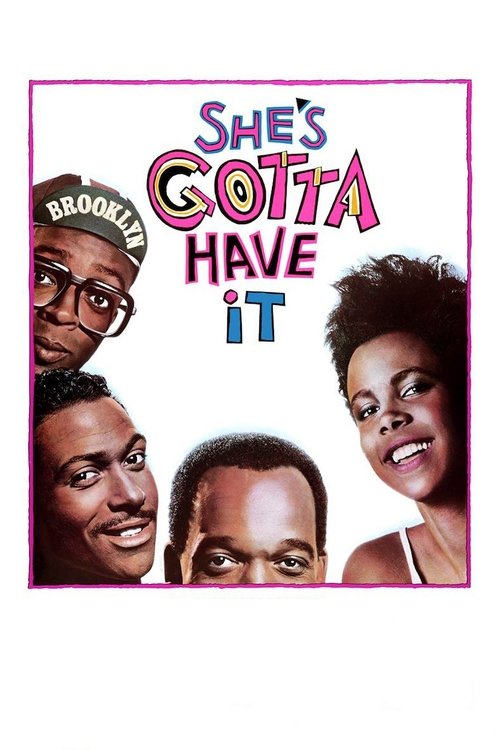
About She's Gotta Have It
Nola Darling, a vibrant and uninhibited artist living in Brooklyn, juggles relationships with three distinctly different men: the smooth and stable Jamie Overstreet, the B-boy free spirit Mars Blackmon, and the narcissistic model Greer Childs. The film, told from multiple perspectives including Nola's own, delves into her fierce determination to maintain her sexual freedom and resist being defined by any single partner. It's a bold exploration of female agency and the complexities of modern romance, set against the backdrop of a burgeoning independent film scene.
"She's Gotta Have It" arrived at a pivotal moment in cinema, marking Spike Lee's explosive entry onto the world stage. Shot in black and white with vibrant bursts of color, the film's raw energy and distinctive visual style immediately set it apart. Its candid portrayal of sex and relationships, particularly from a Black female perspective, sparked widespread discussion and critical acclaim, establishing Lee as a vital new voice in American filmmaking.
The film garnered significant critical attention for its innovative narrative structure, sharp dialogue, and fearless thematic content. It became a cultural touchstone, recognized for its honest depiction of female sexuality and its challenge to traditional romantic conventions. "She's Gotta Have It" won the Award of the Youth at the Cannes Film Festival and helped to launch the careers of its cast members, solidifying its place as a landmark independent film that continues to resonate with audiences and inspire conversations about identity, love, and liberation.
"She's Gotta Have It" endures as a powerful statement on personal freedom and the pursuit of self-definition. Its legacy is evident in its influence on subsequent generations of filmmakers and its continued relevance in discussions about gender, race, and sexuality. The film's unapologetic embrace of Nola Darling's multifaceted desires remains a testament to its enduring impact, cementing its status as a pioneering work that pushed boundaries and redefined storytelling.
Drafts Featuring She's Gotta Have It
Every SnakeDrafts listicle where this movie appears
Similar Movies
Movies related to She's Gotta Have It
Frequently Asked Questions
Everything you need to know about She's Gotta Have It
- Nola's independent living situation in her Fort Greene brownstone symbolizes her autonomy and her desire to create her own space, free from the expectations or control of her romantic partners. It reflects her artistic spirit and her need for personal freedom to explore her identity.
- Jamie represents security and conventional romance, Mars offers playful companionship and excitement, and Greer embodies sophisticated charm and physical attraction. Each man fulfills a distinct aspect of Nola's multifaceted desires, preventing her from committing to just one because no single man can satisfy all her needs.
- The title speaks to Nola's insatiable desire for independence, sexual freedom, and the ability to define her own relationships outside of societal norms. It underscores her agency in pursuing what she wants, rather than conforming to patriarchal expectations.
- Mars Blackmon, played by Spike Lee, serves as the witty and endearing comic relief, often breaking the fourth wall. His character became an iconic figure, later featuring in Nike commercials alongside Michael Jordan, which significantly boosted his cultural prominence and amplified Spike Lee's public profile.
- The ending finds Nola choosing herself and her independence, rather than settling for any of the three men. It reinforces her journey of self-discovery and her commitment to living life on her own terms, solidifying her as a symbol of female empowerment and autonomy.
- The movie challenges traditional notions of female sexuality by portraying Nola as a woman who openly embraces her desires and agency. It suggests that women can and should define their own sexual experiences and relationships, rather than being confined by societal expectations or male gazes.

