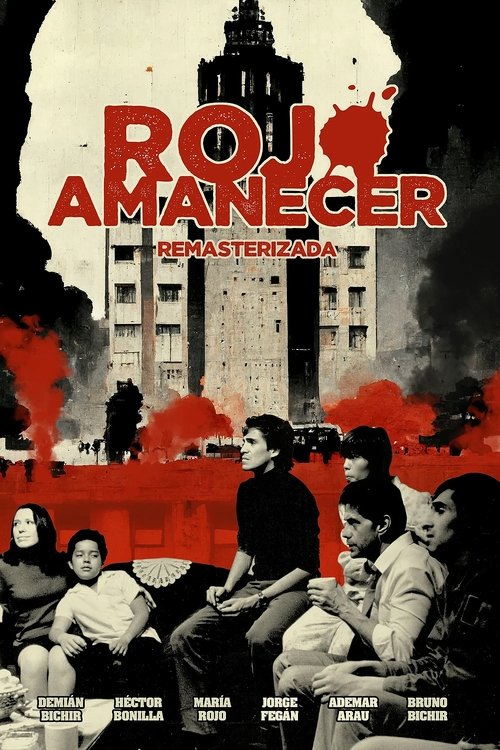
Red Dawn
Red Dawn (Rojo Amanecer) is a stark and powerful historical drama that thrusts viewers into the harrowing true events of October 2, 1968, as a student uprising in Mexico City tragically collides with government oppression. This film is a crucial cinematic document, offering an unflinching look at a pivotal moment in Mexican history and the enduring human cost of political unrest. Discover the untold stories behind one of Latin America's most significant social movements.
About Red Dawn
Jorge Fons' "Rojo Amanecer," known internationally as "Red Dawn," stands as a courageous and essential piece of Mexican cinema, unflinchingly depicting the Tlatelolco Massacre of 1968. The film masterfully reconstructs the events of that fateful day, confining its narrative primarily to a single apartment building where an ordinary family becomes entangled in the escalating violence. Its raw portrayal of fear, desperation, and the desperate human need for truth resonated deeply within Mexican society, breaking years of official silence surrounding the massacre.
The film's premise revolves around a middle-class family preparing for a seemingly ordinary day, their lives soon to be irrevocably altered by the sounds of protest and then gunfire erupting outside. As the military moves in and the situation devolves into chaos, their apartment becomes a microcosm of the nation's struggle, a sanctuary breached by the brutal realities of state-sponsored violence. The confined setting intensifies the psychological drama, making the audience feel the claustrophobia and terror experienced by those trapped within.
"Red Dawn" was not only a critical success but also a cultural phenomenon, confronting a painful chapter of Mexican history that had long been suppressed. Despite facing censorship and distribution challenges upon its initial release, its powerful message and compelling performances, particularly by María Rojo and Héctor Bonilla, ensured its enduring legacy. The film's commitment to historical accuracy and its empathetic depiction of the victims solidified its place as a landmark achievement in social realism.
Its critical reception underscored its importance, earning numerous accolades, including Ariel Awards (Mexico's equivalent of the Oscars) for Best Picture, Best Director, and Best Actress. More than just a film, "Red Dawn" became a significant cultural artifact, contributing to a national dialogue about memory, justice, and the accountability of power. It serves as a stark reminder of the importance of historical remembrance and the devastating consequences when human rights are disregarded.
Drafts Featuring Red Dawn
Every SnakeDrafts listicle where this movie appears
Similar Movies
Movies related to Red Dawn
Frequently Asked Questions
Everything you need to know about Red Dawn
- The apartment in "Red Dawn" serves as a critical narrative device, trapping the family and audience within a confined space. This intensifies the sense of claustrophobia and helplessness as the massacre unfolds outside, mirroring the broader societal entrapment during the real-life events. It symbolizes the violation of private life by public violence.
- The film effectively showcases the family's internal strife through generational divides and differing political viewpoints. While some members are actively involved in the student movement, others are more cautious or apolitical, leading to tension and desperate arguments about how to respond to the unfolding tragedy. This highlights the varied reactions within Mexican society at the time.
- Red Dawn powerfully argues for the importance of historical memory and confronting uncomfortable truths, particularly in the face of official denial. By vividly portraying the Tlatelolco Massacre, the film challenges suppressed narratives and demands recognition for the victims, ensuring that this pivotal event is not forgotten. It underscores the responsibility of society to remember and learn from its past.
- Jorge Fons employs a stark, almost documentary-like style in Red Dawn, utilizing handheld cameras and a naturalistic approach to dialogue to enhance the feeling of authenticity and immediacy. The limited setting and focus on sound design — particularly the escalating noises from outside — create an unbearable tension that immerses the viewer in the terror of the situation.
- Red Dawn played a crucial role in paving the way for more socially conscious and politically engaged filmmaking in Mexico. Its boldness in tackling a taboo historical event encouraged other filmmakers to explore sensitive topics and challenge official narratives, contributing to a richer and more diverse cinematic landscape. It demonstrated the power of film as a tool for historical critique and social commentary.

