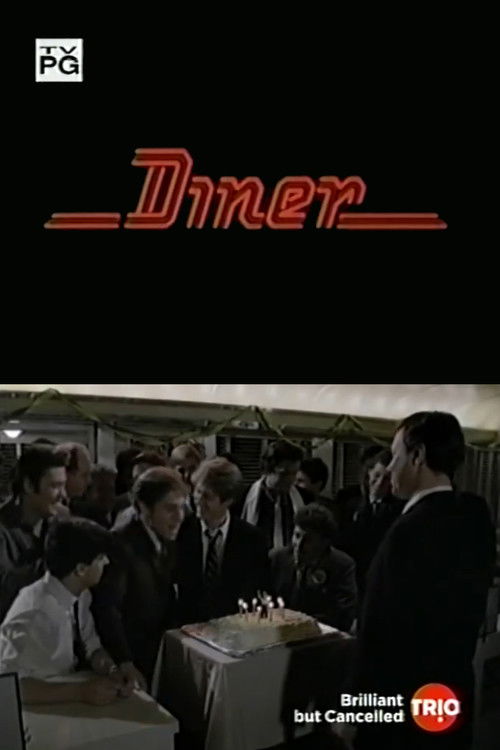
Diner
In 1980s Baltimore, a group of male friends in their twenties grapple with adulthood, relationships, and their unwavering bond, often congregating at their favorite diner. This slice-of-life comedy-drama explores the transition from post-college freedom to looming responsibilities with humor and heart.
Director
Release Year
1983
Runtime
24 minutes
Main Cast
Mike Binder, Max Cantor, Michael Madsen, James Spader, Mady Kaplan
About Diner
Diner (1983) serves as an intriguing television adaptation of Barry Levinson’s critically acclaimed 1982 feature film. Set against the backdrop of Baltimore in the late 1950s, this TV movie explores the interpersonal dynamics of a close-knit group of friends who often gather at a local diner. The series pivoted slightly from the original by focusing more on the perspectives of the wives, Elyse and Beth, highlighting their frustrations with the time their husbands spend socializing instead of focusing on family life. Although brief, its cultural setting captures the transitional period of youth on the cusp of adulthood, offering a nostalgic yet insightful look at friendship and relationships during this era.
The plot of Diner (1983) centers around the tension between personal freedom and relational responsibilities. The original film’s ensemble cast is replaced by younger actors such as Mike Binder, Max Cantor, Michael Madsen, James Spader, and Mady Kaplan, who bring fresh energy and a new dimension to the familiar characters. The story primarily unfolds around the daily lives and interactions at the diner, emphasizing humor and drama without revealing significant spoilers. This premise allowed audiences to experience the character-driven narrative in a more serialized and intimate format typical of television, while still rooted in the warmth and wit that made the original film beloved.
Critically, this TV adaptation received mixed responses, as many reviewers compared it unfavorably to the original cinematic release. However, the performances of the cast garnered appreciation for their earnest efforts to capture the essence of their roles. The shorter runtime of 24 minutes presented limitations in developing a complex storyline, yet the show’s charm lay in its portrayal of relatable domestic and social conflicts. Despite not achieving the acclaim of the original movie, Diner (1983) remains a notable experiment in translating a popular film narrative into a television pilot format, reflecting the early 1980s trend of adapting movies for the small screen.
Though Diner (1983) did not evolve into a full series, its legacy endures as a cultural artifact that highlights the challenges of adapting feature films for television audiences. Barry Levinson's original work continues to influence filmmakers with its authentic dialogue and character interaction. This pilot captures a snapshot of American life and friendship, offering a nostalgic perspective that continues to resonate with fans of both the TV movie and the original film. Its place in television history is as a testament to the enduring appeal of the diner setting as a social hub and a metaphor for youth navigating the complexities of life and relationships.
Similar Movies
Movies related to Diner
Frequently Asked Questions
Everything you need to know about Diner
- The characters in 'Diner' confront adulthood with a mix of reluctance and humor. They often retreat to the familiar comfort of their diner, using shared jokes and nostalgic discussions to navigate the complexities of careers, commitments, and evolving relationships, sometimes to the dismay of their partners.
- The eponymous diner serves as more than just a restaurant; it's a sanctuary and a central character in itself. It's a place where the friends can escape the pressures of the outside world, preserving their youthful camaraderie and engaging in candid conversations that define their relationships.
- 'Diner' is celebrated for its authentic, observational humor, often stemming from the characters' witty banter, inside jokes, and relatable struggles. The comedy emerges from their natural interactions and the absurdities of their everyday lives, rather than overt gags or punchlines, creating a warm, nostalgic feel.
- Elyse and Beth, while not always central to the diner scenes, represent the external pressures and evolving expectations placed upon the male protagonists. Their complaints highlight the tension between the men's desire to cling to their youth and the demands of mature relationships, serving as catalysts for moments of introspection and conflict.
- The film concludes with the characters facing uncertain futures, hinting at both the dissolution and continuation of their tight-knit group. It leaves viewers to ponder whether their bonds will endure the diverging paths of marriage, careers, and personal growth, or if the diner days are a chapter soon to close forever.

