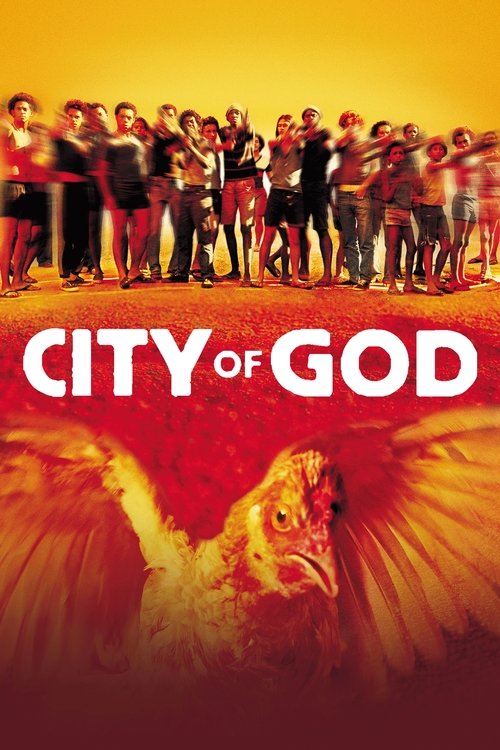
City of God
City of God is a raw, unflinching epic that plunges viewers into the electrifying and perilous favelas of Rio de Janeiro, tracing the intertwined destinies of those who navigate its brutal beauty. This cinematic masterpiece explores themes of survival, ambition, and consequence, making it a must-watch for fans of powerful storytelling and immersive filmmaking.
About City of God
Fernando Meirelles and Kátia Lund's 2002 Brazilian crime drama, "City of God," exploded onto the global film scene with its visceral portrayal of life in the Cidade de Deus favela of Rio de Janeiro. Based on the semi-autobiographical novel by Paulo Lins, the film quickly garnered critical acclaim for its electrifying pacing, innovative cinematography, and compelling narrative, establishing itself as a landmark in contemporary world cinema.
The film masterfully weaves together the stories of Rocket, a sensitive young man aspiring to be a photographer, and Zé Pequeno, a ruthless drug lord whose reign of terror dominates the favela. Their diverging paths illustrate the harsh realities and limited choices faced by many growing up in such environments. "City of God" doesn't just present a crime story; it offers a profound commentary on systemic poverty, violence, and the elusive pursuit of dreams in a world brimming with despair and fleeting hope.
Critically, "City of God" was a phenomenon, earning four Academy Award nominations, including Best Director, Best Adapted Screenplay, Best Cinematography, and Best Film Editing. Its impact extended beyond awards, influencing a generation of filmmakers with its dynamic visual style and non-linear storytelling. The film's raw authenticity, achieved by casting many non-professional actors from the favelas themselves, lent it an unparalleled sense of realism and emotional depth.
The legacy of "City of God" is undeniable. It not only brought the realities of the Rio favelas to a global audience but also sparked important conversations about social inequality and the cycles of violence. Its powerful narrative and groundbreaking cinematic techniques continue to resonate, cementing its place as a pivotal and enduring work that transcends the crime genre to become a profound human drama.
Drafts Featuring City of God
Every SnakeDrafts listicle where this movie appears
Similar Movies
Movies related to City of God




Frequently Asked Questions
Everything you need to know about City of God
- The non-linear narrative in "City of God" mirrors the chaotic and unpredictable nature of life in the favelas. By jumping between different timelines and character perspectives, the film immerses the audience in the fragmented experiences of its inhabitants, emphasizing the cyclical nature of violence and the long-term impact of individual choices on the community.
- Rocket's photography serves as a powerful thematic counterpoint to the rampant violence in "City of God." His pursuit of art represents a search for beauty, truth, and a way out of the favela's destructive cycle. It highlights his desire to document rather than participate, offering a glimmer of hope and an alternative path amidst the pervasive brutality.
- Bené, Zé Pequeno's best friend, symbolizes the fleeting possibility of escaping the cycle of violence and becoming a legitimate presence within the favela. His attempts to leave the drug trade and his desire for a peaceful life highlight the difficult choices and immense pressures faced by those trying to break free from their circumstances.
- The soundtrack of "City of God" masterfully integrates Brazilian funk, samba, and bossa nova, complementing the on-screen action and enhancing the film's vibrant atmosphere. The music often serves to underscore the cultural richness of the favelas, while also ironically contrasting with the brutal events unfolding, intensifying the emotional impact of key scenes.
- The ending of "City of God" is deliberately ambiguous and poignant, leaving a lasting impression by showing that the cycle of violence continues even with Zé Pequeno's demise. It underscores the profound systemic issues at play, suggesting that individual acts of protest or elimination of a single antagonist don't necessarily bring an end to the deeper problems plaguing the community.

