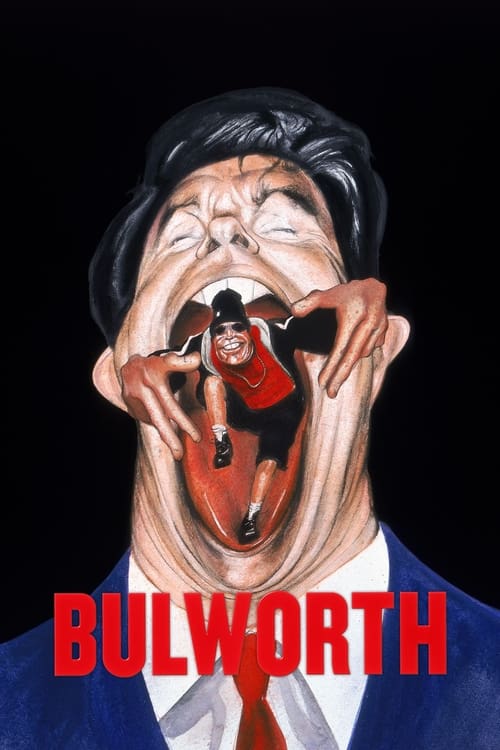
Bulworth
Bulworth is a daring and insightful political satire that challenges perceptions of race, class, and the American dream. This provocative film follows a disillusioned politician's unexpected transformation, delivering sharp social commentary with comedic flair and a powerful message.
Director
Release Year
1998
Runtime
108 minutes
Main Cast
Warren Beatty, Halle Berry, Kimberly Deauna Adams, Vinny Argiro, Sean Astin
About Bulworth
Released in 1998, Warren Beatty's "Bulworth" arrived at a pivotal moment in American political and cultural discourse. The film’s audacious premise, where a senator sheds his carefully crafted public persona to speak in an unfiltered, hip-hop-inflected voice, immediately sparked conversations about authenticity, media, and the widening chasm between politicians and the populace. Its unique blend of satire, romance, and social commentary solidified its place as a significant, albeit controversial, work.
The plot centers on Senator Jay Billington Bulworth, a seemingly successful but deeply unhappy politician. Convinced his career and life are meaningless, he orchestrates his own assassination, freeing himself to speak with a brutal honesty he believes will be his last act. His newfound candor, expressed through rap, electrifies his campaign, bewilders his staff, and unexpectedly connects with an electorate tired of political platitudes. This transformation leads him on a journey of self-discovery, love, and a confrontation with the very institutions he once upheld.
Critically, "Bulworth" garnered a polarized but passionate response. Many praised Beatty's bold vision and the film's willingness to tackle sensitive issues like race and economic inequality with humor and intelligence. Others found its execution uneven or its message muddled. Regardless, its sharp dialogue and memorable musical sequences left an indelible mark, earning it an Academy Award nomination for Best Original Screenplay.
Beyond its initial reception, "Bulworth" has endured as a cult classic and a talking point in discussions about political cinema. Its themes of hypocrisy, racial identity, and the struggle for genuine connection in a commodified society remain remarkably relevant. The film’s unconventional narrative and Beatty’s fearless performance continue to resonate with audiences who appreciate its biting satire and its surprisingly optimistic core message about finding one's voice and purpose.
Drafts Featuring Bulworth
Every SnakeDrafts listicle where this movie appears
Similar Movies
Movies related to Bulworth




Frequently Asked Questions
Everything you need to know about Bulworth
- The hip-hop music and culture in "Bulworth" aren't just a stylistic choice; they symbolize Senator Bulworth's rebellion against his stale political image and the perceived artificiality of mainstream politics. It's his way of breaking free and communicating a raw, unfiltered truth, allowing him to connect with an audience he'd previously alienated.
- Nina acts as both a catalyst and a guide for Bulworth's transformation. Initially, she embodies the street-smart authenticity he's desperately seeking, and her perspective challenges his preconceived notions. As their relationship develops, she helps him navigate his new identity and understand the true impact of his candid approach.
- Bulworth offers a sharp critique of the media's role in shaping political narratives and reducing complex issues to soundbites. By speaking outside the expected political rhetoric, Bulworth disrupts the media's control, forcing them to contend with an unscripted, uncomfortable truth that challenges their usual reporting methods.
- The ending of "Bulworth" is deliberately ambiguous, blending both hope and cynicism. While Bulworth's message resonates and inspires, the ultimate outcome of his actions leaves the audience to ponder the true cost and potential for genuine political change in a system resistant to unconventional truths.
- This resonant line highlights the arbitrary and often contradictory expectations placed upon individuals, particularly in discussions of race and identity. It underscores Bulworth's frustration with the strict categorization and superficial judgments that prevent genuine understanding and perpetuate division in society.

