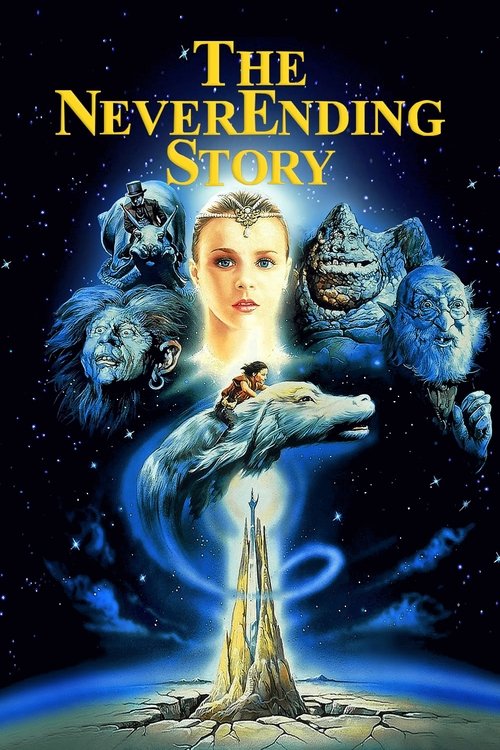
The NeverEnding Story
Embark on a timeless journey with Bastian as he discovers a magical book that transports him to the wondrous, and imperiled, land of Fantasia. This classic fantasy adventure explores the power of imagination and the importance of storytelling, captivating audiences of all ages with its unique blend of wonder and peril.
Director
Wolfgang Petersen
Release Year
1984
Runtime
97 minutes
Genres
Adventure, Fantasy, Family, Drama
Main Cast
Noah Hathaway, Barret Oliver, Tami Stronach, Alan Oppenheimer, Sydney Bromley
About The NeverEnding Story
Wolfgang Petersen's 1984 fantasy epic, "The NeverEnding Story," adapted from Michael Ende's beloved novel, captured the hearts of a generation with its imaginative world-building and poignant narrative. The film, a West German production, became a groundbreaking achievement in family cinema, lauded for its ambitious visual effects and its profound message about the escapism and reality of reading.
The film introduces Bastian Balthazar Bux, a young boy struggling with bullies and the loss of his mother, who seeks refuge in a mysterious book. This book, also titled "The NeverEnding Story," plunges him into Fantasia, a land threatened by a mysterious force known as The Nothing. The narrative cleverly interweaves Bastian's real-world struggles with the fantastical quest of Atreyu, a young warrior chosen to save Fantasia, highlighting the symbiotic relationship between the reader and the story.
"The NeverEnding Story" was met with critical acclaim for its imaginative scope, memorable characters like Falkor the luck dragon, and its surprisingly mature themes. While some critics noted departures from Ende's original novel, the film's enchanting atmosphere and innovative puppetry earned it a special place in cinematic history. It was nominated for several awards, including a Saturn Award for Best Fantasy Film, and its iconic theme song performed by Limahl became a global hit, solidifying its cultural impact.
The legacy of "The NeverEnding Story" extends far beyond its initial release. It remains a touchstone for discussions on childhood imagination, the importance of literacy, and the battle against apathy. The film's enduring popularity has led to sequels, an animated series, and countless merchandise, proving that the magic of Fantasia, and the power of its story, truly is never-ending. Its influence can be seen in subsequent fantasy films and its themes continue to resonate with new audiences.
Drafts Featuring The NeverEnding Story
Every SnakeDrafts listicle where this movie appears
Similar Movies
Movies related to The NeverEnding Story
Frequently Asked Questions
Everything you need to know about The NeverEnding Story
- The Nothing is a mysterious, destructive force that slowly consumes Fantasia, leaving emptiness in its wake. It symbolizes apathy, cynicism, and the loss of imagination in the real world, representing how these forces can erode creativity and wonder if left unchecked.
- Bastian, as the reader of the magical book, is not merely a passive observer. His thoughts, wishes, and interpretations directly affect the unfolding events in Fantasia, demonstrating the powerful connection between a storyteller (or reader) and the world they engage with.
- The Childlike Empress is the benevolent ruler of Fantasia, embodying hope, imagination, and the very essence of the land. Her illness and plea for a new name from Bastian highlight that Fantasia's survival depends on a human child's belief and creative contribution, underscoring the film's central theme.
- The AURYN is a powerful amulet, shaped like two intertwined snakes, bestowed upon Atreyu by the Childlike Empress. It represents protection, guidance, and the unity of opposing forces, signifying that whoever wears it is under the Empress's authority and must not interfere with her will.
- The film explicitly links the real world and Fantasia through Bastian's reading of the book and his active participation in the story. It suggests that the health and existence of imaginative worlds like Fantasia are directly dependent on the human capacity for wonder, dreams, and storytelling.

