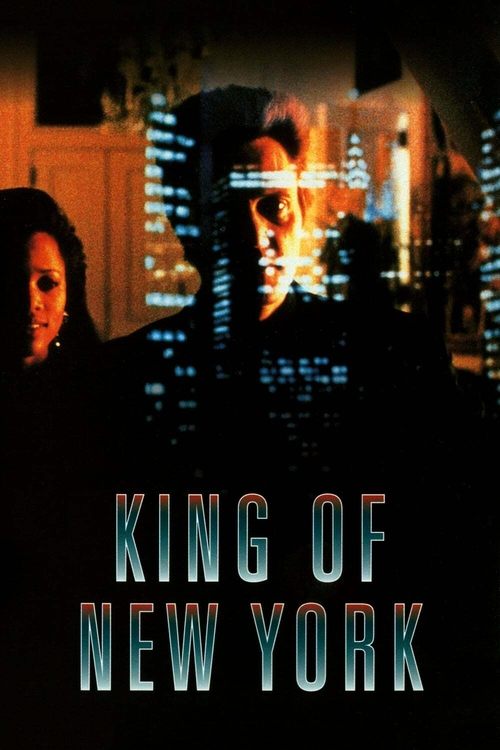
King of New York
In the neon-drenched underbelly of New York City, Frank White emerges from prison, a rehabilitated gangster with a messianic complex. "King of New York" is a stylish and ultra-violent crime thriller that redefines the anti-hero, blending ruthless ambition with a twisted sense of philanthropy. Witness a cinematic tour-de-force driven by Christopher Walken's iconic performance.
Director
Abel Ferrara
Release Year
1990
Runtime
103 minutes
Main Cast
Christopher Walken, David Caruso, Laurence Fishburne, Victor Argo, Wesley Snipes
About King of New York
Abel Ferrara's 1990 crime epic, "King of New York," made a significant cultural impact with its audacious portrayal of a charismatic yet utterly ruthless drug lord. This film challenged conventional gangster narratives by presenting a protagonist who, despite his violent means, genuinely believes he is serving a greater good for the impoverished. Its distinctive visual style, characterized by stark lighting and a pulsing urban soundtrack, cemented its place as a cult classic within the crime genre.
The premise follows Frank White, fresh out of Sing Sing, as he endeavors to reclaim his dominion over the city's drug trade. However, White's ambition extends beyond mere power; he envisions himself as a modern-day Robin Hood, funneling his illicit profits into building hospitals and schools for the underprivileged. This paradoxical moral code forms the crux of the narrative, forcing audiences to grapple with the ethics of his actions and the allure of his dangerous charisma.
Critically, "King of New York" garnered attention for its raw energy and the magnetic performances of its ensemble cast, particularly Christopher Walken's chillingly calm yet volatile Frank White. The film's bold themes and uncompromising violence stirred debate, solidifying its reputation as a provocative and unforgettable piece of cinema. While not a massive box office success upon its initial release, its influence has grown steadily over time.
The legacy of "King of New York" endures through its distinctive aesthetic and its exploration of power, morality, and the blurred lines between good and evil in a corrupt world. It remains a touchstone for discussions on the gangster archetype and the anti-hero's journey, influencing subsequent crime thrillers and cementing Abel Ferrara's reputation as a master of urban noir. The film's memorable dialogue and iconic scenes continue to resonate with audiences, making it a perennial favorite for fans of gritty, character-driven dramas.
Awards and accolades have recognized the film's unique artistic merit over the years, further cementing its status. While not a mainstream awards darling, its recognition within cult cinema circles and by critics who appreciate its independent spirit speaks to its lasting impact on cinematic storytelling.
Drafts Featuring King of New York
Every SnakeDrafts listicle where this movie appears
The Best Christopher Walken Movies Ranked
Ranked #4
The Best Wesley Snipes Movies Ranked
Ranked #10
The Best Laurence Fishburne Movies
Ranked #17
The Essential Giancarlo Esposito: His Best Movie Performances Ranked
Ranked #16
1990's Best Movies Ranked
Ranked #73
The Best Crime Movies of 1990, Ranked
Ranked #4
The Best Thriller Movies of 1990, Ranked
Ranked #22
Similar Movies
Movies related to King of New York
Frequently Asked Questions
Everything you need to know about King of New York
- Frank White genuinely believes his criminal enterprise serves a higher purpose, aiming to provide for the community in ways he feels the system has failed. He sees himself as a benevolent dictator, using illegal means to achieve what he perceives as just outcomes for the poor and marginalized in New York City. This twisted idealism is central to his character's complexity.
- Loyalty is a constant, shifting theme in 'King of New York,' tested by Frank's ruthless ambition and the inherent dangers of his world. While some of his crew, like Jimmy Jump, display unwavering devotion, others are swayed by personal gain or fear, leading to moments of profound betrayal that underscore the perilous nature of their lifestyle and Frank's precarious hold on power.
- The use of opera music, particularly arias, adds a layer of tragic grandeur and heightened drama to Frank White's story. It elevates his criminal exploits to a more theatrical, almost mythological level, suggesting a fatalistic journey and underscoring the Shakespearean rise and fall of a powerful figure. It contrasts with the gritty urban landscape, highlighting Frank's self-perception as a figure of consequence.
- Frank White's interactions with the police, particularly Detectives Gilley and Flanigan, highlight the blurred lines of morality and the cyclical nature of power in the city. The police are often portrayed as just as flawed and driven by their own codes as Frank, creating a dynamic where the concepts of justice and law are constantly questioned and challenged, portraying a system where corruption exists on both sides.
- The ending of 'King of New York' deliberately leaves Frank White's ultimate fate open to interpretation, reflecting the cyclical and often unresolved nature of crime and moral ambiguity. It suggests that even if one king falls, another will inevitably rise, and that the fight against systemic injustice, as Frank perceived it, is an unending struggle. It reinforces the film's exploration of his complex legacy, leaving audiences to ponder the true impact of his actions.
- Frank White selectively targets rival drug lords who refuse to align with his vision or succumb to his power. This selective targeting reveals his strategic mind and his desire for absolute control, not just over the drug trade, but over the moral landscape he imagines for the city. It underscores his belief that he is imposing a new, albeit brutal, order, rather than simply engaging in indiscriminate violence.

