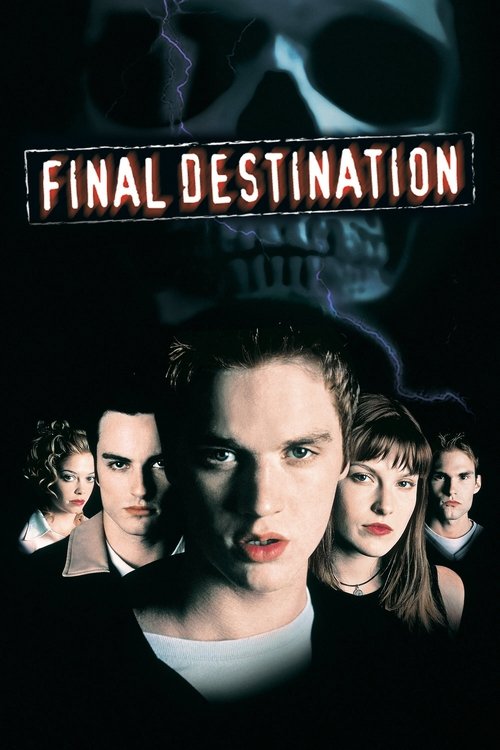
Final Destination
In the chilling supernatural thriller "Final Destination," a premonition of disaster saves a group of teens from a horrific plane crash, only to unleash an inescapable force of Death itself. This iconic film masterfully blends suspense, gore, and a unique premise to keep audiences on the edge of their seats, exploring the terrifying concept that you can't cheat destiny.
Director
James Wong
Release Year
2000
Runtime
98 minutes
Genres
Main Cast
Devon Sawa, Ali Larter, Kerr Smith, Kristen Cloke, Daniel Roebuck
About Final Destination
"Final Destination" carved a unique niche in the horror genre upon its release, offering a fresh and terrifying take on the slasher formula. Departing from masked killers, the film introduces an invisible, relentless antagonist: Death itself, meticulously reclaiming the lives that escaped its grasp. This innovative concept resonated deeply with audiences, tapping into primal fears about fate and the fragility of life. The film's intricate "death traps" became a hallmark, showcasing creative and often gruesome set pieces that left a lasting impression.
The film's premise centers on high school student Alex Browning, who experiences a vivid premonition of a plane explosion. His frantic warning saves a handful of his classmates, but their reprieve is short-lived. Soon, the survivors begin to die in a series of bizarre and horrific accidents, each one seemingly orchestrated by an unseen force. The narrative masterfully builds tension as the characters desperately try to decipher Death's design and break the fatal chain.
Critically, "Final Destination" was praised for its clever concept and effective scares. While some critics debated its reliance on gore, many recognized its innovative approach to horror. The film's commercial success led to a highly popular and profitable franchise, cementing its place as a significant entry in early 2000s horror cinema. Its influence can be seen in subsequent thrillers that explore themes of inescapable fate and intricate demise, making it a cornerstone for fans of supernatural horror.
Beyond its immediate impact, "Final Destination" has maintained a strong legacy, becoming a cult classic and a perennial favorite during Halloween season. Its memorable death sequences and the underlying philosophical question of whether one can truly cheat death continue to spark discussions among viewers. The film effectively uses everyday objects and situations to create terrifying scenarios, reminding audiences that danger can lurk anywhere when fate comes calling.
Drafts Featuring Final Destination
Every SnakeDrafts listicle where this movie appears
Similar Movies
Movies related to Final Destination




Frequently Asked Questions
Everything you need to know about Final Destination
- The 'Death's Design' in "Final Destination" refers to the intricate, Rube Goldberg-esque chain of events that leads to each character's demise. It signifies the predetermined nature of their deaths and the idea that once fate has been cheated, Death will meticulously correct the imbalance, no matter how complex the method. This concept is central to the film's overarching theme of inescapable destiny.
- The survivors, primarily Alex, attempt to unravel Death's plan by recognizing patterns in the order of their near-deaths on the plane and then trying to predict who will be next based on those patterns. They also look for clues in their surroundings and past experiences, trying to intervene and alter the seemingly inevitable course of events. Their efforts highlight the struggle against a seemingly omnipotent force.
- The recurring imagery of shadows and reflections in "Final Destination" often symbolizes Death's omnipresent and unseen influence. Shadows can represent the encroaching darkness and the unseen force stalking the characters, while reflections can subtly hint at imminent danger or provide fleeting glimpses of Death's presence. These visual cues enhance the film's eerie atmosphere and underscore the idea that Death is always lurking nearby.
- The profound survivor's guilt experienced by the characters in "Final Destination" stems from their miraculous escape from the plane crash, which then leads to their friends and loved ones dying in gruesome ways. This guilt emphasizes the moral and psychological burden of cheating fate and highlights the emotional toll of living with the knowledge that their survival came at a dire cost. It's a central theme exploring the complex emotions associated with mass casualty events.
- The ending of "Final Destination," particularly the final scene, dramatically re-contextualizes the entire film by confirming that escaping Death's design is ultimately impossible, even across different locations. It reinforces the film's core message that fate cannot be cheated indefinitely. This twist leaves a lasting impression, solidifying the idea that the characters were always destined to die, making their struggle all the more tragic and futile.

