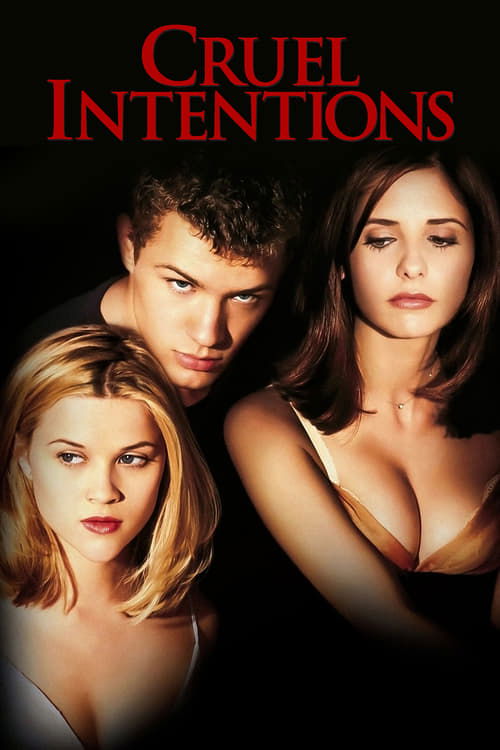
Cruel Intentions
Step into the scandalous world of upper-crust Manhattan with "Cruel Intentions," a film that masterfully blends desire, manipulation, and the darker side of aristocratic privilege. This provocative 90s classic explores the dangerous games played by stepsiblings Kathryn Merteuil and Sebastian Valmont, drawing viewers into a web of high-stakes seduction and betrayal.
Director
Roger Kumble
Release Year
1999
Runtime
98 minutes
Main Cast
Sarah Michelle Gellar, Ryan Phillippe, Reese Witherspoon, Selma Blair, Louise Fletcher
About Cruel Intentions
Released in 1999, "Cruel Intentions" quickly became a cultural phenomenon, redefining the teen drama genre with its edgy themes and unforgettable soundtrack. Loosely based on the 1782 French novel "Les Liaisons dangereuses" by Pierre Choderlos de Laclos, the film successfully transplanted the classic's intricate web of seduction and revenge into a modern-day New York City elite prep school setting. Its impact resonated with young audiences, offering a darker, more cynical take on adolescent relationships than typically portrayed.
The plot centers on the manipulative stepsiblings Kathryn Merteuil (Sarah Michelle Gellar) and Sebastian Valmont (Ryan Phillippe), who engage in a cruel wager. Sebastian, a notorious womanizer, is challenged to seduce the innocent new headmaster's daughter, Annette Hargrove (Reese Witherspoon). If he succeeds, he wins Kathryn's ultimate prize; if he fails, Kathryn claims his prized vintage car. Their machinations unfold with a blend of witty dialogue, calculated mind games, and unexpected emotional complexities, ultimately revealing the devastating consequences of their amoral pursuits. The film skillfully balances its scandalous premise with moments of genuine vulnerability and self-discovery during this complex game of love.
Critically, "Cruel Intentions" received mixed reviews upon its release, but its cultural impact and enduring popularity cannot be understated. Many praised its sharp dialogue, stylish aesthetic, and the compelling performances from its young, talented cast, particularly Sarah Michelle Gellar's iconic portrayal of the cunning Kathryn. While some critics found its themes overly sensationalized, the film has gained a significant cult following over the years, celebrated for its unique blend of teen angst, dark humor, and timeless exploration of power dynamics and desire.
"Cruel Intentions" has left a lasting legacy, influencing subsequent teen dramas and becoming a touchstone for 90s pop culture. Its exploration of morality, social class, and the destructive nature of unchecked ambition continues to resonate with audiences, sparking discussions about right and wrong, and the blurred lines between love and manipulation. The film not only launched the careers of its young stars but also cemented its place as a quintessential, albeit controversial, entry in the canon of modern romantic dramas, remembered for its audacious storytelling and stylish execution.
Drafts Featuring Cruel Intentions
Every SnakeDrafts listicle where this movie appears
Similar Movies
Movies related to Cruel Intentions
Frequently Asked Questions
Everything you need to know about Cruel Intentions
- The bet is the central driving force of the plot, serving as a catalyst for Sebastian and Kathryn's manipulative games. It highlights their deeply ingrained cynicism and desire for control over others, particularly targeting Annette's perceived innocence as a challenge to their jaded worldview. The high stakes, including Sebastian's car and Kathryn's affections, underscore the dangerous and self-destructive nature of their power struggles.
- Annette represents a stark contrast to the jaded and manipulative world Sebastian and Kathryn inhabit. Her unwavering belief in love and sincerity initially disarms Sebastian, forcing him to confront his own emotional detachment. Her refusal to be easily swayed by his charms ultimately makes him question his lifestyle and develops genuine feelings for her, leading to his moral awakening.
- The cello practice scene is pivotal, symbolizing the burgeoning connection and vulnerability between Sebastian and Annette. It's one of the first instances where Sebastian truly lets down his guard and engages with Annette on a more sincere level, transcending their initial manipulative dynamic. This intimate moment underscores the genuine emotional shift occurring within Sebastian, hinting at the depth of his changing feelings.
- The final scene signifies Kathryn's ultimate downfall and the consequences of her relentless manipulation. The public exposure of her diary by Annette serves as a form of poetic justice, stripping Kathryn of her carefully constructed facade and social standing. It underscores the film's theme that even the most cunning schemes can unravel, exposing the truth and leaving the orchestrator to face the repercussions.
- The elite prep school setting provides a backdrop of privileged isolation, where the characters' wealth and social standing allow them to operate with a perceived sense of impunity. This environment amplifies themes of moral corruption, unchecked power, and the destructive nature of boredom within the upper echelons of society. It highlights how entitlement can fuel manipulative behavior and a disregard for ethical boundaries among those who believe they are above reproach.
- The necklace symbolizes Sebastian's growing emotional attachment and genuine affection for Annette. Initially, the seduction was a game, but his gift of a personal and meaningful item indicates a shift from manipulation to genuine care. It’s a tangible representation of his awakening feelings, signifying a departure from his callous past and a step towards authentic love.
- The film masterfully integrates classical music, particularly pieces like Bach's Cello Suite No. 1, to underscore the characters' emotional states and the film's dramatic tension. It often contrasts the elegant, refined nature of the music with the morally corrupt actions of the characters, creating a poignant juxtaposition. The music enhances the sense of sophistication and intensity, subtly highlighting the underlying darkness of their games.

